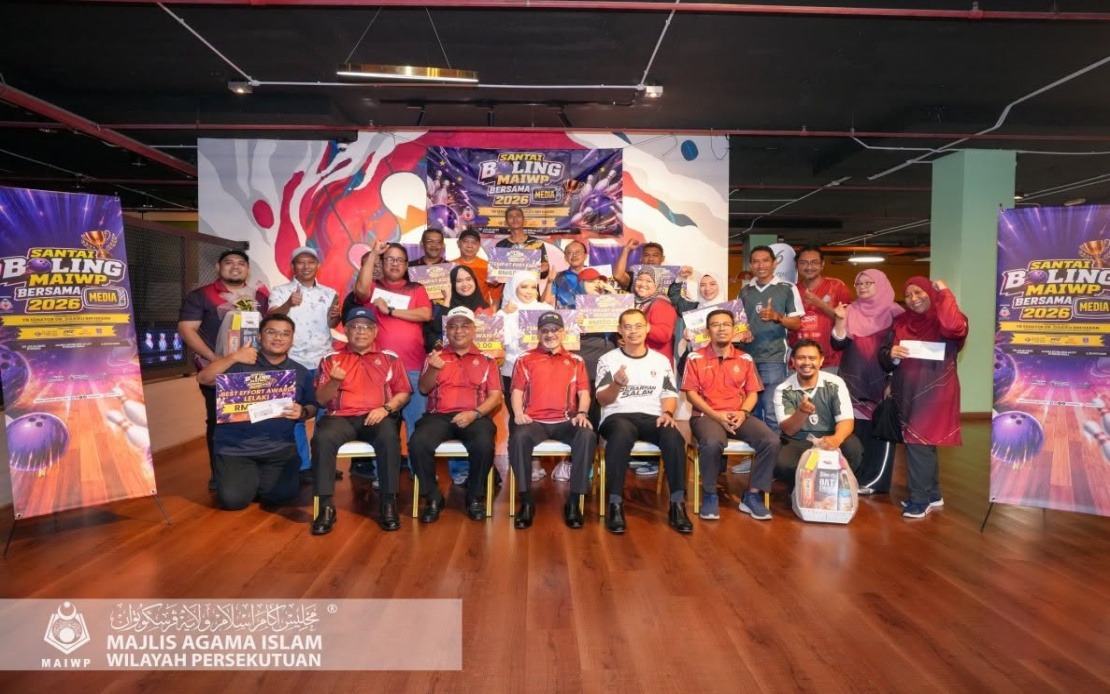
The Federal Territory Islamic Religious Council (MAIWP) has taken a novel approach to deepening its relationship with the Malaysian media landscape by organising a bowling recreational programme designed to foster collaboration and express appreciation for media support. Held at Juara Bowling Alley in Strand Mall, Kuala Lumpur, the MAIWP Bowling Recreational Programme with the Media 2026 brought together an impressive cross-section of journalists, editors, and media executives from the country's leading news organisations. The event reflects a growing recognition among government agencies that informal settings can be more conducive to building sustained professional relationships than traditional formal press conferences or media briefings.
According to MAIWP's official statement, the gathering served multiple strategic objectives beyond the surface-level objective of social bonding. The council sought to recognise the significant role that media organisations play in disseminating accurate and timely information about Islamic welfare programmes, educational initiatives, and socio-economic development projects targeting the Muslim population within the Federal Territory. This acknowledgment is particularly important given the complex media environment in Malaysia, where effective communication of government initiatives depends heavily on sustained partnerships with news outlets that command substantial audience reach and editorial influence.
The media organisations represented at the event constitute a substantial portion of Malaysia's news infrastructure. Participants included Bernama, the national news agency; IKIMfm and TV AlHijrah, which focus on Islamic content; mainstream dailies such as Berita Harian, Harian Metro, Utusan Malaysia, and the New Straits Times; as well as Malaysia Gazette and the broad-based Media Prima Omnia Sdn Bhd network. The inclusion of BPP RTM, the Radio Television Malaysia news division, underscored the government's intention to engage with both print and broadcast media simultaneously. This comprehensive outreach suggests MAIWP recognises that reaching Muslim communities in the Federal Territory requires a multi-platform approach spanning traditional and contemporary news channels.
MAIWP's decision to frame this engagement as a relaxed, recreational platform rather than a formal institutional exercise reveals subtle shifts in how Malaysian government agencies approach public relations and stakeholder management. By moving beyond the conventional press release model, MAIWP created space for informal conversations and relationship-building that can translate into more collaborative coverage of its programmes. Bowling, as an icebreaker activity, provides a neutral ground where the hierarchical distances between senior government officials, media executives, and journalists naturally diminish, potentially facilitating candid dialogue about communication challenges and opportunities.
The council explicitly articulated that strengthening these ties serves instrumental purposes beyond mere goodwill. MAIWP's statement emphasised that the strategic relationships forged through such initiatives are intended to ensure that information about the agency's diverse programmes reaches the public with greater breadth and effectiveness. For Islamic religious affairs in the Federal Territory, which encompasses Kuala Lumpur, Labuan, and Putrajaya, such visibility is crucial given the diverse religious composition of these urban centres and the importance of clear communication about available support services, financial assistance, and educational opportunities for Muslim residents.
The presence of representatives from MAIWP's various subsidiary bodies and the Corporate Communications Unit of the Minister in the Prime Minister's Department (Religious Affairs) indicates that this was not merely a public relations exercise orchestrated at the agency level, but rather an initiative with backing from the ministerial hierarchy. This organisational weight suggests that improving media relations and communication effectiveness is viewed as a priority within the religious affairs portfolio. For Malaysian readers and media professionals, this signals renewed emphasis on ensuring that Islamic welfare and development initiatives receive appropriate media attention and are clearly understood by target beneficiaries.
From a broader Southeast Asian perspective, MAIWP's approach reflects trends seen across the region where government agencies are increasingly recognising that sustained media partnerships yield better outcomes than adversarial or transactional media relations. Countries throughout Southeast Asia have witnessed increased government investment in strategic communications, particularly within religious affairs and social development portfolios where message accuracy and community trust are paramount. Malaysia's experience in this arena, as demonstrated by MAIWP's initiative, offers instructive lessons about the potential value of informal engagement mechanisms.
The timing of the event in 2026 also suggests forward planning and a commitment to establishing ongoing rather than ad-hoc relationships with media partners. By framing this as the first in what could become an annual or periodic initiative, MAIWP signals that this is not a one-off public relations gesture but rather a foundational component of its communication strategy moving forward. Such consistency in engagement can gradually build stronger institutional relationships between government agencies and newsrooms, ultimately benefiting information flow and public understanding of government initiatives.
For Muslim communities in the Federal Territory and Malaysian media organisations more broadly, this initiative carries practical implications. More substantive collaboration between MAIWP and media partners should theoretically result in more accurate, detailed, and accessible reporting on Islamic welfare programmes, educational scholarships, housing assistance, and other initiatives. Journalists attending the event gain deeper familiarity with the council's operations and priorities, while MAIWP officials gain insights into editorial considerations and coverage constraints that shape how their messages are ultimately presented to the public.
The bowling programme also implicitly acknowledges the resource constraints and time pressures facing Malaysian media organisations, particularly newsrooms that have experienced staffing reductions in recent years. By providing a casual networking opportunity within a social activity, MAIWP accommodated the practical reality that many journalists and editors have limited availability for additional formal briefings. This sensitivity to operational pressures within media organisations demonstrates an increasingly sophisticated understanding of how to sustain productive government-media relationships in contemporary conditions.

