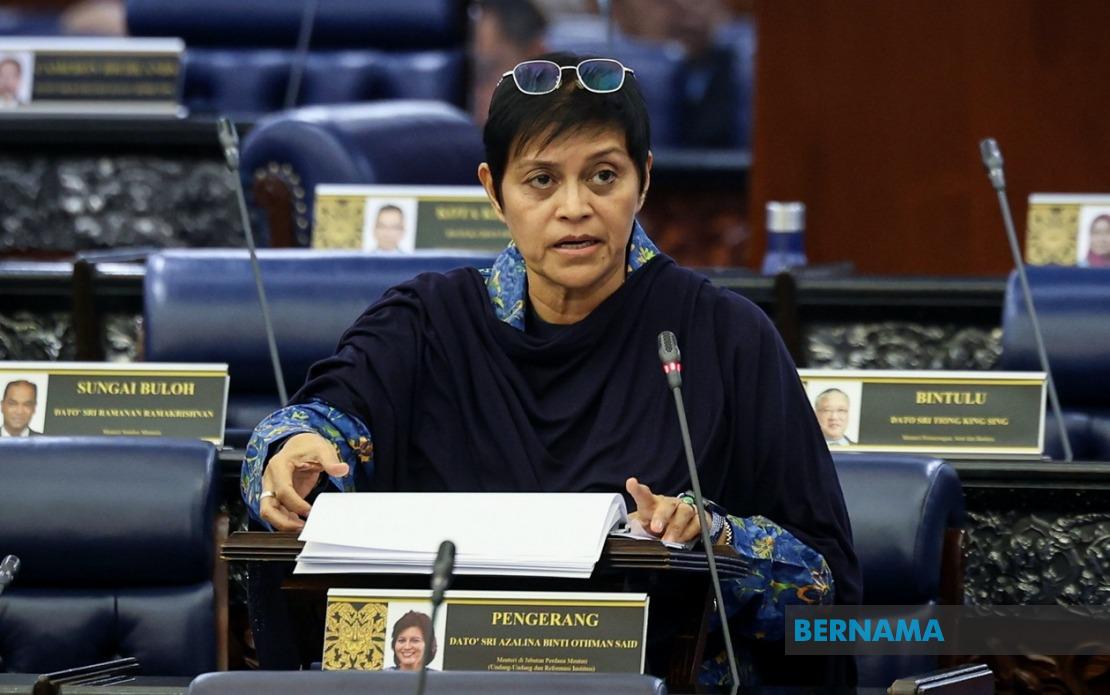
Malaysia is poised to undergo a substantial restructuring of its prosecutorial framework. A special parliamentary committee has completed its review of proposals to separate the roles of the Attorney General and Public Prosecutor—a reform the government views as central to strengthening institutional independence and the rule of law. The report will be presented to the Dewan Rakyat on July 14, marking what the Minister in the Prime Minister's Department (Law and Institutional Reform) Datuk Seri Azalina Othman Said describes as a pivotal moment in the MADANI Government's broader institutional reform agenda.
The separation of these two positions addresses long-standing concerns about the concentration of prosecutorial power and the need for greater operational independence in criminal cases. Currently, the dual role creates potential conflicts of interest and questions about whether political considerations might influence prosecutorial decisions. By splitting these functions, the government aims to ensure that public prosecutors operate with clearer autonomy from the Attorney General's other constitutional duties, which include serving as the government's chief legal adviser and defender of state interests in civil matters.
The committee's proposal rests on seven key institutional improvements designed to fortify the Public Prosecutor's office. Paramount among these is a fundamental restructuring of the appointment mechanism. Rather than the current system where the Prime Minister or Cabinet holds significant influence, the proposal transfers appointment authority to the Yang di-Pertuan Agong, acting on the advice of the Judicial and Legal Service Commission (SPKP). This change deliberately removes the executive branch from direct involvement in selecting the nation's chief prosecutor, a move intended to insulate prosecutorial decisions from governmental pressure.
The appointment process would incorporate parliamentary scrutiny as an additional safeguard. Under the proposed constitutional amendment to Article 145A, Clause 18, the SPKP would forward a candidate's name to the Dewan Rakyat Speaker for examination and debate by a House Select Committee. This committee would then recommend whether to proceed, returning its assessment to the SPKP, which would then advise the Yang di-Pertuan Agong accordingly. This multi-layered approval process creates what officials describe as a robust system of checks and balances, ensuring that no single institutional actor possesses unchecked power over the appointment.
A fixed, non-renewable seven-year term represents another critical reform. This tenure structure protects the Public Prosecutor from arbitrary removal or pressure to seek reappointment under compromised circumstances. Once appointed, the officeholder would focus purely on prosecutorial duties without concern for contract renewal, theoretically freeing them to pursue cases on merit rather than political expediency. The non-renewable aspect further insulates the role from becoming politicized during subsequent selection cycles.
The introduction of a Code of Ethics specifically tailored to Public Prosecutors forms a further pillar of the reform package. Rather than operating under general civil service guidelines, prosecutors would function under principles explicitly designed for their unique position and responsibilities. This codified ethics framework would establish clear standards for impartiality, professional conduct, and institutional accountability, providing the public and judiciary with transparent benchmarks against which prosecutorial behaviour can be measured.
Parliament's expanded legislative capacity to strengthen the prosecutorial institution represents a significant redistribution of institutional authority. Rather than allowing the executive branch to shape prosecutorial practice through ministerial directives or cabinet decisions, lawmakers would gain the explicit power to enact legislation governing how the Public Prosecutor's office operates. This shift reflects a deliberate choice to embed prosecutorial independence within statutory frameworks that require broader political consensus to alter.
For Malaysian readers and the broader Southeast Asian context, these reforms signal a commitment to judicial independence at a time when rule-of-law concerns have surfaced across the region. The separation addresses criticisms raised by international observers and domestic civil society organizations who have questioned whether prosecutorial decisions occasionally reflect political rather than legal considerations. By restructuring the institutional architecture, Malaysia seeks to demonstrate that it is serious about reinforcing the justice system's independence from executive manipulation.
The timing of this reform also reflects wider regional trends. Several Southeast Asian democracies have undertaken similar institutional restructuring in recent years, recognizing that public confidence in judicial systems depends partly on the perceived independence of prosecutorial bodies. Malaysia's move aligns with international best practices emphasizing the separation of prosecutorial authority from executive control and the incorporation of parliamentary oversight mechanisms.
Azalina has framed this reform not merely as a technical administrative reorganization but as fundamental nation-building. She argues that establishing independent, transparent and accountable institutions serves intergenerational interests, creating stronger frameworks for future governance. This rhetorical emphasis on legacy and long-term institutional health suggests the government views the separation as transcending immediate political calculations.
However, implementation will present challenges. Moving from a system where prosecutors operated within executive frameworks to one emphasizing independence requires not only constitutional and legislative changes but also cultural and operational shifts within the prosecutorial service itself. Building institutional muscle memory around independent decision-making takes time, and questions may persist about whether formal independence translates into genuine prosecutorial autonomy in high-profile or politically sensitive cases.
The parliamentary debate following the report's tabling will prove revealing. Opposition scrutiny of the proposal's details, particularly regarding the appointment mechanism's robustness and whether sufficient checks constrain parliamentary influence, will likely surface. Some lawmakers may question whether the proposed reforms adequately protect prosecutorial independence or merely relocate political influence from the executive to parliamentary corridors.
Looking ahead, if parliament approves these reforms, Malaysia will have undertaken one of its most significant prosecutorial restructurings in decades. The success of this institutional experiment will likely influence how other Southeast Asian nations approach similar questions about balancing prosecutorial independence with democratic accountability—making Malaysia's experience a relevant reference point across the region.

