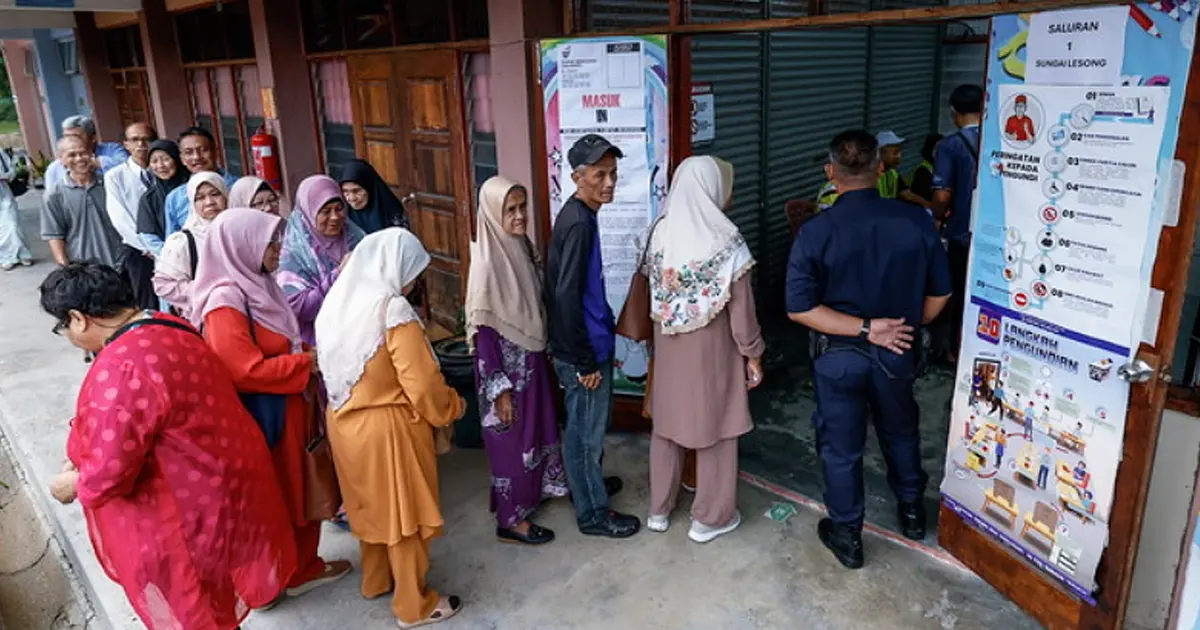
Malay voters risk experiencing significant emotional exhaustion over the persistent focus on 3R issues, according to a prominent academic observer tracking political trends in Malaysia. Awang Azman Pawi, a scholar at Universiti Malaya, has raised concerns about the sustainability of campaigns centred on these culturally and religiously charged topics, suggesting that sustained emphasis may ultimately alienate rather than energise the electorate they are designed to mobilise.
The concept of emotional fatigue in political discourse describes a phenomenon where repeated exposure to divisive or emotionally charged messaging gradually diminishes voter responsiveness and engagement. In the Malaysian context, this dynamic carries particular significance given the demographic weight and political sensitivity of Malay-Muslim communities in determining electoral outcomes. Awang Azman's observation reflects growing scholarly attention to how campaign strategies affect not merely voting behaviour but the broader health of democratic participation and social cohesion.
The analyst's assessment suggests that political parties competing for Malay support may find themselves caught in a strategic paradox. While 3R messaging—typically referring to religion, race, and royalty—has historically proven effective in mobilising core constituencies, over-reliance on these themes without substantive policy delivery risks breeding cynicism and disengagement. Voters repeatedly exposed to polarising rhetoric without corresponding improvements in their material circumstances may eventually withdraw from active political participation altogether, creating a legitimacy crisis for competing parties.
Awang Azman emphasises that the ultimate measure of political performance extends far beyond rhetorical positioning on sensitive issues. Parties seeking durable support among Malay voters will ultimately be evaluated on their tangible track record in addressing bread-and-butter concerns that dominate household conversations and daily financial planning. The sustained surge in living costs across Malaysia—affecting everything from food prices to housing, transportation, and utilities—has emerged as the primary anxiety shaping voter sentiment across demographic lines.
This observation carries implications extending beyond electoral strategy into questions of governance legitimacy. When parties attempt to sustain voter enthusiasm through appeals to identity and cultural concerns while simultaneously failing to manage inflation or provide relief from economic pressures, a credibility gap inevitably emerges. Malay voters, like all constituencies, navigate multiple concerns simultaneously and make holistic judgments about which party deserves their trust and support based on integrated assessments of performance.
The economic context amplifies the relevance of Awang Azman's warning. Malaysia's middle and working-class families, including substantial Malay communities in urban centres and rural areas alike, have experienced noticeable erosion of purchasing power over recent years. When political campaigns remain focused heavily on cultural and religious themes while economic hardship deepens, voters perceive a fundamental mismatch between campaign messaging and governance priorities that directly affect their lives and families.
Moreover, the emotional fatigue phenomenon may operate differently across generational and educational divides within Malay-Muslim communities. Younger, more educated voters appear increasingly skeptical of politics conducted primarily through identity appeals, viewing substantive policy proposals addressing education, employment, and economic opportunity as more relevant to their aspirations. This generational shift suggests that reliance on traditional 3R messaging may prove increasingly ineffective in securing support from emerging voter cohorts whose concerns are oriented toward career prospects, entrepreneurial opportunity, and quality of life improvements.
The analyst's perspective also illuminates strategic vulnerabilities in Malaysian politics at a moment of significant volatility. Parties that succeed in building and maintaining support typically combine appeals to voters' deeper values and identities with demonstrated competence in managing practical governance challenges. The most durable political coalitions historically have balanced these dimensions rather than emphasising one at the expense of the other. Parties that allow identity politics to overshadow economic management create openings for challengers to position themselves as more pragmatic and competent alternatives.
Awang Azman's comments arrive amid broader regional discussions about political sustainability in Southeast Asia's diverse democracies. Malaysia's experience with identity-based mobilisation offers instructive lessons about the limits of purely divisive campaign strategies, particularly as economic challenges persist and voter sophistication increases. Other regional democracies similarly grapple with balancing identity politics and governance performance, suggesting Malaysia's trajectory will influence broader patterns across Southeast Asia.
Looking forward, the analyst's warning implies that successful political parties competing for Malay support will need to develop more integrated campaign frameworks addressing both cultural concerns and economic challenges. Parties demonstrating concrete, measurable progress on cost-of-living issues while engaging seriously with questions of religious and cultural importance will likely prove more resilient and electorally formidable than those pursuing narrower, single-issue strategies. The Malay electorate, despite its political significance in Malaysian politics, fundamentally desires capable governance combined with respect for identity—not one at the expense of the other.

%22%2F%3E%3C%2Fpattern%3E%3C%2Fdefs%3E%3Crect%20width%3D%22100%25%22%20height%3D%22100%25%22%20fill%3D%22url(%23ph1ejxxg)%22%2F%3E%3Crect%20width%3D%22100%25%22%20height%3D%22100%25%22%20fill%3D%22url(%23ph1ejxxp)%22%2F%3E%3Ctext%20x%3D%2250%25%22%20y%3D%2250%25%22%20text-anchor%3D%22middle%22%20dominant-baseline%3D%22central%22%20fill%3D%22rgba(255%2C255%2C255%2C0.95)%22%20font-family%3D%22Georgia%2C%20'Times%20New%20Roman'%2C%20serif%22%20font-weight%3D%22700%22%20font-size%3D%22320%22%20letter-spacing%3D%22-0.02em%22%3EMMC%3C%2Ftext%3E%3C%2Fsvg%3E)