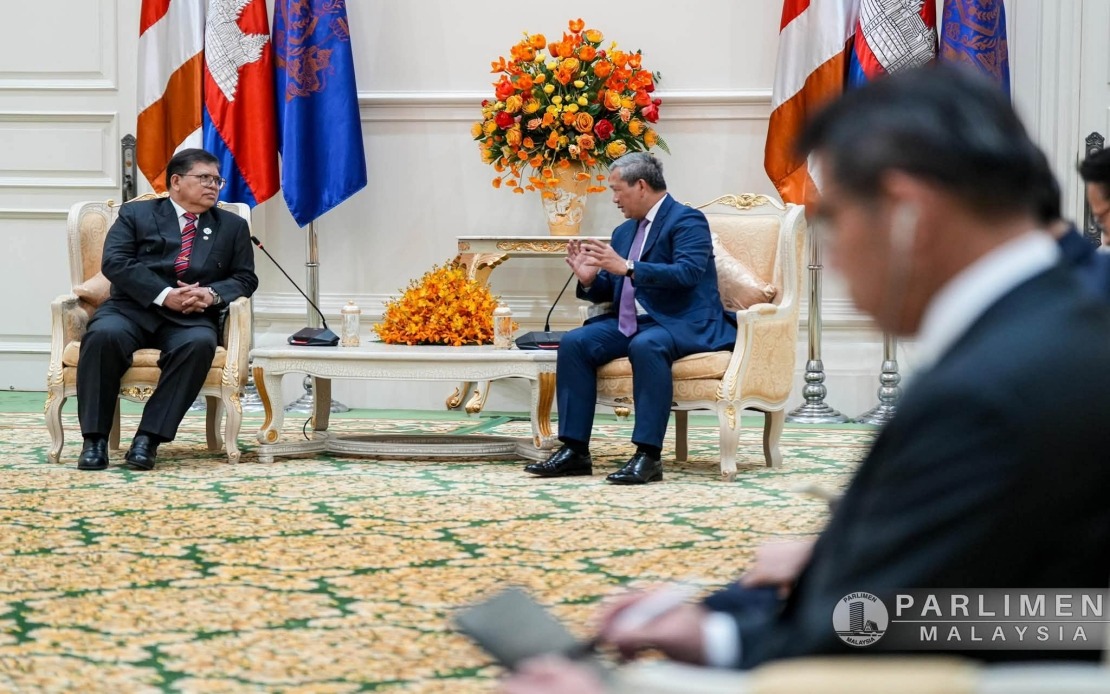
Malaysia's Dewan Rakyat Speaker Tan Sri Johari Abdul has stressed the critical importance of maintaining open dialogue and diplomatic channels in addressing the ongoing Cambodia-Thailand border situation, positioning negotiation and constructive engagement as the most viable pathways toward resolving tensions that could threaten broader regional peace. Speaking from Phnom Penh during the Second Inter-Parliamentary Speakers' Conference, Johari underscored Malaysia's commitment to supporting efforts that bring disputing parties back to the negotiating table, reflecting Kuala Lumpur's role as a stabilising force within Southeast Asia's multilateral framework.
The border dispute between Cambodia and Thailand has remained a persistent source of friction in the region, with periodic flare-ups threatening to destabilise not only bilateral relations but the cohesion of the entire Association of Southeast Asian Nations. Johari's intervention highlights Malaysia's diplomatic strategy of using high-level parliamentary engagement to reinforce messages about conflict resolution and regional responsibility. By addressing the matter during direct talks with Cambodian Prime Minister Hun Manet at the Inter-Parliamentary Speakers' Conference in Phnom Penh, the Malaysian Speaker demonstrated the utility of track-two diplomacy and parliamentary channels in maintaining communication between member states during periods of tension.
Central to Johari's position is the argument that bilateral disputes, if left unmanaged, can erode the foundational principles upon which ASEAN rests. The regional organisation has long functioned as a platform where member states build mutual trust, identify areas of common interest and manage disagreements through established protocols rather than confrontation. Johari emphasised that the Cambodia-Thailand border issue must not be allowed to undermine this spirit of togetherness and collective identity. This framing suggests that the resolution of such disputes transcends the immediate concerns of the two countries involved and carries implications for ASEAN's broader institutional credibility and effectiveness.
Johari also acknowledged the humanitarian dimensions of the border situation, noting that Malaysia understands Cambodia's concerns regarding the current circumstances and their tangible impact on residents living in affected border communities. This recognition of civilian suffering demonstrates a more nuanced approach to the dispute beyond purely diplomatic or strategic considerations. Border tensions inevitably impose real costs on ordinary people through restrictions on movement, economic disruption, and security concerns. By articulating sensitivity to these grassroots consequences, Malaysian leadership signals that any resolution must account for the welfare of affected populations, not merely the political interests of national governments.
During his engagement with Prime Minister Hun Manet, Johari reaffirmed Malaysia's readiness to support Cambodia's efforts in seeking peaceful resolution while simultaneously emphasising Malaysia's commitment to maintaining regional peace and stability. This dual-track approach allows Malaysia to express solidarity with Cambodia's position without appearing to take sides in a manner that could alienate Thailand or compromise Malaysia's role as a neutral mediator. Such balanced diplomacy has traditionally enabled Malaysia to exercise influence disproportionate to its size within ASEAN forums, as other member states often regard Malaysian interventions as relatively impartial and constructively motivated.
Beyond the immediate border question, the parliamentary meeting also provided an opportunity to strengthen bilateral ties between Malaysia and Cambodia across multiple dimensions. The two sides explored opportunities for deeper parliamentary cooperation, expanded economic engagement, and collaborative initiatives in human capital development. These broader relationship-building efforts serve an important function in regional diplomacy, as stronger bilateral foundations can facilitate more productive dialogue on contentious issues. When countries maintain robust economic, educational and cultural connections, they develop mutual stakes in stable relations that can help moderate tensions during disputes.
Youth engagement emerged as a significant priority in discussions between the Malaysian Speaker and Cambodian leadership. Johari advocated for expanding exchange programmes and creating additional opportunities for young people from both nations to build connections through economic participation, social interaction and parliamentary exposure. This intergenerational approach to diplomacy reflects recognition that sustainable peace requires cultivation of understanding and cooperative relationships among emerging leaders and younger populations who will shape regional relations in future decades. Such people-to-people connections can build constituencies for continued cooperation even when government-to-government relations face temporary strain.
The discussion also highlighted potential for expanded cooperation in Technical and Vocational Education and Training, an area where Malaysia possesses considerable expertise and institutional capacity. TVET collaboration through skills development programmes, institutional exchanges and industry partnerships offers concrete mechanisms for bilateral engagement that generate tangible benefits for both societies. These practical cooperation frameworks have the added advantage of being less politically sensitive than some other areas of engagement, allowing momentum to continue even during periods of diplomatic tension on higher-profile issues. Such technical cooperation can serve as a foundation upon which political relationships can be rebuilt if broader disputes require resolution.
Johari's acknowledgment of Cambodia's government role in facilitating Malaysian business operations and investments reflects the economic interdependence that increasingly characterises Southeast Asian relations. When Malaysian companies operate successfully in Cambodia and generate employment and economic activity, the stakes invested in stable bilateral relations increase on both sides. Business communities in both countries develop interests in maintaining peaceful, predictable operating environments. Johari's appreciation for Cambodia's business-friendly policies signals Malaysian interest in deepening these economic ties, which can reinforce diplomatic cooperation and create mutual interests in resolving disputes peacefully.
The Malaysian Speaker's broader message was that ASEAN's strength depends upon member states' willingness to prioritise negotiation, dialogue and constructive engagement over confrontation and escalation. This position reflects longstanding Malaysian diplomatic doctrine, which holds that regional stability and prosperity are best served through maintenance of peaceful relations and resolution of differences through established multilateral mechanisms. By consistently articulating these principles in high-level engagements, Malaysian leadership reinforces norms of behaviour that discourage unilateral action and militarised responses to border disputes.
Looking forward, Malaysia's continued emphasis on dialogue and diplomacy regarding the Cambodia-Thailand border situation indicates Kuala Lumpur's intention to remain actively engaged in supporting regional conflict resolution efforts. The willingness of parliamentary leaders to address such matters during international conferences demonstrates how ASEAN's various institutional mechanisms, including parliamentary bodies, contribute to broader peace and stability objectives. As tensions periodically arise along various borders within Southeast Asia, Malaysia's advocacy for negotiation-based approaches provides consistent messaging that regional norms favour peaceful resolution and diplomatic engagement as the preferred means of addressing disputes.
The convergence of diplomatic, economic and educational cooperation initiatives discussed between Malaysia and Cambodia illustrates how multifaceted engagement strategies can support political objectives. By developing connections across numerous domains, countries create multiple channels for communication and cooperation that can cushion the impact of disputes in any single area. This diversified approach to bilateral relations has enabled ASEAN to weather various crises and tensions over its nearly six decades of existence, and Malaysia's continued advocacy for such comprehensive engagement demonstrates appreciation for these dynamics in contemporary Southeast Asian diplomacy.

