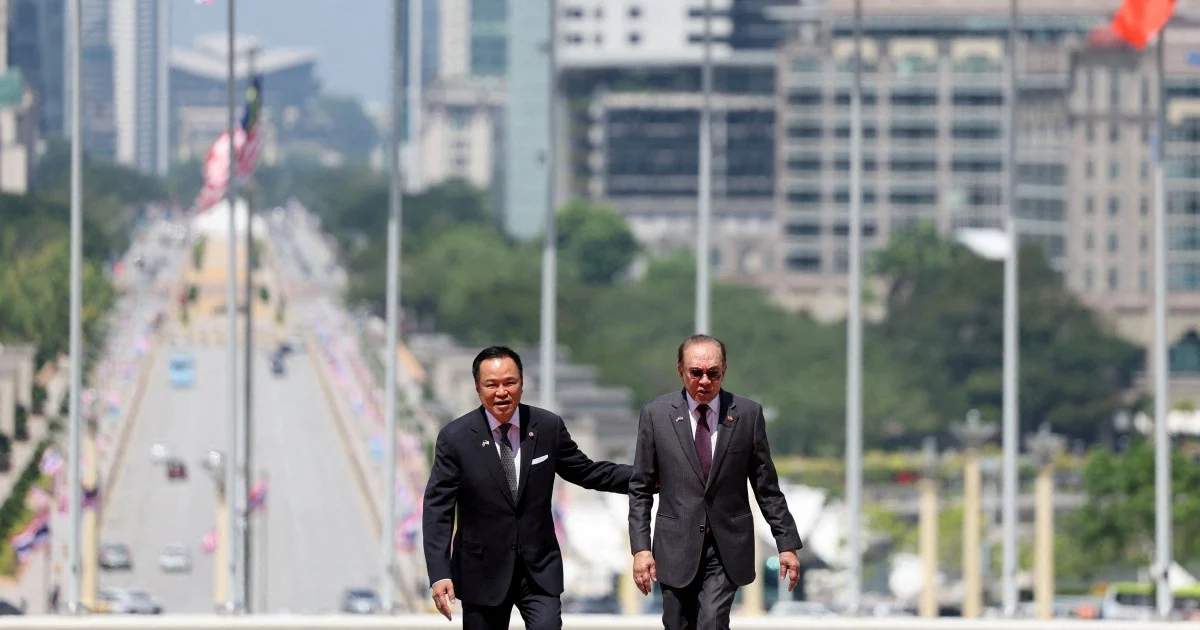
Malaysia is positioning itself as a voice for pragmatic conflict resolution in Southeast Asia, with Prime Minister Datuk Seri Anwar Ibrahim reiterating that the Myanmar humanitarian and political crisis cannot be addressed through exclusionary approaches. Speaking in Putrajaya, Anwar stressed that any meaningful path toward stability requires bringing all significant actors to the negotiating table, a stance that reflects Malaysia's broader regional leadership ambitions and its deep stakes in Myanmar's future.
The Prime Minister's emphasis on inclusive engagement represents a nuanced Malaysian position on the Myanmar question, one that moves beyond simplistic condemnation to address the complexity of the conflict. By insisting that all stakeholders must participate in dialogue, Anwar implicitly acknowledges that sustainable peace requires buy-in from military leadership, civilian political movements, ethnic armed organisations, and international partners. This approach differs from purely sanctions-based strategies pursued by Western nations and signals Malaysia's commitment to constructive engagement over isolation, a principle that has historically guided ASEAN's regional diplomacy.
For Malaysia specifically, the Myanmar crisis carries immediate consequences. Over 600,000 Rohingya refugees remain in camps across Bangladesh, with Malaysia having hosted tens of thousands of Myanmar's displaced populations. The continued instability in Myanmar threatens to perpetuate forced migration across Southeast Asia and destabilises the broader subregion. Malaysia's maritime borders and migrant populations make it vulnerable to spillover effects from Myanmar's internal conflicts, underscoring why Kuala Lumpur views resolution through dialogue as not merely a moral imperative but a strategic necessity.
Anwar's framework centring on the principle of self-determination for the Myanmar people carries symbolic weight within ASEAN discussions. By emphasising that Myanmar's population must ultimately decide their political future, the Prime Minister sidesteps both legitimacy questions around military rule and international pressure for regime change, instead anchoring the resolution process in democratic principle. This formulation allows Malaysia to maintain diplomatic relations across the international divide while advancing a conception of peace that prioritises local agency over external imposition.
The inclusive engagement approach also reflects Malaysia's assessment that excluding any major player—whether military-aligned interests, ethnic armed organisations, or pro-democracy forces—from dialogue creates incentives for continued conflict and makes enforcement of any agreement precarious. Historical experience across conflict zones demonstrates that agreements reached by only some parties typically unravel. Anwar's position suggests Malaysian policymakers believe that even actors currently opposing democratic transition can be brought toward compromise through structured dialogue that respects their core concerns.
Within the ASEAN context, Malaysia's stance positions the bloc as committed to the Five-Point Consensus adopted in 2021, which itself calls for cessation of violence, constructive engagement, and humanitarian assistance. However, implementation has stalled, with little visible progress on dialogue mechanisms. Anwar's reiteration of inclusive engagement may signal Malaysian frustration with this impasse and an attempt to revitalise the consensus framework by reasserting principles that partner nations officially endorse but have struggled to operationalise.
The emphasis on allowing Myanmar people to determine their future also carries implications for Malaysia's own advocacy regarding external pressure. Malaysian leadership has sometimes chafed at what it views as selective international condemnation based on geopolitical convenience. By grounding Myanmar resolution in democratic self-determination rather than external imposition of particular outcomes, Anwar articulates a position that resonates with principles Malaysia itself invokes when resisting international interference in domestic affairs.
From a humanitarian perspective, Malaysia's inclusive engagement framework creates space for addressing the immediate crisis—the displacement, violence, and economic collapse—even as longer-term political settlement remains elusive. By engaging all stakeholders in dialogue, Malaysia opens channels through which humanitarian access can be negotiated, ceasefires can be arranged, and the most acute suffering can be addressed. This sequential approach recognises that waiting for comprehensive political resolution before addressing humanitarian needs prolongs civilian suffering.
The international dimension also influences Malaysia's positioning. China maintains significant interests in Myanmar and has close military ties with the leadership, while the United States and Western allies back democratic transition. As a middle power and ASEAN chair for 2023, Malaysia has attempted to bridge this divide. Advocating for inclusive engagement that respects all parties' interests—without explicitly endorsing any particular political outcome—allows Malaysia to maintain productive relationships across these fault lines while advancing regional stability.
Moving forward, the success of Malaysia's approach depends on whether stakeholders can be convinced that inclusive dialogue serves their interests better than continued conflict or unilateral action. For Myanmar's military, dialogue offers legitimacy and a potential pathway to managed transition. For democratic forces, it provides a vehicle for advocacy and influence. For ethnic armed organisations, it promises recognition of grievances and a seat at the table. For ASEAN and Malaysia specifically, inclusive engagement offers the most realistic avenue toward the stability necessary for addressing humanitarian crises and preventing further regional destabilisation. Whether these incentives prove sufficient to move from dialogue frameworks to substantive negotiation remains the critical question facing Malaysia's Myanmar policy.

