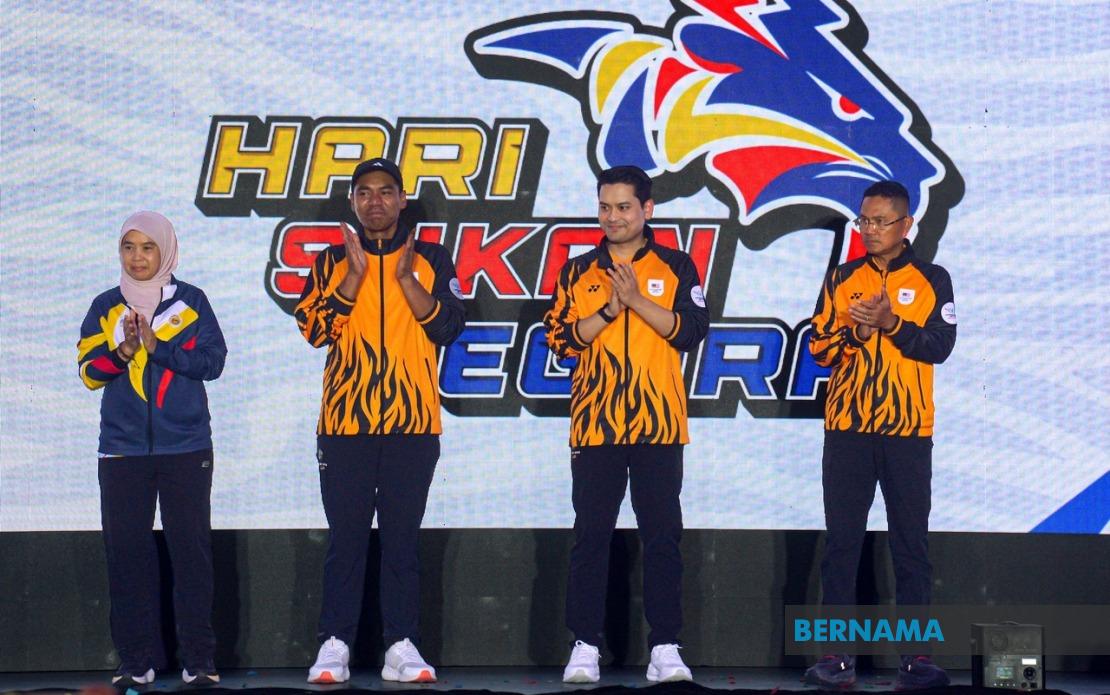
Malaysia's Youth and Sports Minister Dr Mohammed Taufiq Johari has unveiled an ambitious vision for the 2026 National Sports Day (HSN), aiming to mobilise participation from more than 5.3 million Malaysians across a three-day celebration scheduled for October 9 to 11. The initiative represents a significant escalation in the government's ambitions for the annual sports festival, with activities spanning district, state and national tiers throughout the country.
This year's edition marks a departure from previous iterations through its thematic focus on Digital Technology and Artificial Intelligence. Rather than treating these domains as separate from sport, the ministry is positioning them as integral components of Malaysia's broader sports development strategy. The approach reflects growing recognition that technological integration can enhance athletic performance, spectator engagement and accessibility for participants across all age groups and ability levels.
A particularly innovative element underpinning this year's celebrations involves the deployment of virtual reality technology at the pre-launch event itself. By showcasing VR applications early in the promotional cycle, the ministry aims to signal its commitment to modernising how Malaysians experience and engage with sports. This technologically-forward presentation underscores the government's intent to position the nation as a contemporary, digitally-savvy sporting nation rather than one relying on traditional promotional methods.
Dr Mohammed Taufiq articulated a nuanced philosophy regarding the intersection of gaming and physical health. E-sports, conventionally perceived as sedentary, are being reframed within a holistic wellness narrative. The ministry's position acknowledges that video gaming represents a legitimate competitive sphere while simultaneously advocating that participants in digital sports maintain physical activity regimens. This dual emphasis signals recognition that modern sport encompasses diverse modalities and that the government must accommodate evolving definitions of athletic engagement.
The national-level culmination of HSN 2026 will occur on October 10 at the National Stadium in Bukit Jalil, where Prime Minister Datuk Seri Anwar Ibrahim will officiate proceedings. This high-level ceremonial endorsement underscores the political importance attached to sports development within the government's broader policy agenda. The participation of the nation's chief executive signals that sporting initiatives transcend recreational concerns and form part of wider governance priorities.
Importantly, HSN 2026 functions as a strategic bridge toward Malaysia's hosting of the 2027 SEA Games. By channelling enthusiasm and participation through the National Sports Day framework, the government seeks to build domestic momentum and public investment in regional sporting excellence. The ministry is coordinating closely with the Malaysia SEA Games Organising Committee to orchestrate a SEA Games Roadshow during the HSN period, effectively creating a dual-benefit promotional campaign that builds grassroots support whilst maintaining focus on the flagship regional competition.
The programmatic components reflect a comprehensive approach to sports democratisation. The MADANI Fun Run and MADANI Fun Walk initiatives signal that HSN 2026 prioritises accessibility and mass participation over elite athletic performance alone. These activities inherently invite participation from demographics typically underrepresented in competitive sporting frameworks, including elderly citizens, individuals with mobility considerations and families seeking collective recreational engagement.
The Active Malaysia and Sports Industry segments represent efforts to construct a broader ecosystem supporting sports participation beyond government initiatives. By incorporating Rakan Muda Lifestyle elements, the ministry acknowledges that youth engagement constitutes a critical demographic for building sustainable sporting culture. Young Malaysians represent the potential foundation for long-term sports participation patterns and can serve as multipliers transmitting enthusiasm to families and communities.
For Malaysian sports development broadly, this approach reflects evolving policy philosophy. Rather than compartmentalising sport as an isolated sector, the government increasingly situates athletic engagement within digital transformation and artificial intelligence paradigms. This integration positions sports as a vehicle for broader technological adoption and demonstrates how sector-specific initiatives can advance cross-cutting government objectives around digitalisation and economic modernisation.
The 5.3 million participation target, whilst ambitious, reflects confidence in the government's capacity to mobilise citizens through coordinated district and state-level programming. Such figures suggest that organisers perceive HSN as capable of achieving genuine mass mobilisation rather than merely constituting ceremonial events concentrated in urban centres. Successfully achieving this target would represent significant progress toward normalising sports participation across Malaysia's geographically and demographically diverse population.
Looking forward, HSN 2026 represents an inflection point for Malaysian sports policy. The emphasis on technological integration, combined with sustained focus on mass participation and the strategic proximity to the 2027 SEA Games, suggests the government is attempting to construct a coherent sports development narrative spanning grassroots participation, technological modernisation and regional competitive ambition. Whether this multifaceted approach successfully translates into sustained behavioural change among Malaysian populations remains an open question.

