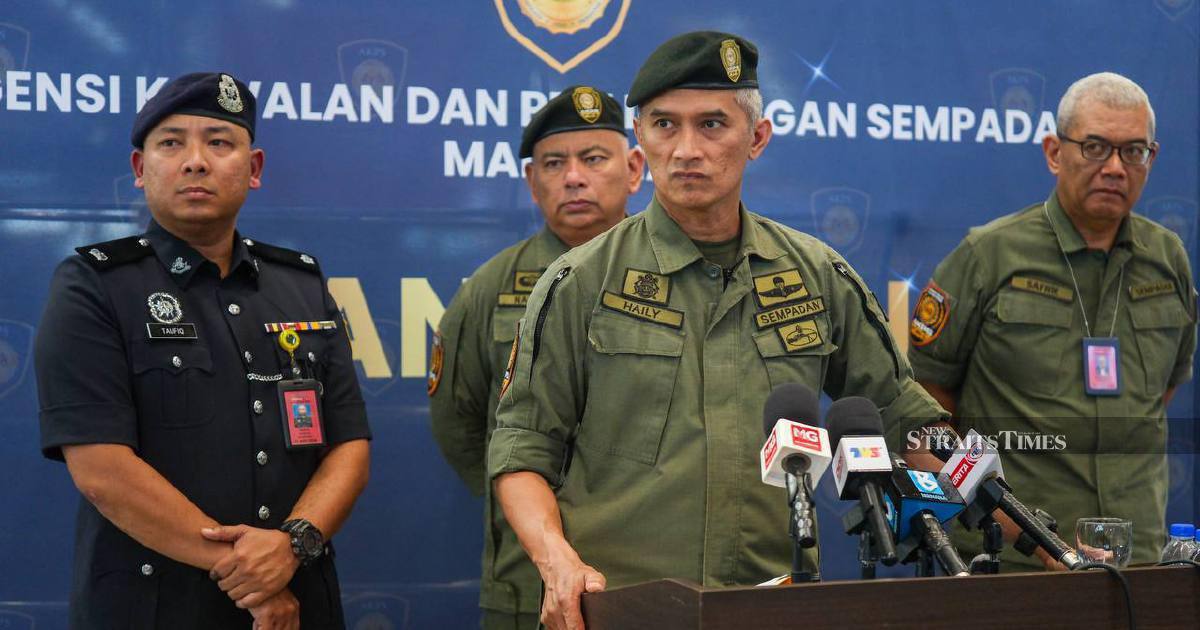
Malaysia's border control agency has defended its screening operations following the arrest of a Malaysia Airlines pilot in Indonesia on allegations of attempted drug trafficking, asserting that all prescribed standard operating procedures were rigorously observed during the baggage examination process. The statement came as the case drew scrutiny regarding the effectiveness of Malaysia's aviation security protocols and passenger vetting mechanisms at international departure points.
The detained pilot, identified as operating under Malaysia Airlines, faced Indonesian law enforcement after authorities in that country allegedly uncovered prohibited substances during a separate inspection. The incident has raised questions about the coordination between Malaysian and Indonesian border security agencies and whether existing detection systems adequately identify potential violations before passengers transit to neighbouring countries.
The Malaysian aviation sector remains one of Asia's most significant transportation hubs, processing thousands of personnel and passengers daily across multiple airports. Sepang, home to Kuala Lumpur International Airport, represents one of the nation's busiest international gateways. When security lapses or enforcement questions emerge, they carry implications not only for Malaysia's reputation as a transit hub but also for regional aviation standards and mutual cooperation frameworks between ASEAN nations.
According to Malaysian authorities, the baggage scanning systems utilised at the relevant departure point operated as designed, with artificial intelligence-assisted detection equipment functioning within normal parameters. These automated systems, increasingly deployed across major airports globally, are engineered to identify anomalies in luggage contents that warrant further physical inspection. The technology flagged no irregularities in this particular instance, officials confirmed.
The reliance on AI-assisted screening represents a contemporary approach to managing the massive volume of passenger baggage processed at international airports. However, the case illustrates a broader challenge: automated systems can only highlight suspicious patterns within their programmed detection thresholds, and determined individuals may attempt to circumvent detection through packaging methods or concealment techniques specifically designed to evade scanning equipment.
Customs and immigration officials conducting secondary inspections rely on training, experience, and random sampling protocols to catch items missed by technology. The Malaysian authorities' statement that all SOPs were followed suggests that the burden did not fall solely on automated detection but that human verification steps were also completed according to established guidelines. This distinction matters when assessing whether any procedural breakdown occurred at the Malaysian departure point.
The timing of the arrest in Indonesia rather than Malaysia raises questions about inter-agency intelligence sharing and whether either nation's authorities possessed advance information about the suspect. Regional cooperation frameworks, including ASEAN agreements on law enforcement coordination, theoretically enable such information exchange, but enforcement effectiveness varies considerably. The case may prompt Malaysian authorities to review communication protocols with neighbouring countries, particularly regarding aviation personnel who maintain cross-border operational patterns.
For Malaysia Airlines and other carriers operating from Malaysian airports, the incident presents operational and reputational considerations. Airlines bear secondary responsibility for crew member conduct and are increasingly subject to enhanced background checks and periodic security vetting. The pilot's credentials and history presumably underwent standard airline security processes, yet these do not necessarily encompass the same screening intensity as law enforcement investigations conducted after suspicious activity has been identified.
Regionally, the case reflects ongoing challenges that ASEAN nations face in harmonising airport security standards and enforcement approaches. While major hubs like Kuala Lumpur, Bangkok, and Singapore maintain sophisticated screening infrastructure, consistency across the region remains variable. The transnational nature of aviation means that vulnerabilities at any airport can affect regional security. Drug trafficking through airport networks remains a persistent concern for Southeast Asian law enforcement agencies, with both pharmaceutical and recreational substances representing significant contraband targets.
The investigation into how the substances allegedly reached the pilot and what destination or distribution network was intended will likely emerge as more information surfaces through Indonesian legal proceedings. Such investigations frequently reveal broader smuggling operations rather than isolated individual incidents. If the case involves organised networks, it could trigger enhanced cooperation protocols or intelligence-sharing initiatives between Malaysia and Indonesia focused specifically on aviation security threats.
Malaysia's assertion that screening protocols were properly executed does not necessarily resolve questions about whether those protocols remain adequately stringent given evolving smuggling methods and the particular vulnerabilities of aviation personnel. Crew members, pilots, and ground staff often enjoy certain access privileges that general passengers do not, making them potentially attractive targets for criminal recruitment. Enhanced background monitoring or periodic re-screening of aviation personnel represents one potential response to such vulnerabilities, though implementation raises operational and privacy considerations.
The broader implications for Malaysian aviation's standing within international aviation networks depend partly on how thoroughly the incident is investigated and whether findings indicate systemic weaknesses or merely individual criminal behaviour. Regulatory bodies monitoring Malaysian airport operations will assess whether the case warrants additional scrutiny or enhanced security measures. For travellers and the industry, confidence in Malaysian airport security ultimately rests on demonstrated competence across multiple screening layers and transparent handling of incidents when they occur.

