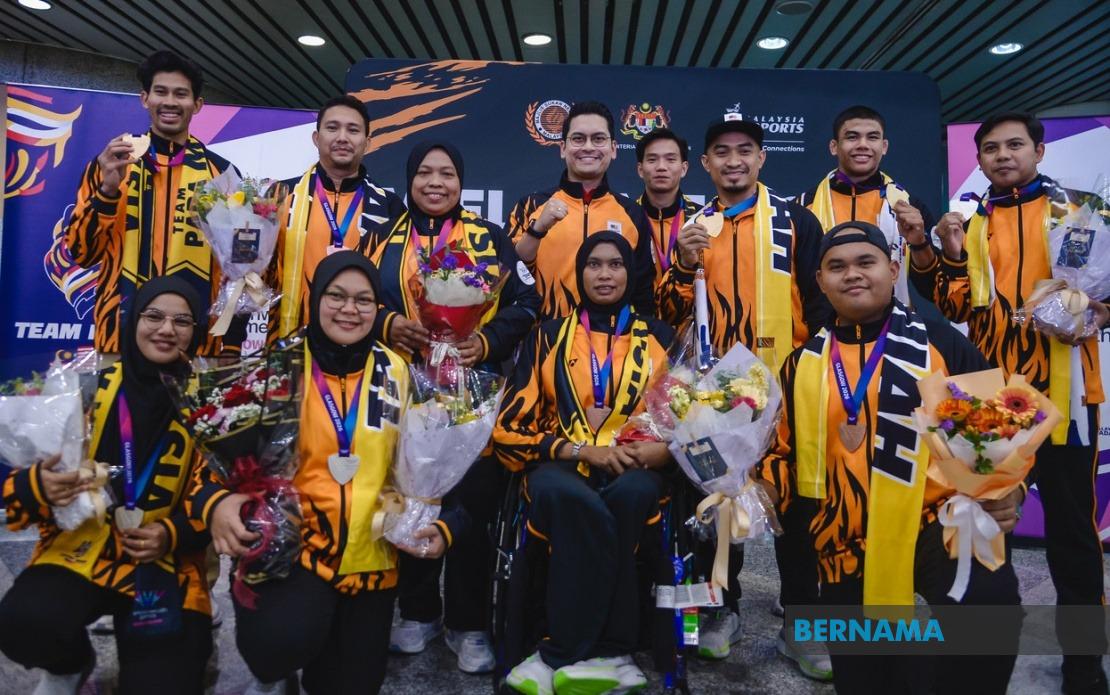
Malaysia's government has committed RM1.1 million to reward athletes who secured medals at the Glasgow 2026 Commonwealth Games, drawing on funds allocated through the National Sports Incentive Scheme (SHAKAM). The financial recognition represents an attempt to acknowledge the dedication and national pride generated by medal-winning performances, with Youth and Sports Minister Dr. Mohammed Taufiq Johari making the announcement during a welcoming ceremony for returning athletes at Kuala Lumpur International Airport.
The reward structure follows a tiered approach aligned with medal classification. Gold medalists will receive RM80,000, with an additional RM10,000 bonus available to those who establish new games records. Silver medallists qualify for RM40,000, whilst bronze medal winners receive RM20,000. This incentive framework is designed to create tangible recognition of achievement across all medal categories, though discussions are underway between the National Sports Council and corporate partners to potentially expand the monetary allocations through supplementary funding sources.
Malaysia's Glasgow 2026 performance yielded eight gold, three silver, and five bronze medals—a result that exceeded the initial target of five gold medals and represents one of the nation's strongest Commonwealth Games showings since 2010. This outcome is particularly notable given that the Malaysian contingent was smaller in size compared to previous Games editions, suggesting improved competitive efficiency and strategic focus. The success has been attributed partly to a revised ministry approach that emphasises colour-based medal targets, shifting away from aggregate medal counting toward specific pursuit of gold.
Dr. Mohammed Taufiq characterised the shift to gold-focused targeting as a deliberate strategic pivot designed to inject fresh motivation into the athlete development pipeline. Rather than spreading efforts across multiple medal colours, the approach concentrates preparation and training resources on maximising gold medal prospects. This methodology initially raised concerns about whether such pressure would negatively affect athlete performance, but the Glasgow results suggest the strategy instead galvanised athletes and coaching staff, providing psychological reinforcement rather than constraint.
The gold-targeting approach holds broader significance for Malaysian sports ambitions beyond Commonwealth competition. The minister framed the Glasgow success as a foundational step toward achieving Malaysia's long-standing objective of winning an Olympic gold medal. By institutionalising colour-based targets across international sporting events, the ministry seeks to cultivate a medal-winning culture and competitive mentality that extends beyond Commonwealth Games into the Olympic cycle. Future Games competitions will continue employing this framework, with gold medals as the primary focus.
The decision to adopt colour-based targets emerged from extensive consultation with national sports associations, coaching networks, and athletes themselves. This collaborative foundation was designed to ensure buy-in from the sporting community and to ground targets in realistic assessment of competitive capabilities. Rather than imposing targets from administrative offices, the ministry sought input from individuals closest to training environments and performance conditions, lending credibility to the framework and increasing likelihood of successful implementation.
Datak Awalan Abdul Aziz, Chef de Mission for the Glasgow contingent and President of the Malaysian Lawn Bowls Federation, provided additional perspective on targeting methodology. He noted that whilst the lawn bowls team aspired internally to gold medal success, official targets were deliberately set to avoid creating counterproductive pressure on competitors. The team ultimately delivered two silver and two bronze medals in Glasgow—a substantial improvement over the single silver and single bronze achieved at Birmingham 2022. This incremental progress demonstrates how recalibrated expectations, when combined with improved preparation and athlete development, can yield measurable gains.
For Malaysian readers and the Southeast Asian sporting community, this allocation and strategic approach carry several implications. First, the commitment of RM1.1 million signals government determination to invest in medal-winning athletes, a message likely to resonate through sports development pipelines and potentially encourage young athletes to pursue competitive careers. Second, the revised targeting methodology may influence how other Southeast Asian nations structure their own sports incentive schemes, as the approach demonstrates potential effectiveness. Third, the Glasgow success, achieved with a smaller contingent, suggests that quality training infrastructure and targeted athlete selection may yield better results than simply maximising team size.
The potential expansion of SHAKAM rewards through corporate partnership funding introduces another dimension relevant to Malaysian stakeholders. As the National Sports Council pursues additional financial contributions from the private sector, it establishes precedent for corporate involvement in athlete recognition and incentive schemes. This public-private collaboration model could expand opportunities for athletes whilst distributing funding burdens more broadly across the economy. Malaysian corporations increasingly recognise sports sponsorship as both social responsibility and marketing opportunity, making such partnerships strategically viable.
The Glasgow 2026 campaign represents a notable inflection point in Malaysian Commonwealth Games strategy and broader Olympic aspirations. By emphasising gold medal achievement and demonstrating competitive success with constrained resources, the ministry has created both practical success and psychological momentum for future competitions. The athlete welcome ceremony at KLIA itself functioned as public recognition and celebration, extending the rewards beyond financial terms to include national acknowledgement and media attention. This multifaceted approach—combining cash incentives, strategic targeting, athlete consultation, and public celebration—reflects contemporary best practices in sports management and competitive development.
Looking ahead, the sustainability of this approach depends on continued government funding, corporate partnership development, and most importantly, the ability of athlete development systems to consistently produce gold medal competitors. The RM1.1 million allocation and accompanying strategic framework represent initial investments in building a medal-winning culture. Whether Malaysia can maintain and expand this trajectory through subsequent Commonwealth Games and Olympic cycles will determine whether Glasgow 2026 marks a temporary peak or the beginning of sustained competitive excellence.

