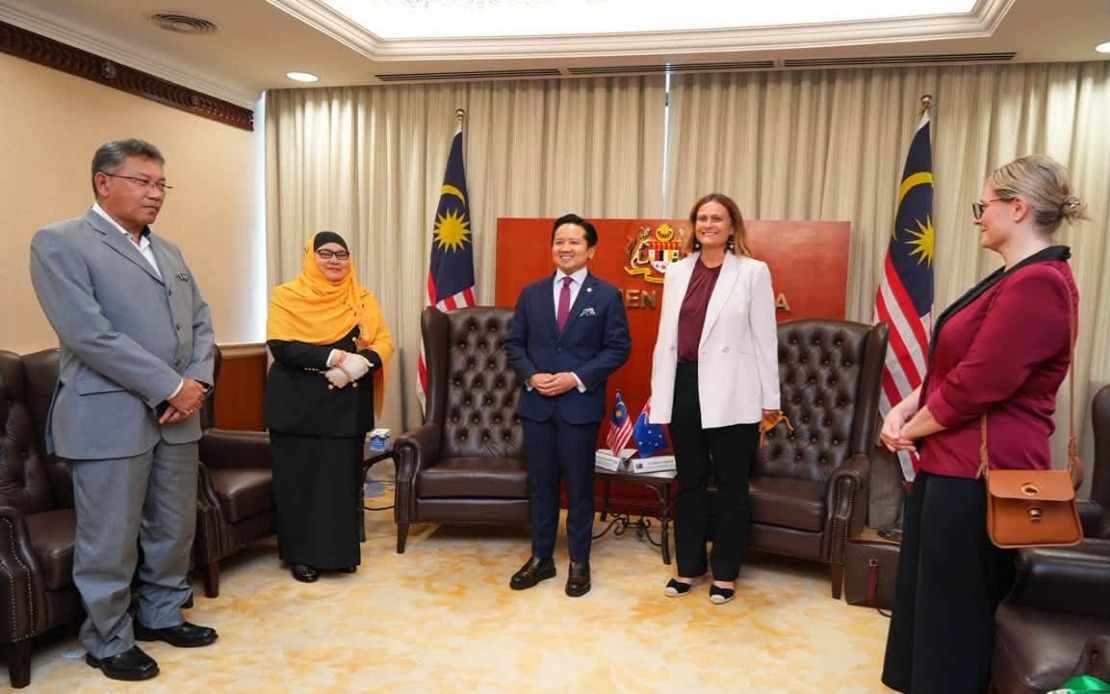
Malaysia is positioning itself as a potential hub for rare earth elements and critical minerals processing in partnership with Australia, signalling an ambitious shift toward capturing greater value from the region's mineral wealth. The two countries confirmed their intention to deepen cooperation during high-level talks between Natural Resources and Environmental Sustainability Minister Datuk Seri Arthur Joseph Kurup and Australian High Commissioner to Malaysia Danielle Heinecke at Parliament House, with discussions centring on building a comprehensive domestic value chain that extends beyond raw material extraction to advanced manufacturing.
The strategic focus on neodymium magnet production represents a particularly significant development for Malaysia's economic trajectory. Neodymium magnets are essential components in electric vehicle motors, wind turbines, and renewable energy systems that are expected to drive global demand over the coming decades. By developing indigenous manufacturing capacity rather than simply exporting raw materials, Malaysia could capture substantially higher profit margins and create skilled employment opportunities across the country. This vertical integration strategy aligns with global trends toward supply chain resilience, as major economies seek alternatives to heavy dependence on Chinese processing dominance.
Australia's technical expertise and established track record in the critical minerals sector make it an ideal collaborative partner for Malaysia's ambitions under the National Mineral Policy 3. Australia has invested heavily in downstream processing capabilities and has developed sophisticated methodologies for managing the environmental complexities associated with rare earth extraction and refinement. By tapping into this knowledge base, Malaysia can accelerate its own capability development while learning from Australia's experience managing both the technical and regulatory challenges in this demanding sector.
A particularly pressing technical matter addressed in the discussions involves neutralisation underflow residue, or NUF, a hazardous byproduct of rare earth processing. The management of this residue is critical to any sustainable rare earth operation, as improper handling can result in severe environmental contamination and regulatory penalties. Malaysia's willingness to partner with Australia on best practices in handling such residues demonstrates a commitment to developing its processing sector responsibly rather than simply replicating the environmental mistakes of earlier industrial eras. This approach could position Malaysian operations as cleaner and more sustainable alternatives to existing regional competitors.
The partnership framework builds upon the Malaysia-Australia Comprehensive Strategic Partnership established in 2021, indicating that rare earth cooperation is being embedded within a broader bilateral relationship rather than treated as an isolated transaction. This structural integration suggests longevity and mutual commitment beyond short-term commercial considerations. The expansion of cooperation beyond minerals into hazardous waste management, marine conservation, and climate financing demonstrates how Malaysia and Australia view themselves as aligned on sustainability challenges that increasingly shape investment decisions and trade relationships globally.
For Malaysian policymakers, developing a competitive rare earth value chain carries significant strategic implications. The country currently hosts major rare earth processing operations, but much of the value-added manufacturing occurs elsewhere. By deliberately building neodymium magnet production and other downstream capabilities domestically, Malaysia can reduce income leakage and build industrial ecosystems that attract complementary investments in related sectors. Electronics manufacturers, automotive suppliers, and renewable energy companies may be incentivised to locate facilities near magnet producers, creating multiplier effects throughout the economy.
The climate financing dimension of the talks deserves particular attention as Malaysia prepares for its commitments under COP31. Rare earth elements are fundamental to the global energy transition, making their sustainable production a climate imperative rather than merely an economic opportunity. Green-focused climate finance mechanisms increasingly favour investments in sustainable critical mineral supply chains, potentially opening funding pathways for Malaysian projects that meet rigorous environmental standards. This convergence of climate objectives and industrial development could unlock capital that might otherwise be unavailable for conventional mineral processing ventures.
For Southeast Asian regional dynamics, Malaysia's emerging leadership in rare earth processing could reshape supply chain geography. Currently, supply chain concentration poses risks for manufacturers throughout the region dependent on critical minerals. By developing robust domestic processing capacity through partnerships like the one with Australia, Malaysia offers neighbouring countries more diverse sourcing options and reduces regional vulnerability to external supply disruptions. This could strengthen Malaysia's economic diplomacy and position the country as a essential node in Asia-Pacific critical mineral networks.
The environmental stewardship dimension cannot be overstated in assessing the true long-term viability of this partnership. Past rare earth mining operations have left legacies of environmental damage and community harm in various jurisdictions. Malaysia's explicit commitment to learning from Australia's best practices in managing processing residues and environmental impacts suggests that policymakers are determined to avoid repeating those mistakes. This conscious approach to sustainability may actually confer competitive advantages, as global manufacturers increasingly scrutinise their supply chains for environmental compliance and ethical sourcing.
Moving forward, the practical implementation of these cooperation commitments will determine whether the partnership generates genuine economic transformation or remains largely aspirational. Malaysia will need to invest in technical training programmes, research infrastructure, and potentially subsidies or incentives to attract international magnet manufacturers. Australia's willingness to share expertise should be complemented by Malaysian regulatory clarity and long-term policy stability that gives investors confidence in the sector's direction.

