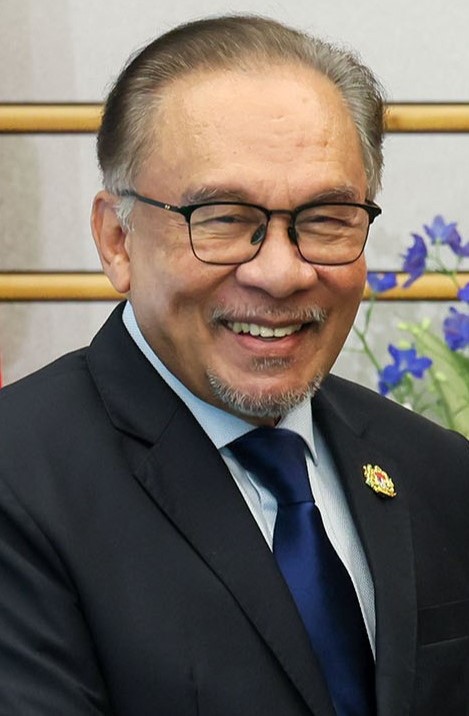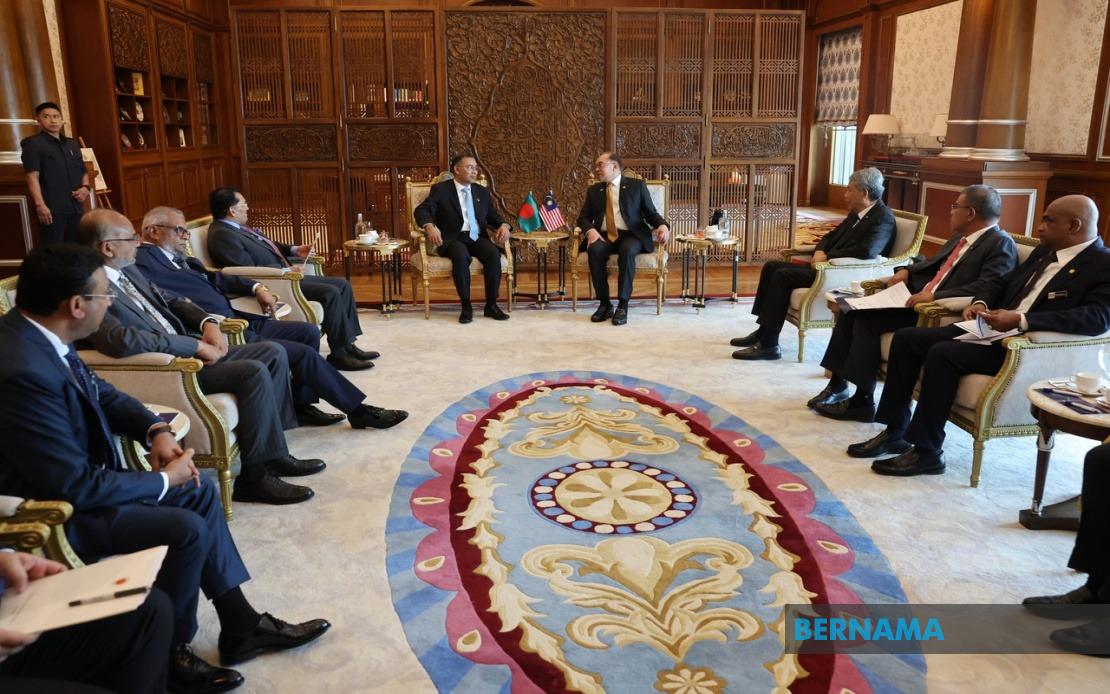
Prime Minister Datuk Seri Anwar Ibrahim and Bangladesh Prime Minister Tarique Rahman have committed to leveraging ASEAN frameworks to forge a sustainable resolution to the Rohingya refugee crisis, one of the region's most intractable humanitarian challenges. During their joint press conference in Putrajaya on June 22, the two leaders underscored their mutual determination to tackle a problem that has directly affected both nations, with hundreds of thousands of displaced Rohingya populations currently sheltering in Bangladesh and Malaysia awaiting repatriation to their homeland in Myanmar.
Anwar emphasised that Malaysia and Bangladesh share a profound responsibility to address the deteriorating circumstances faced by the Rohingya diaspora. He outlined a strategic approach centred on bilateral diplomacy and multilateral engagement, signalling that the two nations would utilise their respective foreign ministries and ASEAN's established mechanisms to pursue dialogue with Myanmar's leadership. This diplomatic strategy reflects a recognition that durable solutions require sustained engagement with the government in Naypyidaw, the source of the refugee outflows that have strained neighbouring states since 2017.
The initiative carries particular significance for Malaysia, which hosts one of Southeast Asia's largest Rohingya populations outside Bangladesh. For over six years, Malaysia has grappled with the complex challenge of managing a refugee influx that has tested infrastructure, social services, and community resources whilst simultaneously maintaining humanitarian commitments. By anchoring discussions within ASEAN structures rather than pursuing bilateral channels alone, Malaysia signals its preference for a regional consensus-building approach that could leverage the bloc's diplomatic weight and collective influence over Myanmar.
Bangladesh Prime Minister Tarique Rahman articulated his nation's profound apprehension regarding the humanitarian dimensions of the crisis affecting the Rohingya sheltered within its borders. His expression of gratitude towards Malaysia acknowledged the latter's material and diplomatic support for advancing conditions that might eventually permit Rohingya populations to return to Myanmar with dignity and security. Bangladesh has absorbed approximately 900,000 Rohingya refugees, straining its already limited resources and creating unprecedented pressure on Cox's Bazar district, which has become the world's largest refugee settlement.
The bilateral meeting extended beyond the Rohingya question, addressing the broader canvas of Malaysia-Bangladesh economic and strategic relations. The two leaders examined prospects for deepening cooperation across critical sectors including trade, investment, human resources, semiconductor manufacturing, energy infrastructure, agricultural development, and educational exchanges. This comprehensive agenda reflects recognition that regional stability and prosperity depend on multifaceted partnerships that transcend any single issue, however pressing.
Tarique's visit constitutes his inaugural official bilateral journey since assuming the Bangladesh premiership in February 2026, underscoring the diplomatic weight Malaysia carries in Dhaka's foreign policy calculations. The visit also marks an opportunity to reset and recalibrate Malaysia-Bangladesh relations following domestic political transitions in Bangladesh. The choice of Malaysia as the destination for this inaugural overseas visit signals Bangladesh's commitment to strengthening ties with ASEAN members and positioning itself as a constructive partner in regional architecture.
The two governments formalised their strengthened partnership through several institutional frameworks. They exchanged a Memorandum of Understanding addressing cultural cooperation, establishing mechanisms for educational and cultural exchanges that can deepen people-to-people connections. Additionally, they signed two Exchanges of Notes pertaining to counter-terrorism research collaboration and investment promotion, dimensions that reflect contemporary security concerns and economic aspirations within the region.
Bilateral trade relations between the nations have expanded substantially, reaching RM12.18 billion in 2025, equivalent to approximately USD2.84 billion. Malaysian exports to Bangladesh totalled RM10.08 billion, primarily driven by petroleum products that supply Bangladesh's growing energy demand. Conversely, Malaysian imports from Bangladesh amounted to RM2.10 billion, comprising predominantly textiles, apparel, and footwear manufactures. Bangladesh ranked as Malaysia's 28th largest trading partner globally and second most significant partner within South Asia after India, reflecting both nations' recognition of complementary economic strengths.
The ASEAN-centred approach to Rohingya resolution carries both promise and limitations. Whilst ASEAN's non-interference principle and consensus-based decision-making framework provide diplomatic space for sustained dialogue, they also constrain the bloc's capacity for forceful intervention or pressure. Myanmar's position within ASEAN structures—notwithstanding international criticism of its military governance—means that consensus-building requires accommodation of Naypyidaw's perspectives and interests, potentially limiting the scope of multilateral pressure.
For Malaysian policymakers, the emphasis on ASEAN mechanisms reflects pragmatic recognition that sustainable Rohingya repatriation depends fundamentally on Myanmar's willingness to facilitate return and reintegration. This necessitates confidence-building measures, security assurances, and possibly international support for reconstruction efforts in Rakhine State. Malaysia's diplomatic engagement through ASEAN can contribute to creating conditions where Myanmar may view repatriation as preferable to indefinite hosting of displaced populations in neighbouring countries.
The Bangladesh component of the Rohingya crisis remains extraordinarily difficult, with repatriation prospects contingent on Myanmar demonstrating meaningful changes to the governance and security arrangements that precipitated the 2017 exodus. Tarique's emphasis on safe, dignified, and sustainable repatriation acknowledges that purely humanitarian considerations cannot override fundamental questions of security and political status for prospective returnees. Bangladesh seeks international support for this process whilst simultaneously managing legitimate domestic pressures regarding the strain imposed by prolonged refugee hosting.
Moving forward, the Malaysia-Bangladesh cooperation framework suggests a patient, institutionalised approach to Rohingya resolution rather than rapid breakthroughs. By embedding discussions within ASEAN mechanisms and complementing them with bilateral engagement, both nations position themselves to sustain diplomatic efforts across multiple administrations and shifting political circumstances. The approach acknowledges that refugee crises of this magnitude require sustained, multifaceted strategies combining diplomatic pressure, humanitarian assistance, and international coordination.