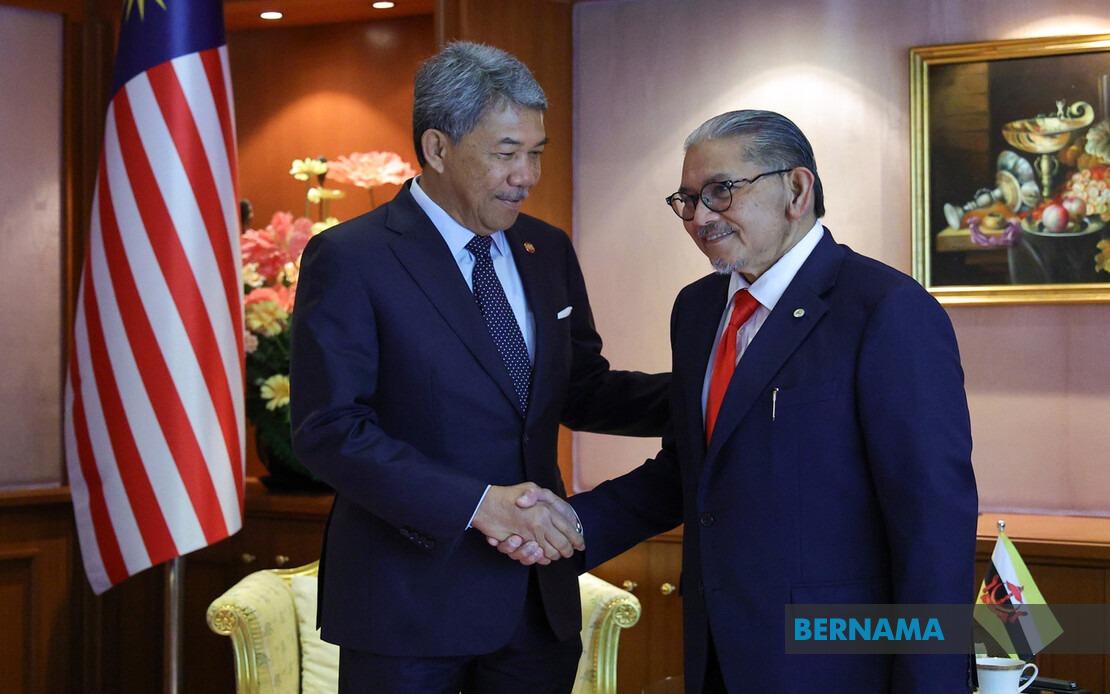
Malaysia and Brunei are moving forward with substantive cooperation on multiple fronts, marking steady progress in their long-standing bilateral relationship. The two neighbours convened the 27th Meeting on the Implementation of the Exchange of Letters in Bandar Seri Begawan, where Malaysian Foreign Minister Datuk Seri Mohamad Hasan and Brunei Second Minister of Foreign Affairs Datuk Seri Setia Erywan Mohd Yusof jointly chaired discussions spanning boundary issues, regional mobility, and emergency response capabilities.
The meeting addresses fundamental aspects of cross-border administration that underpin stable relations between neighbouring states. Land and maritime boundaries remain central to the agenda, reflecting the complexities that naturally arise when two nations share terrestrial and sea borders. Rather than treating these as contentious issues, both governments have adopted a collaborative approach centred on technical precision and mutual agreement, signalling maturity in their diplomatic engagement.
A significant milestone emerged from the discussions: the two countries have completed approximately 50 per cent of the boundary demarcation process. This figure represents concrete progress rather than mere diplomatic rhetoric, though the extended timeline suggests the undertaking's technical difficulty. The demarcation exercise differs fundamentally from simply acknowledging existing boundaries; it involves meticulous on-ground surveying and coordinate verification to account for geographical variations, terrain changes, and the complex realities of shared borderlands.
Malaysia's foreign minister clarified that the demarcation initiative operates within the framework of the 2009 Terms of Reference, providing the legal and procedural scaffolding for the technical committees working on-site. This adherence to established agreements demonstrates both nations' commitment to rule-based engagement and suggests that any disputes are being resolved through predetermined mechanisms rather than ad hoc negotiations. The technical committees will eventually submit comprehensive reports documenting their findings and recommendations, which both governments will then harmonise into final demarcated boundaries.
Beyond territorial matters, the dialogue encompassed practical mechanisms for facilitating movement between the two nations and their shared neighbours. The establishment of a Search and Rescue mechanism represents a security-focused initiative with significant implications for regional safety. Both countries plan to formalise this cooperation through a memorandum of understanding, institutionalising emergency response protocols and ensuring coordinated action in maritime incidents, natural disasters, or humanitarian emergencies affecting either jurisdiction.
The expansion of facilitated movement for citizens of Brunei, Sarawak, and Sabah addresses the economic and social realities of a region where communities often share cultural ties, commercial interests, and family connections transcending political boundaries. Enhanced mobility provisions can stimulate cross-border trade, facilitate labour movement, and strengthen people-to-people connections, particularly important for the less densely populated regions of Malaysian Borneo where Brunei represents both a neighbouring economy and a potential partner for development initiatives.
These developments carry broader significance for Southeast Asian regional stability and the ASEAN framework within which both nations operate. The methodical approach to boundary resolution offers a model for how regional disputes can be managed constructively, prioritising technical accuracy and mutual benefit over nationalist posturing. In an era when some international disputes escalate rapidly, Malaysia and Brunei's patient, institutionalised approach to their bilateral agenda demonstrates the stabilising effects of sustained diplomatic engagement and formalised procedures.
For Malaysia specifically, strengthening ties with Brunei has practical advantages beyond symbolic diplomatic gestures. Brunei's strategic location on the Borneo island and its substantial sovereign wealth create opportunities for joint infrastructure projects, energy cooperation, and coordinated regional diplomacy. The search-and-rescue mechanism directly enhances safety for Malaysian maritime industries and citizens operating in waters adjacent to Brunei, while improved boundary demarcation reduces ambiguity that could potentially trigger future disputes.
The bilateral relationship also reflects Malaysia's broader engagement strategy in Southeast Asia, emphasising incremental cooperation and institutionalised dialogue over confrontational approaches. As the region navigates complex geopolitical pressures, including maritime disputes elsewhere in Southeast Asia, the Malaysia-Brunei model of pragmatic, technical boundary management offers valuable lessons. Both nations have effectively depoliticised what could otherwise be sensitive territorial matters, allowing technical experts to work within agreed frameworks rather than allowing political rhetoric to dominate discussions.
Moving forward, the completion of boundary demarcation will represent a significant achievement in regional administration and can serve as a foundation for deeper cooperation. With the search-and-rescue MoU anticipated and movement facilitation measures progressing, Malaysia and Brunei are constructing a comprehensive bilateral framework that addresses both historical governance matters and contemporary practical needs. The 27th iteration of these implementation meetings underscores the enduring commitment both nations maintain toward each other, suggesting that future bilateral agendas will continue expanding in scope and ambition.

