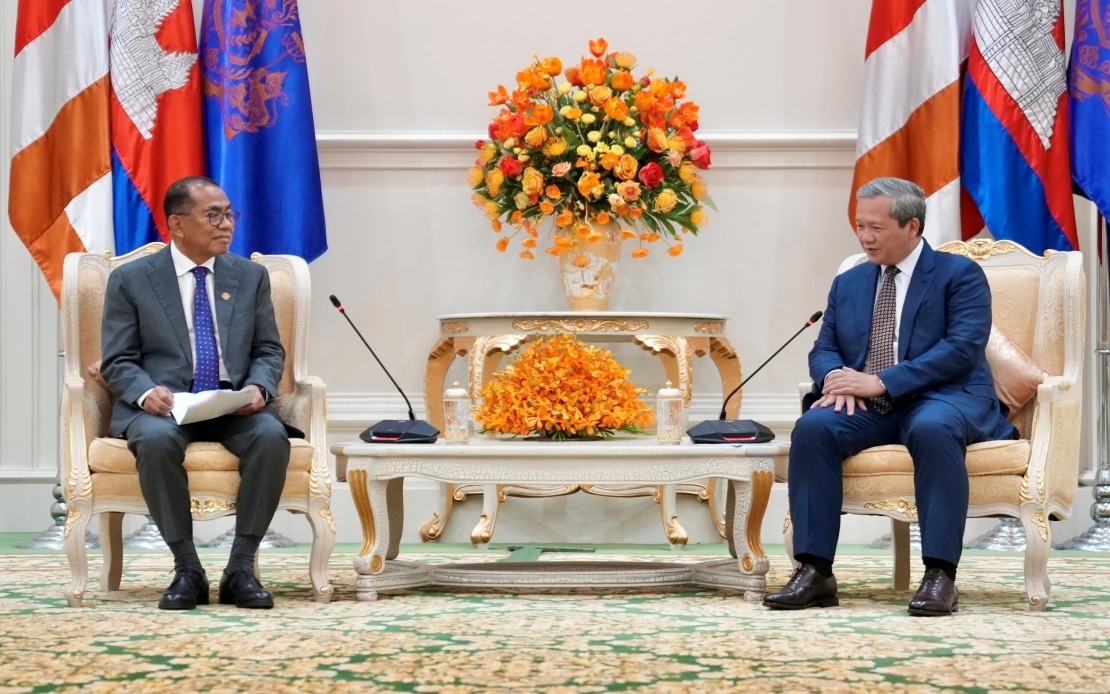
Malaysia and Cambodia are moving forward with comprehensive defence cooperation arrangements designed to bolster mutual security capabilities and contribute to wider ASEAN stability objectives. Defence Minister Datuk Seri Mohamed Khaled Nordin, during an official visit to Phnom Penh, reaffirmed this commitment through substantive engagements with Cambodian leadership, signalling that both countries see expanded military ties as essential to their strategic futures in an increasingly complex regional environment.
At the heart of the bilateral discussions was the anticipated finalisation of a Malaysia-Cambodia Defence Cooperation Memorandum of Understanding, a formal instrument that will provide the institutional scaffolding for deepened defence collaboration. Mohamed Khaled's courtesy call on Prime Minister Samdech Thipadei Hun Manet at the Peace Palace centred on accelerating this agreement's completion, with both sides viewing it as a cornerstone framework that will unlock broader opportunities for military-to-military engagement. The timing is significant, as the framework is now in advanced stages and could be formally signed during the forthcoming ASEAN Defence Ministers' Meeting in the Philippines.
The scope of intended cooperation extends beyond traditional bilateral defence matters into emerging domains that reflect contemporary security preoccupations. Malaysia and Cambodia have identified jungle warfare training, defence industry collaboration, artificial intelligence applications, and drone technology as priority areas for joint development. This diversification of cooperation domains suggests both nations recognise that modern security challenges transcend conventional military operations and increasingly encompass technological sophistication and asymmetric threats.
Regional peace mechanisms featured prominently in the ministerial exchanges, particularly discussions concerning the ASEAN Observer Team mechanism and ongoing efforts to maintain stability along the Cambodia-Thailand border. Mohamed Khaled emphasised Malaysia's continued backing for dialogue-centric approaches to regional tensions, underscoring that peaceful resolution through negotiation remains the preferred pathway. This positioning reflects Malaysia's broader strategic philosophy of supporting ASEAN-centred frameworks that prioritise consensus-building over confrontation.
The South China Sea Code of Conduct emerged as another critical discussion point, with both nations acknowledging its importance as a stabilising instrument for ensuring peace and maintaining a rules-based regional order. Malaysia and Cambodia's joint emphasis on finalising this multilateral agreement indicates their shared concern about unchecked maritime tensions and their preference for legally binding frameworks that constrain unilateral actions. For Malaysian observers, this alignment with Cambodia is particularly noteworthy given the interconnected nature of regional maritime stability and Malaysia's substantial maritime interests.
Mohamed Khaled's parallel engagement with Cambodian Deputy Prime Minister and Defence Minister General Tea Seiha added further institutional weight to the bilateral relationship, enabling defence establishments to directly exchange perspectives on the broadening and increasingly unpredictable regional security landscape. Such high-level military-to-military dialogue typically facilitates candid assessment of shared threats and opportunities for coordinated responses that might not emerge through purely diplomatic channels.
The broader context for these developments involves Malaysia's demonstrated commitment to maintaining defence partnerships across Southeast Asia, regardless of whether it holds the rotating ASEAN Chair. Mohamed Khaled explicitly noted that Malaysia's dedication to regional peace and stability transcends the constraints of annual ASEAN leadership cycles, suggesting a long-term strategic vision that prioritises consistency over momentary positional advantages. This positioning helps Malaysia maintain credibility as a stabilising force irrespective of institutional roles.
Malaysia's Defence White Paper and Third Pillar of the National Defence Strategy, focused on establishing credible partnerships, provide the overarching policy framework animating these defence diplomacy initiatives. Mohamed Khaled's sequential visits to Vietnam and Cambodia, culminating in substantive engagements with senior political and military leadership, operationalise this strategic vision by translating policy documents into tangible institutional arrangements. The Defence Ministry's designation of these visits as implementing the partnership pillar reflects sophisticated strategic planning that links diplomatic activity to documented long-term objectives.
The delegation composition, including Chief of the Royal Malaysian Navy Admiral Tan Sri Zulhelmy Ithnain and Defence Ministry Deputy Secretary-General Datuk Mohd Yani Daud, underscores the visit's institutional significance. The inclusion of senior naval leadership signals Malaysia's particular interest in maritime security cooperation, an area of obvious relevance given both nations' coastal geography and reliance on maritime trade corridors. Such carefully calibrated delegation structures communicate substantive intent to partners and demonstrate that visiting officials possess requisite authority to commit their respective governments to specific cooperative arrangements.
Looking ahead, Mohamed Khaled expressed confidence that strengthened Malaysia-Cambodia cooperation will enhance bilateral relations in advance of the two nations' seventieth diplomatic anniversary in 2027. This forward-looking perspective suggests that officials are thinking in generational timeframes rather than focusing exclusively on immediate institutional cycles. The symbolic significance of this approaching milestone provides natural momentum for deeper institutionalisation of defence ties, offering opportunities to mark the occasion through formalised cooperation frameworks that might endure for subsequent decades.
For Malaysian observers and regional analysts, these developments illustrate how ASEAN member states continue constructing cooperative defence architectures that operate alongside broader multilateral mechanisms. Malaysia's strategy of deepening bilateral ties while simultaneously championing ASEAN-centred approaches reflects the delicate equilibrium that Southeast Asian nations must maintain between fostering individual partnerships and supporting collective frameworks. Cambodia's receptiveness to these Malaysian initiatives suggests that even smaller or less-resourced ASEAN members recognise tangible benefits in structured defence cooperation arrangements that enhance their own security capabilities while contributing to regional stability.
The emphasis on dialogue, peaceful resolution, and rules-based order throughout these engagements indicates that Malaysia and Cambodia are consciously positioning themselves within a centrist ASEAN camp that prioritises institutional mechanisms over confrontational approaches. This alignment has implications extending beyond bilateral defence matters, potentially influencing both nations' positions on broader regional issues requiring ASEAN consensus. As regional security challenges continue multiplying, the strength of cooperative bilateral relationships often determines the effectiveness of collective ASEAN responses to transnational threats.

