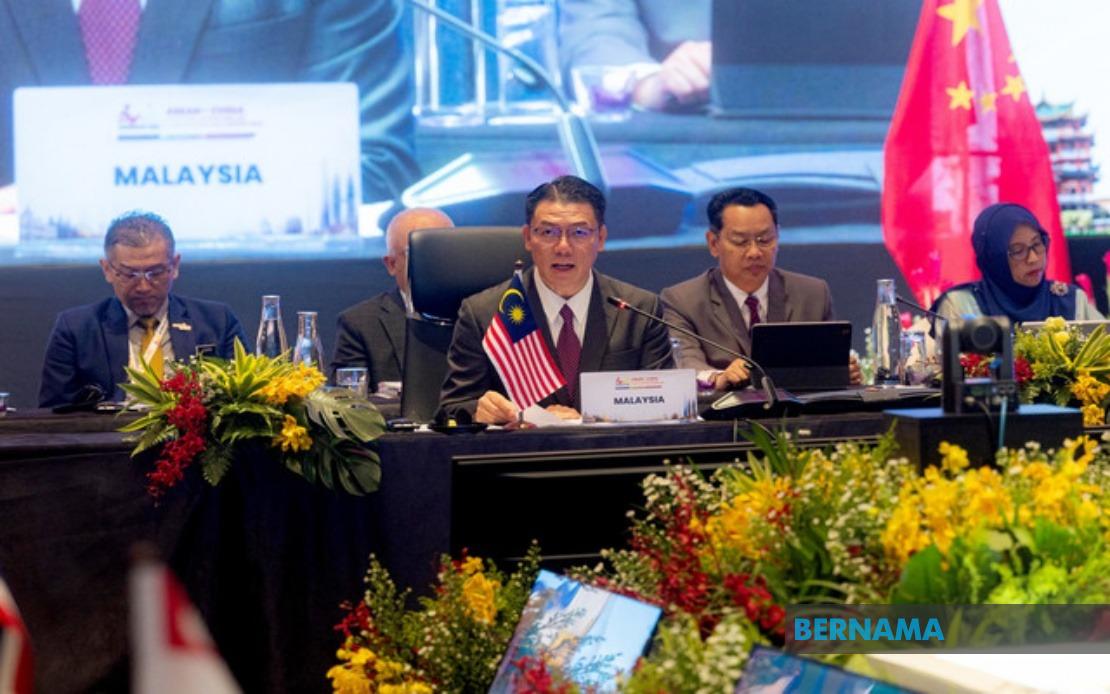
Malaysia has positioned itself at the forefront of a major regional initiative to tackle the mounting pressures of rapid urbanisation and housing shortages across Southeast Asia. The ASEAN-China Ministerial Roundtable Conference on Construction and Housing (ACMROCH) 2026, held in Ipoh, brought together representatives from all 11 ASEAN member states alongside Chinese officials to chart a coordinated path toward sustainable urban development. The gathering underscores growing recognition among regional powers that urbanisation trends demand integrated solutions that transcend national borders.
Housing and Local Government Minister Nga Kor Ming opened the conference by framing the initiative as essential to addressing one of the region's defining demographic shifts. He emphasised that ACMROCH 2026 aligns regional efforts with the UN-Habitat mission to create sustainable, inclusive, and resilient urban centres. This positioning reflects Malaysia's broader commitment to the global New Urban Agenda, a framework Malaysia currently champions as the sitting president of the UN-Habitat Assembly. The conference's emphasis on bridging ASEAN and Chinese expertise signals confidence that coordinated approaches yield better outcomes than isolated national efforts.
The scale of urbanisation sweeping Asia justifies the sense of urgency evident at the conference. More than half of the world's urban population now resides in Asia, with the continent's urbanisation rate surpassing 54 per cent. Within this context, Malaysia's urbanisation rate of 78 per cent ranks among the world's highest, while China has achieved 67 per cent. These figures translate into unprecedented structural demands on housing stock, energy infrastructure, and urban services. The sheer velocity of this transformation means that incremental policy adjustments prove insufficient; the region requires fundamental reimagining of how cities function.
Nga articulated three overarching objectives guiding ACMROCH 2026's work. First, sustainability demands that urban growth respect environmental boundaries while prioritising human wellbeing. Second, quality housing ensures that the benefits of development reach ordinary citizens through safe, comfortable, and reliable residential spaces. Third, cohesive communities stress that progress must strengthen social bonds rather than fragmenting societies along economic or geographic lines. These principles represent a conscious rejection of development models that prioritise growth metrics over lived experience.
The conference's four operational priorities address distinct but interconnected dimensions of urban challenges. Advancing energy-efficient and climate-responsive housing tackles the intersection of housing shortages and environmental imperatives, a crucial concern as Southeast Asia faces increasing climate variability. Promoting value-driven housing and inclusive urban growth addresses affordability and equity dimensions often neglected in purely market-driven development. Strengthening resilient urban services and sustainable infrastructure recognises that housing quality depends on functioning water systems, sanitation, electricity grids, and transportation networks. Fostering cohesive communities and liveable neighbourhoods emphasises the social fabric that makes cities habitable beyond mere physical structures.
The Malaysian government has explicitly integrated these principles into its overarching development philosophy through Malaysia MADANI, which positions ethical considerations at the centre of progress narratives. Nga's reference to building cities that serve human needs rather than abstract growth targets reflects this orientation. The philosophy demands that public spaces, neighbourhood design, and urban planning prioritise the daily quality of life for ordinary residents. This contrasts sharply with development paradigms where infrastructure and housing become primarily investment vehicles rather than homes.
The connection to Malaysia's Thirteenth Malaysia Plan and the ASEAN Community Vision 2045 demonstrates how domestic and regional agendas reinforce each other. The regional vision emphasises resilience, forward-looking approaches, and people-centred development. Malaysia's role in shaping this vision through initiatives like ACMROCH 2026 extends its influence beyond bilateral relationships with China to encompass the entire regional community. For Malaysian stakeholders, this positioning offers opportunities to influence standards, technologies, and practices that neighbouring countries may eventually adopt.
China's participation, represented by Housing and Urban Rural Development Minister Ni Hong, reflects Beijing's recognition that regional stability depends partly on effective urbanisation management. As Southeast Asia's largest trading partner and major infrastructure investor through initiatives like the Belt and Road Initiative, China has direct interest in ensuring that rapid urban development in the region proceeds orderly and sustainably. Chinese experience with managing massive urbanisation projects provides valuable lessons, though the ministry-level engagement suggests recognition that one-size-fits-all approaches prove problematic across diverse ASEAN contexts.
The conference format, bringing together 300 participants including multiple cabinet ministers and senior officials, indicates the political weight attached to urban and housing policy. This level of engagement contrasts with the relatively lower profile these issues sometimes receive in domestic political discourse. The presence of ministers from across ASEAN signals that urbanisation and housing have risen to strategic priority status comparable to defence, trade, or diplomatic affairs. For Malaysia particularly, this prominence reflects the reality that housing affordability, urban livelihood opportunities, and environmental pressures increasingly drive public sentiment and electoral outcomes.
The timing of ACMROCH 2026 carries significance as Southeast Asian nations simultaneously grapple with post-pandemic economic recovery, climate adaptation requirements, and demographic shifts. Young populations in several ASEAN countries intensify housing demands precisely when construction costs and land prices surge. Meanwhile, climate impacts threaten existing urban infrastructure and force expensive adaptation measures. By establishing regional coordination mechanisms now, ASEAN members can pool knowledge, share proven technologies, and potentially achieve economies of scale in sustainable construction and infrastructure development.
For Malaysian residents and policymakers, the conference outcomes matter considerably. Malaysia's already-high urbanisation rate means the country faces acute housing affordability challenges, particularly for middle and lower-income groups. Infrastructure strain in major urban centres affects transportation, healthcare access, and quality of life. Participation in ACMROCH 2026 and commitment to its principles positions Malaysia to import best practices from China and other ASEAN members while exporting its own approaches to housing and urban management. This knowledge exchange may yield practical solutions to persistent challenges like urban sprawl, housing finance accessibility, and liveable neighbourhood design.
The regional framework also creates potential for standardised approaches to housing and urban development that could facilitate cross-border mobility, investment, and labour flows within ASEAN. As the region progresses toward deeper integration under the ASEAN Community Vision 2045, harmonised standards and shared approaches to urbanisation become increasingly valuable. For Malaysian professionals in construction, urban planning, and housing finance, this represents opportunities to operate across borders under comparable regulatory frameworks.
The substantive challenge ahead involves translating conference principles into concrete policy adjustments and resource allocations. Sustainable housing typically costs more upfront than conventional construction, requiring supportive financing mechanisms. Climate-responsive design demands expertise and may conflict with development timelines. Inclusive growth principles may constrain developer profits. These tensions between aspiration and implementation will test whether participating governments prove willing to subordinate short-term economic metrics to longer-term livability and sustainability goals. The conference's success ultimately depends not on ministerial rhetoric but on whether nations restructure incentives, regulations, and investments to align with stated principles.

