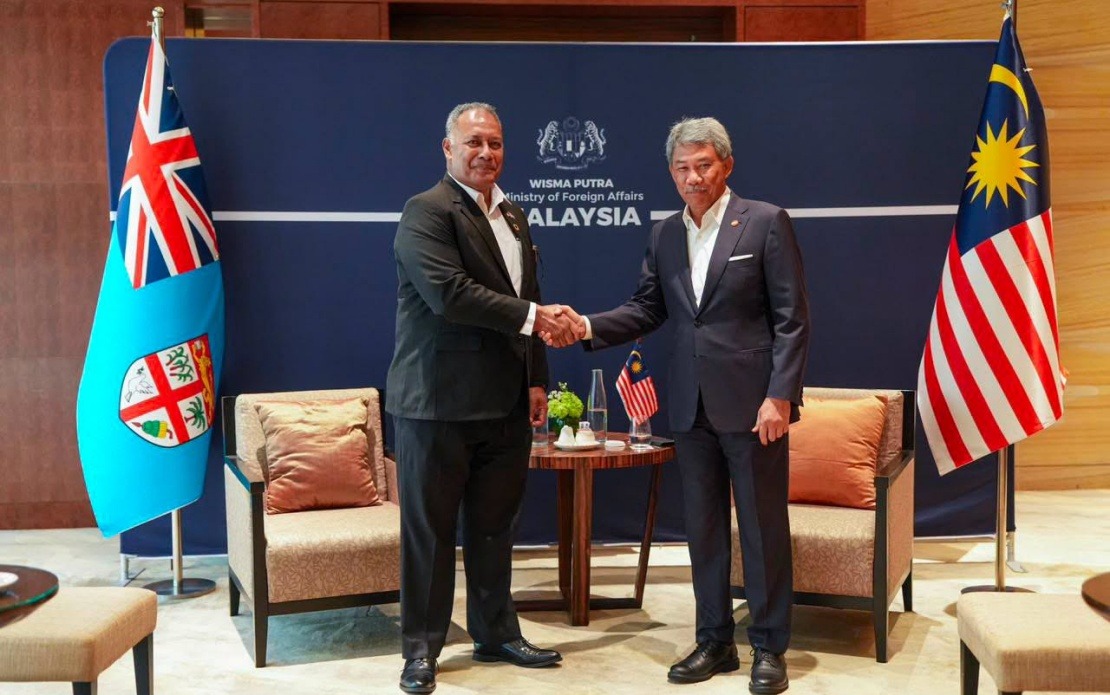
Malaysia and Fiji are positioning themselves to deepen cooperation across multiple sectors following high-level discussions between their foreign affairs ministers this week. During a working visit to Kuala Lumpur, Fijian Foreign and External Trade Minister Sakiasi Raisevu Ditoka met with Malaysian Foreign Minister Datuk Seri Mohamad Hasan on Tuesday to chart the course of their bilateral relationship. The meeting, held over lunch, reflected both nations' commitment to broadening their engagement at a time when Pacific island nations are increasingly seeking stronger partnerships with major Asian economies.
The agenda for enhanced cooperation spans diverse economic and development sectors. Trade and investment represent the cornerstone of the planned expansion, with renewable energy and forestry emerging as priority areas where Malaysia's expertise and technological capabilities align with Fiji's development needs. Human capital development and cultural exchange were also highlighted, indicating that Kuala Lumpur and Suva view their relationship as extending beyond transactional commerce to encompass people-to-people connections and institutional capacity building. This multifaceted approach suggests a strategic recognition that sustainable bilateral relationships require depth across multiple dimensions rather than concentration in any single sector.
Ditoka's working visit, which runs from August 9 to 12, carries symbolic weight beyond the bilateral discussion itself. On Monday, he officially reopened the High Commission of Fiji in Kuala Lumpur, a ceremony that underscores renewed diplomatic focus on the relationship. The reopening of a physical diplomatic presence signals both nations' intent to normalize and strengthen their engagement after what appears to have been a period of reduced bilateral activity. For Malaysia, particularly as a major Southeast Asian economy, the reactivation of such diplomatic infrastructure demonstrates a broader strategy of deepening connections with Pacific island nations, a region often overlooked in regional diplomacy but increasingly important for trade and geopolitical considerations.
Financial data released by the Foreign Ministry provides context for the importance both governments attach to this relationship. Total bilateral trade between Malaysia and Fiji reached RM880.01 million, equivalent to US$206.2 million, in 2025. Malaysian exports to Fiji comprised the vast majority of this figure, valued at RM867.92 million or US$203.41 million, while imports from the island nation stood at a significantly lower RM12.09 million, approximately US$2.80 million. The imbalance in trade flows reflects Fiji's reliance on Malaysian manufactured goods and services rather than raw material exports, positioning Malaysia as a primary supplier of value-added products to the Pacific market.
The asymmetry in bilateral trade patterns suggests opportunities for rebalancing through investment initiatives and joint development projects. Malaysia's stronger export position creates space for expansion in sectors where Fiji possesses comparative advantages, whether in agricultural products, mineral resources, or fisheries. By explicitly discussing investment cooperation, both ministers appear to be recognizing that conventional trade relationships may reach saturation without new mechanisms to deepen economic ties. Joint ventures in renewable energy or forestry management could create mutual benefits while simultaneously advancing sustainable development goals, a priority that resonates across both Southeast Asia and the Pacific region.
The broader regional context amplifies the significance of Malaysia-Fiji bilateral engagement. Mohamad's comments about exchanging views on regional and global issues, combined with the stated intention to deepen cooperation with Pacific nations more broadly, indicate that Kuala Lumpur views stronger ties with Fiji as part of a wider strategy. As Southeast Asian nations navigate increasingly complex geopolitical dynamics involving major powers and shifting trade alignments, the ability to forge strong partnerships with Pacific island states provides strategic flexibility. For Malaysia, engagement with Fiji opens doors to influence in regional forums like the Pacific Islands Forum and strengthens ASEAN's collective standing in dialogue with the Pacific.
From Fiji's perspective, the renewed diplomatic engagement with Malaysia carries distinct advantages. As a small island developing state, Fiji benefits from access to Malaysian investment capital, technical expertise, and market opportunities. The emphasis on renewable energy is particularly timely, as Pacific island nations face mounting pressures to transition away from fossil fuel dependency while confronting the existential challenge of climate change and rising sea levels. Malaysia's experience in renewable energy deployment and green technology could provide valuable knowledge transfer and investment pathways. Similarly, forestry cooperation might encompass sustainable management practices that balance economic development with environmental conservation, a perennial challenge for resource-rich island economies.
The timing of this engagement also reflects broader trends in Indo-Pacific diplomacy. As major powers compete for influence and traditional donors face budget constraints, countries like Malaysia are stepping into roles as alternative partners for Pacific island states. This shift creates opportunities for smaller Asian economies to expand their diplomatic footprint and economic influence without the baggage of historical colonial relationships that complicate some larger nations' engagement with the Pacific. Malaysia's Islamic heritage and multi-ethnic character also provide cultural bridges that resonate in diverse Pacific communities.
Cultural cooperation, though mentioned briefly in official statements, deserves emphasis as a foundation for sustained bilateral ties. Exchange programs in education, arts, and tourism create constituencies within both societies with vested interests in good relations. Malaysian universities could attract more Fijian students, while cultural festivals and sporting exchanges build familiarity and goodwill. These softer dimensions of diplomacy often prove more durable than government-to-government relations, as they create networks of individuals with personal stakes in bilateral friendship. Over time, such people-to-people connections can insulate diplomatic relationships from policy disagreements or political transitions.
The reopening of Fiji's High Commission in Kuala Lumpur also signals confidence in the relationship's trajectory. Maintaining diplomatic infrastructure requires sustained commitment and resources, and the decision to restore the Suva mission suggests both governments view this as a worthwhile investment. For Malaysian policymakers, the presence of a Fijian diplomatic mission provides valuable insights into Pacific political and economic dynamics while serving as a visible marker of Malaysia's engagement with the broader Indo-Pacific region. Fiji, meanwhile, gains a platform to advocate for Pacific interests and build relationships with Malaysian business and government actors.
Looking forward, the success of Malaysia-Fiji cooperation will depend on translating diplomatic statements into concrete projects and measurable outcomes. The identified priority sectors—renewable energy, forestry, trade, and investment—require mechanisms for implementation, whether through business councils, joint development authorities, or multilateral partnerships. Given the distance between Malaysia and Fiji and the logistical challenges of conducting business across the Indian and Pacific Oceans, successful cooperation may require intermediary roles played by ASEAN structures or international development institutions. Both nations would benefit from developing specific, time-bound initiatives rather than relying on broad statements of intent.
Ultimately, the Malaysia-Fiji engagement demonstrates that economic and diplomatic opportunities exist far beyond Southeast Asia's immediate geographical sphere. As global supply chains diversify and countries seek new partners, relationships with island economies like Fiji become increasingly valuable. For Malaysia, stronger ties with the Pacific reinforce its status as a major Asian economy with influence extending across multiple regions. For Fiji and other Pacific nations, engagement with substantial Southeast Asian partners like Malaysia provides alternatives to traditional relationships and opportunities for genuine economic partnership based on mutual interest rather than aid dependency. The coming months will reveal whether this week's diplomatic engagement translates into substantive collaboration or remains primarily symbolic.

