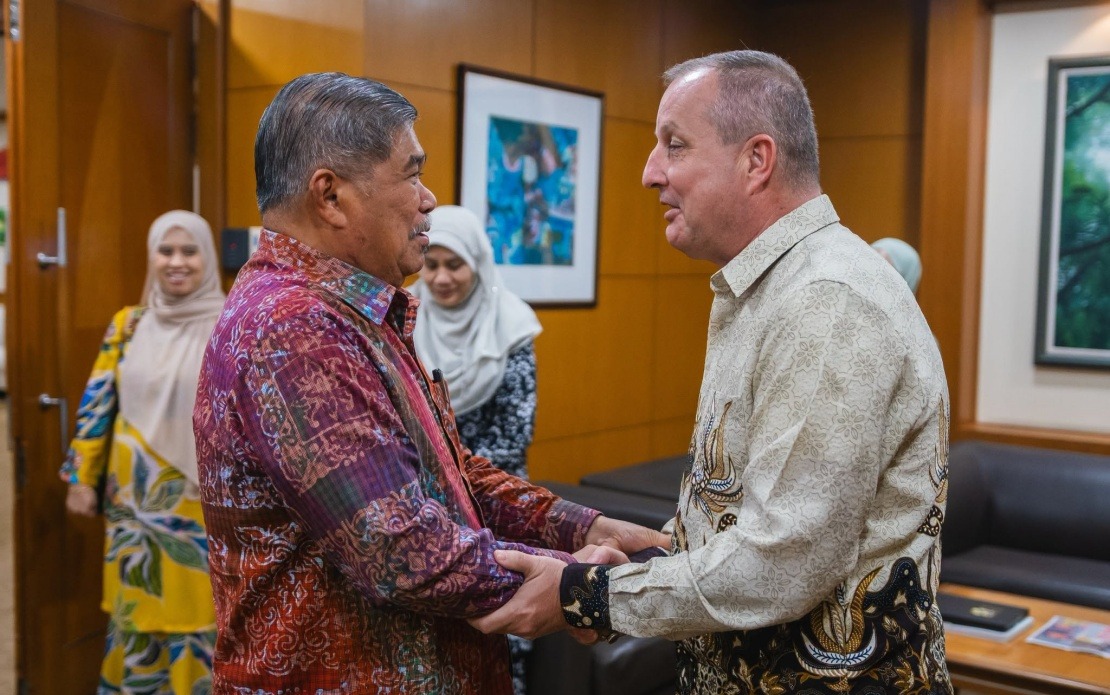
Malaysia and Hungary have embarked on a comprehensive strengthening of their agricultural partnership, moving beyond traditional diplomatic courtesy to establish concrete mechanisms for sector-wide collaboration. The two nations are pursuing multiple channels of cooperation spanning research institutions, trade participation, and technology transfer, signalling a strategic commitment to mutual agricultural development at a time when regional food security concerns are mounting across Southeast Asia.
Agriculture and Food Security Minister Datuk Seri Mohamad Sabu outlined the scope of bilateral engagement following discussions with Hungarian Ambassador to Malaysia Dr. Sándor Sipos. The conversations centred on immediate and medium-term collaborative arrangements that position both countries to leverage their distinct agricultural strengths. Hungary's confirmed participation in the Malaysian Agriculture, Horticulture and Agrotourism Exhibition (MAHA) 2026 represents a tangible demonstration of commitment, providing a platform for Hungarian agricultural businesses and innovators to access the Southeast Asian market whilst showcasing European farming practices and technologies to Malaysian stakeholders.
The establishment of the Malaysia-Hungary Joint Working Group (JWG) marks an institutional innovation in bilateral relations, creating a formal structure through which policy alignment and operational coordination can occur. This mechanism enables both governments to identify priority areas, resolve implementation challenges, and chart a strategic direction for expanded engagement. Such arrangements have proven effective in other bilateral relationships, allowing countries to move beyond ad-hoc cooperation towards systematic, sustained collaboration.
At the technical level, the partnership between the Malaysian Agricultural Research and Development Institute (MARDI) and Hungary's University of Agriculture and Life Sciences (MATE) constitutes the backbone of knowledge exchange. These institutions bring complementary expertise to the relationship—Malaysia's experience with tropical agriculture and crop development meets Hungary's established research capabilities in temperate climate farming and advanced breeding technologies. The Erasmus+ Researcher exchange programme facilitates direct scientist-to-scientist engagement, enabling tacit knowledge transfer that published papers alone cannot convey. When researchers from different continents work within the same laboratories, they develop intuitive understanding of methodologies and can identify applications tailored to local conditions.
The specific focus on genetics, breeding technology, and high-quality livestock product development addresses critical priorities for both nations. Malaysia, despite rapid urbanisation, maintains significant agricultural sectors requiring continuous productivity enhancement to feed a growing population whilst competing for land use with development. Hungary, as a major European agricultural producer facing its own pressures to modernise and increase yields sustainably, brings decades of experience managing intensive farming systems. The genetic research collaboration could yield crop varieties optimised for tropical conditions with disease resistance and yield characteristics superior to current cultivars, directly benefiting Malaysian farmers confronting climate variability and pest pressures.
From a strategic Southeast Asian perspective, this Malaysia-Hungary partnership signals Malaysia's intention to diversify its agricultural knowledge sources beyond traditional suppliers. While neighbouring countries like Thailand and Indonesia remain important agricultural partners, engaging with Hungarian expertise—particularly in technology transfer and institutional research frameworks—expands the innovation ecosystem accessible to Malaysian agricultural practitioners. This diversification reduces dependency and introduces alternative approaches to persistent challenges such as crop disease management, animal husbandry efficiency, and value-added product development.
The emphasis on expanding trade and investment in the agri-food sector acknowledges that cooperation beyond research produces tangible economic benefits. Hungarian companies operating in biotechnology, agricultural machinery, food processing, and precision farming technologies represent potential sources of technology import for Malaysian agribusinesses. Conversely, Malaysia's position as a Southeast Asian agricultural hub and gateway to ASEAN markets offers Hungarian firms a strategic entry point for regional expansion. Investment flows in both directions—whether Hungarian companies establishing processing facilities in Malaysia or Malaysian enterprises acquiring Hungarian technology—generate employment and fiscal revenue while accelerating sector modernisation.
The opportunity framework outlined by Minister Mohamad encompasses multiple stakeholder categories: individual farmers gaining access to improved practices and varieties, livestock breeders acquiring knowledge of genetic selection methodologies, agricultural researchers accessing comparative data and methodologies, and agri-food entrepreneurs identifying supply chain efficiencies and value addition techniques. This inclusive approach recognises that agricultural development depends not solely on national institutions but on ecosystem-wide capability enhancement. When smallholder farmers implement new techniques derived from international research collaboration, sector-wide productivity gains accumulate.
Food security implications extend beyond bilateral commerce into regional resilience considerations. Malaysia, dependent on food imports for significant portions of its dietary needs, benefits from strengthened relationships with diverse agricultural producers capable of supplying quality products. Hungary, as a substantial European agricultural exporter, gains secure market access in a dynamically growing region where middle-class consumers increasingly demand imported speciality products. Diversification of food sourcing partners reduces vulnerability to supply disruptions—whether from climate events, geopolitical tensions, or disease outbreaks—that could concentrate risk if Malaysia relied too heavily on limited supplier bases.
The sustainability dimension of this cooperation warrants recognition. Both Malaysia and Hungary face mounting pressure to reconcile agricultural productivity with environmental stewardship. Hungarian research institutions have developed expertise in precision agriculture, reduced chemical inputs, and biodiversity-friendly farming practices. These approaches, when adapted to Malaysian tropical conditions, could enable local farmers to maintain yields whilst reducing environmental footprint—a critical consideration as regulatory frameworks around pesticide usage and soil conservation tighten globally. Technology transfer in this domain serves dual purposes of economic development and environmental protection.
Governmental commitment to continuing relationship consolidation suggests this partnership will mature beyond current initiatives. Further institutionalisation through bilateral investment promotion agreements, harmonisation of agricultural standards to facilitate trade, and establishment of student scholarship exchanges could deepen engagement over coming years. Such developments typically follow successful initial collaboration phases as governments identify mutual benefits and constituencies develop stakes in sustained cooperation.
For Malaysian policymakers and agricultural industry participants, the Hungary partnership exemplifies the value of engaging developed-world agricultural systems whilst maintaining focus on tropical and subtropical production specialties. The relationship positions Malaysia to import technologies and methodologies whilst exporting regional market access and production experience. As food security pressures intensify across Southeast Asia driven by climate change and population growth, such diversified international cooperation becomes increasingly central to maintaining stable, affordable food supply and supporting farmer livelihoods.

