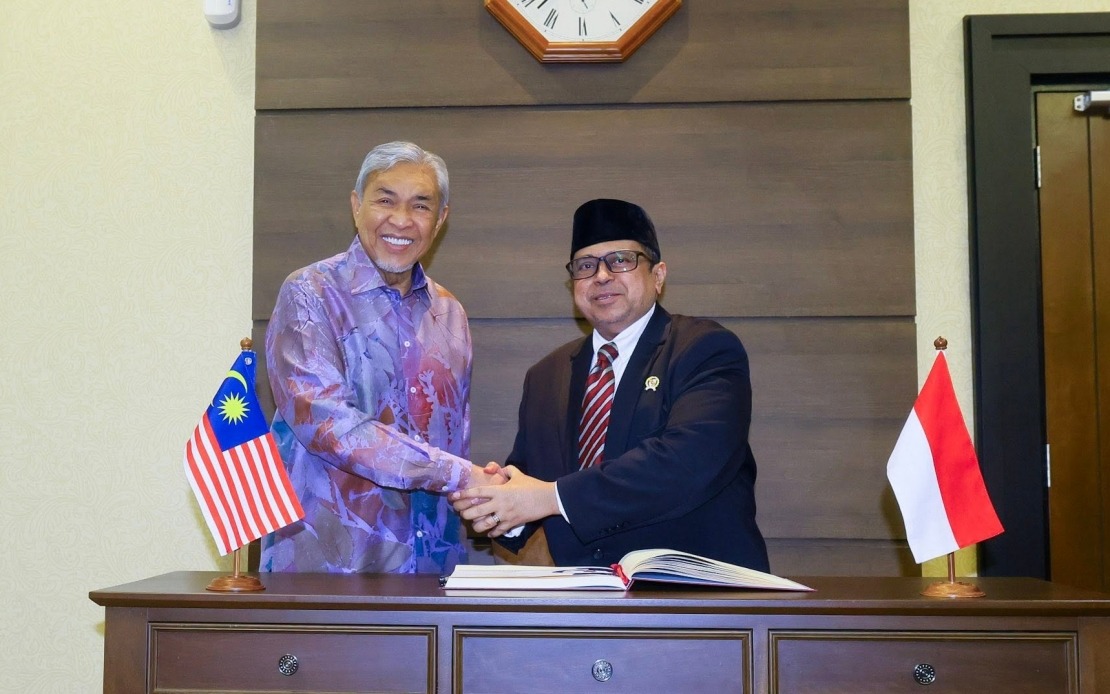
Malaysia and Indonesia are poised to intensify their partnership across the halal economy, signalling a strategic pivot that reflects both nations' commitment to consolidating their dominance in global halal markets. Deputy Prime Minister Datuk Seri Dr Ahmad Zahid Hamidi announced the initiative following a meeting with Indonesia's Ambassador to Malaysia, Raden Datuk Mohammad Iman Hascarya Kusumo, and Dr Ahmad Haikal Hassan, who heads Indonesia's Halal Product Assurance Organising Body (BPJPH), at the Parliament building. The discussion ranged beyond ceremonial courtesies to address substantive pathways for bilateral advancement in trade, rural development, and workforce capacity-building.
The centrepiece of the proposed framework is the establishment of the Malaysia-Indonesia Halal Council (MIHC), designed as a bilateral platform to harmonise halal certification standards and streamline trade between the two neighbours. This initiative addresses a longstanding challenge in the region: divergent regulatory requirements and certification protocols that have historically fragmented the Southeast Asian halal supply chain and created compliance burdens for producers and exporters. By aligning standards, both nations aim to reduce friction in cross-border commerce and enhance the competitiveness of their halal products in international markets where certification credibility remains paramount.
Beyond bilateral arrangements, Ahmad Zahid articulated a broader ambition to expand the cooperative framework regionally and globally. The proposed ASEAN Halal Council would position Southeast Asia as a unified force in setting halal standards and driving regional trade integration. Such a structure could enable smaller nations within ASEAN to benefit from economies of scale and collective bargaining power. Simultaneously, the envisaged World Halal Development Council signals an intention to shape international halal governance and investment norms, allowing Malaysia and Indonesia to influence global supply chains and certification benchmarks that currently favour certain Western-aligned certification bodies.
The halal industry represents a significant economic frontier for both nations. Malaysia has positioned itself as the global halal hub, hosting the Malaysian Halal Corporation and serving as a benchmark-setting authority for halal standards. Indonesia, with the world's largest Muslim population and substantial production capacity, possesses untapped potential in halal manufacturing and exports. The complementarity is evident: Malaysia's regulatory sophistication and certification expertise can marry Indonesia's manufacturing scale and raw material availability, creating a powerful bloc in the global halal economy valued at over USD 2 trillion annually.
Ahmad Zahid, speaking in his capacity as chairman of the Malaysia Halal Industry Development Council, emphasised that the initiative builds upon the historic ties between Malaysia and Indonesia. The two nations share linguistic, cultural, and religious foundations that facilitate institutional coordination and mutual understanding. This proximity differs markedly from partnerships between Muslim-majority nations and distant Western counterparts, potentially enabling faster consensus-building and more culturally sensitive regulatory design. The depth of existing bilateral mechanisms provides existing infrastructure upon which new halal frameworks can be constructed.
The economic implications extend across multiple sectors. A strengthened halal ecosystem attracts foreign investment, particularly from Gulf Cooperation Council countries seeking reliable sourcing partners and from Chinese enterprises expanding into Islamic-compliant product lines. Enhanced trade reduces logistics costs and improves supply chain resilience, benefiting downstream manufacturers and retailers across ASEAN. Rural development through halal value chains creates employment in agricultural communities, addressing underutilisation of agricultural potential in both nations' interior regions.
Human capital development, identified as a cooperation pillar, suggests plans for shared training programmes, technical certification, and knowledge exchange. This dimension is crucial, as halal industry growth depends upon a skilled workforce capable of meeting rigorous international standards. Joint capacity-building reduces duplicative efforts and enables both nations to concentrate expertise. Malaysia's established halal science and management institutions can partner with Indonesian counterparts to build regional competency, fostering a cohort of professionals who understand both national contexts and global best practices.
The timing of this initiative reflects broader geopolitical currents. Rising protectionism in traditional markets, supply chain fragmentation accelerated by pandemic disruptions, and growing demand from emerging markets in Africa and Southeast Asia have prompted Malaysia and Indonesia to consolidate regional supply chains. By controlling halal standards and certification at the regional level, both nations reduce dependence upon external certification bodies and create barriers to entry for competitors outside their framework. This approach mirrors strategies employed by developed nations through technical standards and regulatory harmonisation.
Implementation challenges remain. Indonesia's regulatory environment is sometimes characterised as less stringent than Malaysia's, potentially complicating harmonisation efforts. Political differences between federal systems and negotiating preferences could slow agreement on council structures and decision-making procedures. Private sector buy-in is essential, yet producers may resist standardisation that increases compliance costs or restricts market access. Success will depend upon establishing frameworks that balance rigour with practicality and ensure stakeholder participation across government, industry, and civil society.
For Malaysian readers and regional observers, these developments signal that halal commerce is transitioning from niche certification to mainstream industrial strategy. The proposed councils represent an attempt to formalise and scale cooperation that has previously occurred ad hoc. Should implementation succeed, the Malaysia-Indonesia framework could become a model for South-South cooperation in standards-setting and trade integration. Malaysian businesses stand to gain preferential access to Indonesian markets and supply sources, while Indonesia's export competitiveness improves through association with Malaysia's credible halal governance. Ultimately, both nations recognise that in an increasingly competitive global economy, regional integration and standard-setting authority are prerequisites for prosperity.

