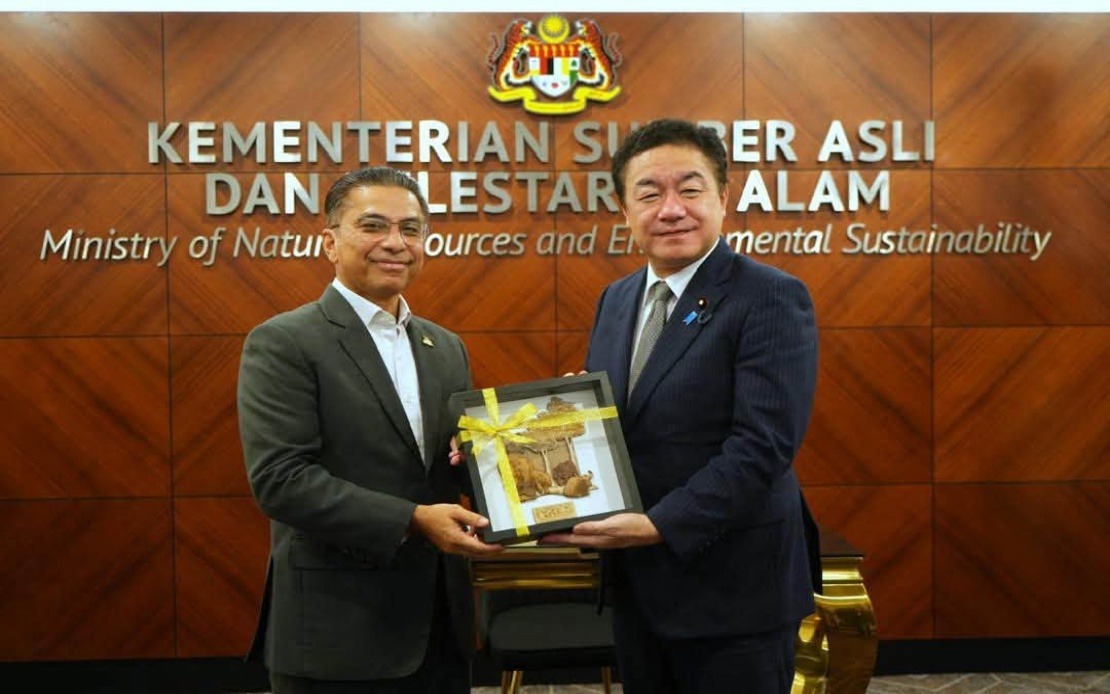
Japan's Parliamentary Vice-Minister of Economy, Trade and Industry Komori Takuo visited Malaysia's Ministry of Natural Resources and Environmental Sustainability in Putrajaya this week, marking the latest step in intensifying economic and environmental collaboration between the two Asian nations. The engagement reflects both countries' commitment to deepening strategic ties under their Comprehensive Strategic Partnership framework, particularly following decisions made during a bilateral summit held in June.
Deputy Natural Resources and Environmental Sustainability Minister Syed Ibrahim Syed Noh led discussions that focused on translating previous high-level commitments into concrete action. The meeting signals Malaysia's determination to leverage Japanese expertise in processing technology and sustainable resource management as part of its broader strategy to develop a competitive green economy. For Malaysia, this partnership holds particular significance given the country's substantial rare earth mineral deposits and its ambitions to become a regional leader in value-added processing rather than raw material exports.
A central theme of the discussions was Japan's ongoing technical assistance through established cooperation mechanisms. Malaysia expressed appreciation for continued support from the Japan International Cooperation Agency and the Japan Organisation for Metals and Energy Security, both of which have been instrumental in building domestic capacity for critical mineral processing. These institutional partnerships represent more than financial aid; they embody knowledge transfer and institutional strengthening that enable Malaysia to build long-term competitive advantages in the global green technology supply chain.
Malaysia reinforced its commitment to maintaining a moratorium on exporting raw rare earth materials, a policy position that underpins the country's industrial strategy. This stance reflects a deliberate choice to capture greater economic value domestically by ensuring that processing and manufacturing activities occur within Malaysian borders. Such a policy aligns with broader regional trends where Southeast Asian nations increasingly seek to move beyond commodity extraction toward higher-value manufacturing, though it requires sustained investment in processing infrastructure and skilled workforce development.
Beyond minerals, the talks advanced progress on a crucial climate finance mechanism. Both nations have nearly concluded negotiations on a draft Memorandum of Cooperation covering the Joint Crediting Mechanism, a framework enabling bilateral carbon market cooperation under Article 6.2 of the Paris Agreement. Officials anticipate finalising this agreement by year's end, which would create new pathways for attracting green technology investment and supporting Malaysia's energy transition objectives.
The Joint Crediting Mechanism is particularly relevant for Malaysia as it provides a structured approach to implementing its Nationally Determined Contribution, the country's pledge under the Paris climate accord. By combining Japanese expertise in low-carbon technology with Malaysia's renewable energy potential and natural resources, the mechanism creates incentive structures for private investment in sustainable projects. This approach acknowledges that achieving climate targets requires not just policy commitments but also financial mechanisms that make green investments economically attractive.
Malaysia's strategy reflects recognition that competing in green industries demands integration of multiple capabilities. Japanese technology leadership in efficiency and sustainability combines with Malaysia's resource endowments and strategic location in Southeast Asia's economic ecosystem. The collaboration positions Malaysia as more than a resource supplier; it frames the country as a hub for downstream processing and green technology application within the region. This transformation is essential for maintaining long-term competitiveness as global supply chains shift toward sustainability requirements.
The talks also highlighted the diplomatic breadth of the relationship, with Malaysia's delegation including representatives from the Foreign Ministry alongside natural resources officials. This multidepartmental engagement underscores how resource and climate cooperation increasingly intersect with broader foreign policy objectives. Japan's representation through Ambassador Shikata Noriyuki and senior METI officials reflected Tokyo's strategic interest in securing supply chain partnerships for critical materials essential to Japan's own green technology ambitions.
For Southeast Asian observers, the Malaysia-Japan engagement offers a template for how middle-income nations can negotiate partnerships with advanced economies. Rather than simply selling raw materials, Malaysia is structuring arrangements that build domestic capacity, transfer technology, and create frameworks for long-term value creation. The emphasis on processing activities remaining domestically executed reflects lessons learned from commodity-dependent economies where price volatility undermines development goals.
The timing of these discussions also matters within regional context. As global competition for critical mineral processing capacity intensifies, with major powers investing heavily in supply chain resilience, Malaysia's negotiated partnerships with Japan position it advantageously. The moratorium on raw rare earth exports, backed by concrete capacity-building support from Japan, demonstrates how policy and partnership can work synergistically. Without Japanese technical assistance, such a moratorium would risk isolating Malaysia from global markets; with it, the policy becomes a tool for industrial development.
Looking forward, the finalisation of the Joint Crediting Mechanism and the continued deepening of rare earth cooperation will likely influence how other Southeast Asian nations approach their own resource and climate policies. Malaysia's ability to attract investment in sustainable processing while maintaining resource sovereignty offers a development model that others may seek to replicate. The success of these initiatives will depend on sustained commitment from both governments and the ability to attract private investment into processing infrastructure and green technology deployment.

