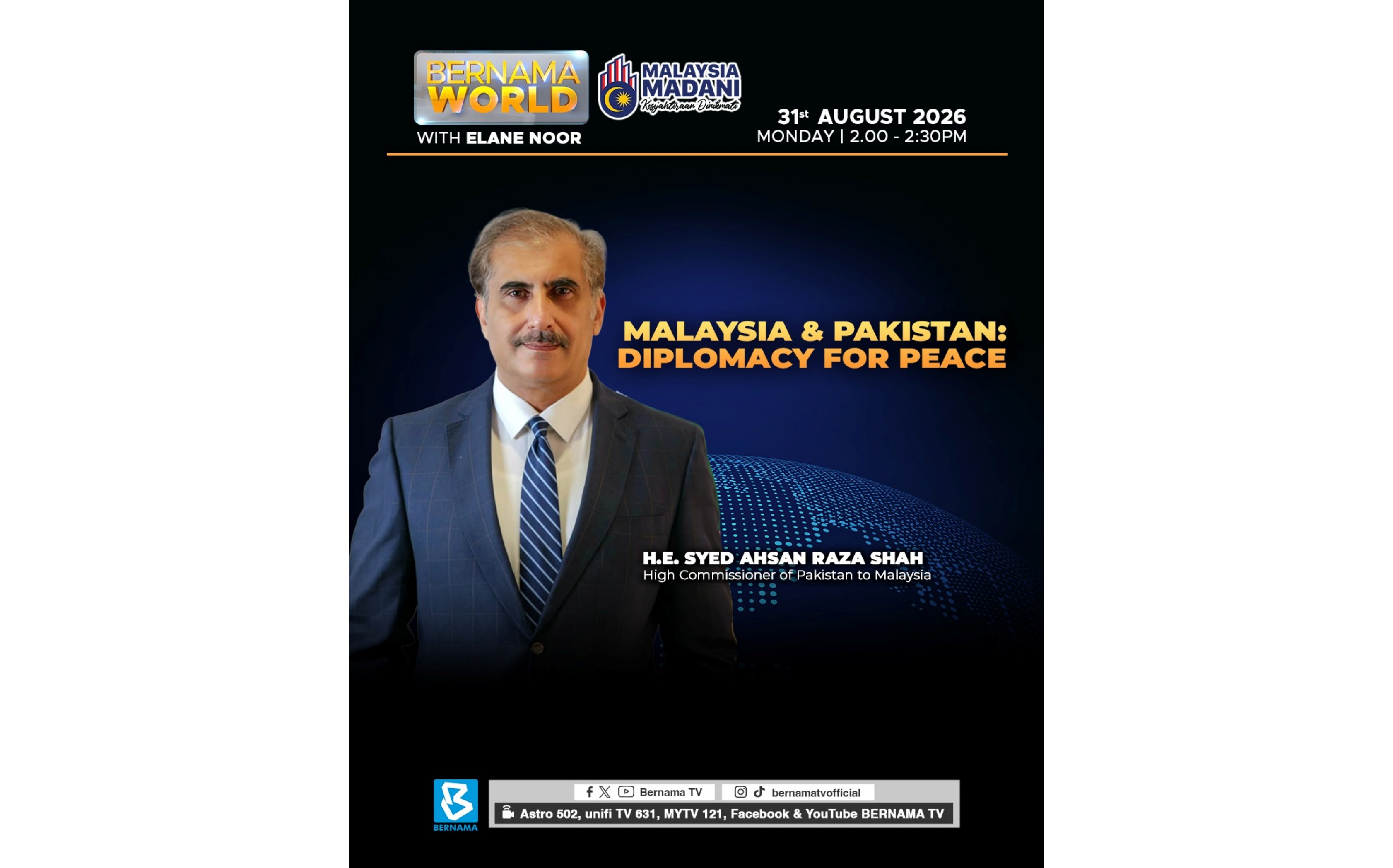
Pakistan High Commissioner to Malaysia Syed Ahsan Raza Shah has urged both nations to pool their experience in conflict resolution, arguing that such partnership represents a critical necessity in an era of intensifying regional and international tensions. Speaking during a media interview, Syed Ahsan emphasized that Malaysia and Pakistan occupy uniquely important positions on the global stage, with each country possessing substantial diplomatic credibility and proven capacity to navigate some of the world's most intractable disputes. The timing of his remarks underscores growing concerns across Southeast Asia and beyond about the destabilising effects of unresolved conflicts and the absence of effective mediation channels.
Both countries have demonstrated their diplomatic reach through recent interventions in major regional conflicts. Pakistan positioned itself as a crucial intermediary during escalating hostilities between the United States and Iran, leveraging its geographic proximity to Tehran and longstanding historical connections alongside its close relationship with Washington. This delicate balancing act culminated in the Islamabad accord, which the High Commissioner described with evident pride as a testament to patient, principled diplomacy. Concurrently, Malaysia under Prime Minister Datuk Seri Anwar Ibrahim played a pivotal stabilising role when Thailand and Cambodia descended into armed confrontation, with tensions threatening to overwhelm ASEAN's institutional mechanisms for conflict prevention. Anwar's measured approach facilitated a ceasefire and the subsequent Kuala Lumpur pact, demonstrating Malaysia's emerging prominence as a trusted mediator in Southeast Asian affairs.
Syed Ahsan stressed that the international environment has fundamentally transformed into what Prime Minister Anwar has termed "post-normal times," requiring diplomats and policymakers to fundamentally rethink their traditional playbooks. The rigid diplomatic frameworks developed during earlier eras prove increasingly inadequate for addressing contemporary challenges characterised by fluid alliances, multiple simultaneous crises, and non-state actors wielding substantial influence. Malaysia and Pakistan, drawing from their respective successes and inevitable setbacks, possess valuable insights into adaptive diplomacy that could benefit not only their bilateral relationship but also contribute to broader regional stability frameworks. This represents an opportunity for institutional learning that transcends mere bilateral cooperation, potentially influencing how multilateral organisations approach mediation.
The foundation of effective mediation, Syed Ahsan argued, rests fundamentally upon trust between all parties and the neutral intermediary. Disputants must genuinely perceive the mediator as motivated by impartial concern rather than hidden agendas or narrow national interests. This precondition explains why certain nations succeed in mediation roles while others, despite possessing significant power, fail to gain acceptance from conflicting parties. Both Malaysia and Pakistan have cultivated reputations as generally credible interlocutors, though maintaining such standing requires constant, meticulous attention to perceived neutrality and demonstrated commitment to equitable solutions.
Syed Ahsan articulated several practical principles that should guide mediation efforts in challenging environments. Rather than pursuing comprehensive settlements through dramatic single negotiations, successful mediators should advance incrementally, securing agreement on smaller issues that gradually build momentum and create psychological investment in the broader process. Mediators must simultaneously cultivate exceptional patience when negotiations encounter inevitable setbacks, which nearly all substantial peace processes experience. They must resist the temptation to respond emotionally to hostile rhetoric or provocative statements, maintaining equanimity and focus on underlying interests rather than inflammatory language. These principles, while seemingly straightforward, demand considerable discipline and diplomatic sophistication in practice, particularly when mediators face domestic pressure to adopt more confrontational positions.
Prime Minister Anwar Ibrahim's personal diplomatic acumen figured prominently in Syed Ahsan's analysis of Malaysia's mediation successes. The High Commissioner highlighted Anwar's distinctive ability to establish genuine personal relationships with international leaders across ideological divides and geopolitical blocs. This interpersonal facility extends beyond superficial courtesy to create genuine rapport that facilitates candid conversations and mutual understanding. Such personal connections often prove decisive in critical moments when formal negotiations have stalled, providing leaders with confidence that their concerns will be heard sympathetically and treated confidentially. This dimension of diplomacy, often underestimated in academic analysis, frequently determines whether mediation efforts succeed or collapse.
The High Commissioner connected these bilateral mediation considerations to broader geopolitical realities affecting Malaysia and the region. Conflicts, Syed Ahsan cautioned, never remain neatly confined within geographic boundaries. Disputes that appear purely regional invariably generate economic, security, and strategic consequences that ripple across vast distances and impact supposedly uninvolved nations. Malaysia's position as a major trading hub and crucial node in global supply chains renders it particularly vulnerable to disruption emanating from distant conflicts. Similarly, refugee movements, arms trafficking, and extremist recruitment networks generated by unresolved conflicts eventually reach Malaysian shores. This systemic interconnection means that regional stability constitutes not merely a humanitarian imperative but a direct national interest for Malaysia.
The proposal for enhanced Malaysia-Pakistan cooperation on mediation reflects recognition that Southeast Asian security increasingly intersects with South Asian dynamics. Pakistan's deep involvement in Afghanistan's ongoing instability, tensions with India, and its own internal security challenges mean that developments in South Asia substantially influence the broader Asian security environment. Conversely, Southeast Asian conflicts and developments in the Indo-Pacific directly affect Pakistan's strategic calculations. Greater sharing of mediation experience and diplomatic best practices between these two influential Muslim-majority democracies could strengthen the broader architecture for conflict resolution across the Asian continent.
Practical collaboration might encompass several dimensions, including academic exchanges between foreign service institutes, joint training programmes for mediators and conflict resolution specialists, and regular high-level consultations on emerging disputes. Intelligence sharing on conflict dynamics, while necessarily circumscribed by classification concerns, could alert both nations to incipient crises before they escalate beyond peaceful resolution. Malaysia's established channels into Southeast Asian decision-making structures and Pakistan's connections throughout South Asia and the Middle East could be leveraged for complementary diplomatic efforts on shared concerns. Such collaboration need not constitute a formal alliance or coordination mechanism that might itself generate suspicion among other nations; rather, it could operate through existing diplomatic infrastructure and academic institutions.
The High Commissioner's remarks arrive at a moment when multilateral mediation mechanisms face increasing strain. The United Nations Security Council's effectiveness has deteriorated as permanent members increasingly employ veto power to protect aligned nations, rendering collective security mechanisms less relevant. Regional organisations including ASEAN and the African Union possess limited enforcement capacity. In this context, patient, principled mediation by credible third parties operating without coercive power often represents the most feasible path toward conflict resolution. Malaysia and Pakistan, neither possessing hegemonic ambitions nor threatening the fundamental interests of major powers, may prove peculiarly well-positioned to fill this gap.
Syed Ahsan's emphasis on shared learning reflects growing recognition among serious practitioners that mediation constitutes a learnable craft rather than an innate talent. While individual personality factors matter, systematic principles grounded in negotiation theory, psychology, and comparative experience can be taught and applied across diverse contexts. Codifying Malaysia and Pakistan's respective experiences into transferable frameworks could benefit not only bilateral cooperation but also strengthen the cadre of effective mediators available to address Asia's multiplying challenges. As geopolitical tensions escalate and traditional great power mechanisms prove inadequate, such investment in mediation capacity represents an increasingly valuable strategic asset.

