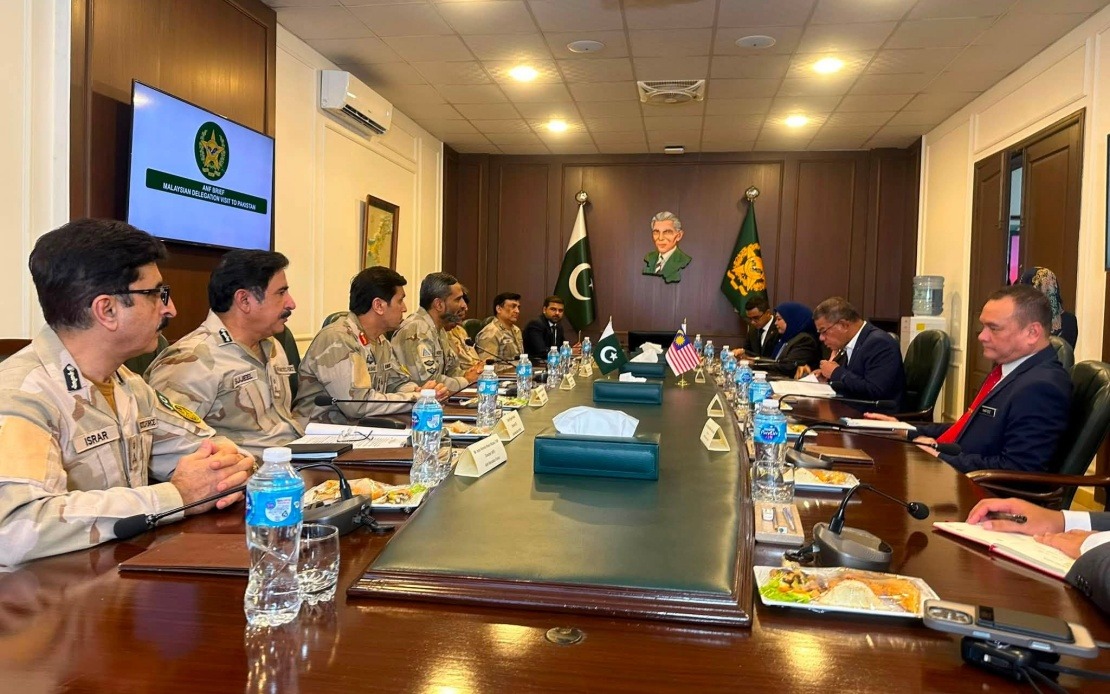
Malaysia and Pakistan are moving to formalise their collaboration on drug enforcement through a structured Memorandum of Understanding aimed at combating the growing challenge of transnational narcotics trafficking. Home Minister Datuk Seri Saifuddin Nasution Ismail outlined the initiative during an official visit to Islamabad, where he engaged directly with Pakistan's Anti-Narcotics Force leadership and senior government officials to chart a more coherent strategy for the region's drug crisis.
The proposed MoU represents recognition that the scale and sophistication of modern drug trafficking demands coordinated action beyond individual nation boundaries. Saifuddin Nasution emphasised that contemporary drug threats have evolved dramatically, with synthetic substances like methamphetamine now dominating criminal supply chains alongside the involvement of organised networks that operate across multiple jurisdictions simultaneously. These operations exploit geographical advantages and regulatory gaps to move contraband rapidly across continents, making unilateral enforcement efforts insufficient.
Pakistan's geographical position places it at the frontline of global drug flows originating from Afghanistan, one of the world's largest opium producers. For Malaysia and the broader Southeast Asian region, this positioning makes partnership with Islamabad strategically essential. The trafficking routes that originate in Central and South Asia do not terminate at Pakistan's borders but extend eastward through networks that ultimately reach Malaysian ports, airports, and distribution hubs. By working upstream with Pakistani counterparts, Malaysia can potentially intercept shipments before they establish foothold in the region.
The two countries already possess a foundation for cooperation, having jointly coordinated more than 28 significant cases between 2012 and 2018. This operational history demonstrates feasibility and compatibility between Malaysian and Pakistani enforcement agencies. However, the Home Minister signalled that existing collaboration, while valuable, operates below its potential. The proposed MoU would systematise and intensify these efforts through mechanisms that move beyond ceremonial agreements toward substantive operational integration.
Future cooperation will pivot on three key pillars, according to Saifuddin Nasution. Intelligence sharing represents the first priority, enabling both countries' agencies to maintain real-time awareness of trafficking patterns, criminal networks, and emerging threats. Coordinated operations constitute the second element, allowing Malaysian and Pakistani enforcement teams to conduct joint investigations that disrupt supply chains before narcotics reach distribution points in Southeast Asia. Training and expertise exchange forms the third component, ensuring that Pakistani and Malaysian personnel understand each other's operational methods, legal frameworks, and technological capabilities.
Beyond narcotics, the Home Minister's visit addressed Pakistan's role in broader regional security architecture. Discussions with Pakistan's Deputy Prime Minister and Foreign Minister Mohammad Ishaq Dar covered geopolitical developments, emphasising that dialogue and diplomatic engagement remain essential tools for addressing regional conflicts. The conversations extended to economic cooperation, with particular focus on food security, an increasingly pressing concern for Malaysia as global supply chains face disruption. Pakistan's potential as a source for rice and meat imports could contribute meaningfully to Malaysia's food resilience strategies, while market access discussions may facilitate deeper bilateral trade.
A significant outcome involved establishing a Joint Working Group encompassing security, narcotics control, and police training. This institutionalised framework ensures that cooperation continues beyond individual ministerial visits and survives bureaucratic transitions. The structure also permits coordination across multiple sectors simultaneously rather than treating narcotics, security, and law enforcement as separate domains. The signing of the International Transfer of Prisoners Agreement between the two nations further cements institutional cooperation, enabling both countries to manage offenders more effectively within their respective legal systems.
Pakistan's identity management infrastructure also attracted Malaysian attention. The visit to the National Database and Registration Authority headquarters introduced the Malaysian delegation to NADRA's biometric systems, digital identity solutions, and border management technologies. Given Malaysia's own digital transformation agenda under the MADANI Government framework, exposure to Pakistani systems offers practical lessons for enhancing security architecture while improving public service delivery. The integration of identity databases with law enforcement systems, in particular, holds relevance for Malaysian efforts to strengthen border control and counter transnational crime more comprehensively.
The broader context for this engagement reflects Malaysia's recognition that Southeast Asian nations cannot insulate themselves from global drug production and trafficking dynamics. The region's prosperity and stability depend partly on effective cooperation with countries sitting on major trafficking corridors. Pakistan, despite facing its own severe narcotics challenges, possesses intelligence networks, enforcement experience, and geopolitical positioning that Malaysian agencies can leverage. Simultaneously, Pakistan benefits from Southeast Asian cooperation by accessing routes through which drugs transit and understanding market dynamics in East Asian destinations.
For Malaysian policymakers, the MoU signals a shift toward multilateral engagement on security matters rather than relying exclusively on regional frameworks like ASEAN. While ASEAN cooperation remains important, the narcotics crisis transcends the bloc's boundaries. Afghanistan's opium production, Pakistan's position as a transit country, and East Asia's role as a lucrative market create a chain that requires coordinated action across multiple regions. Malaysia's willingness to engage directly with Pakistan represents pragmatic acknowledgment of this geopolitical reality.
The emphasis on intelligence-led operations rather than enforcement alone also indicates evolving thinking within Malaysian security agencies. Rather than focusing narrowly on arrests and seizures, the partnership prioritises understanding criminal networks' structures, supply chain logistics, and financial flows. This intelligence-centric approach enables more strategic interventions that disrupt trafficking at critical junctures rather than merely responding to drugs already in circulation.
Looking forward, the success of the Malaysia-Pakistan narcotics MoU will likely depend on implementation consistency and resource allocation. Structural agreements mean little without sufficient funding, personnel, and political will to sustain operations. The involvement of senior ministers from both countries at the launch stage suggests initial commitment, though maintaining momentum through bureaucratic transitions in either country will require sustained attention from political leadership.

