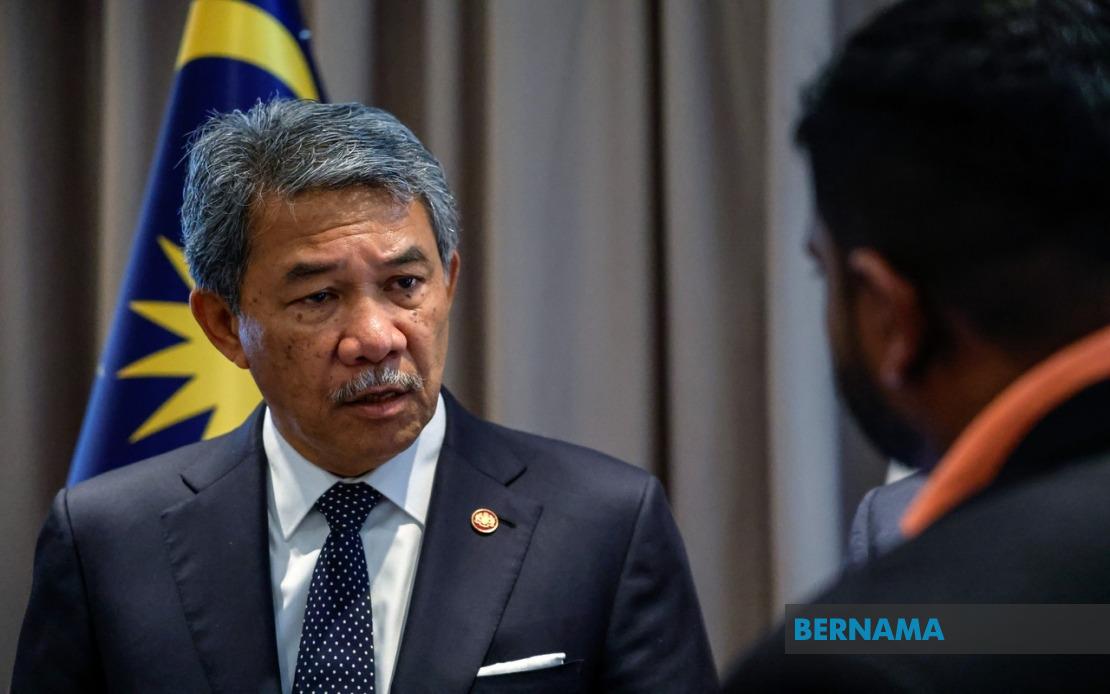
Malaysia and the Philippines have moved to expedite the return of more than 5,000 undocumented Philippine nationals currently held in immigration detention facilities across Sabah, addressing a mounting humanitarian and administrative challenge that has strained Malaysia's detention infrastructure. The commitment emerged following high-level discussions at the 9th Malaysia-Philippines Joint Commission Meeting in Manila, where both countries acknowledged the urgent need to clear overcrowded facilities while maintaining orderly repatriation procedures.
Foreign Minister Datuk Seri Mohamad Hasan indicated that the Philippine Embassy's screening process has already identified over 1,000 individuals whose documentation and circumstances permit immediate deportation. These individuals represent the first wave of returnees, with Manila and Kuala Lumpur now exploring multiple logistical pathways including sea routes and other transport mechanisms to facilitate their movement back to the Philippines. The dual-track approach reflects recognition that managing departures on this scale requires flexible, sustainable solutions rather than rigid timelines that could compromise either nation's administrative capacity.
The overflow situation at Sabah's four immigration depot centres underscores the persistent challenge of undocumented migration throughout Southeast Asia. These facilities, designed for temporary processing rather than indefinite detention, have become de facto long-term holding sites as repatriation negotiations with Manila proceeded slowly. Mohamad's acknowledgment that the centres cannot sustain their current population signals that Malaysia views accelerated returns not merely as a preference but as an operational necessity requiring immediate action.
Beyond the mechanics of deportation, the bilateral discussions broached the question of education for the children of detained migrants residing in Sabah pending repatriation. Malaysia has agreed to examine whether continued schooling should be provided during the waiting period, a consideration reflecting both humanitarian concerns and practical recognition that families may remain in Malaysia for several months. However, Mohamad emphasized that any educational provision must operate under direct Philippine government administration rather than private, unregulated institutions. This insistence on state oversight addresses longstanding concerns across Southeast Asia about informal education systems operating without transparent accountability or adequate safeguards.
The education component of the agreement carries significance beyond immediate migrant welfare. It signals Malaysia's willingness to invest in transitional support structures while migrants await departure, a posture that contrasts with purely enforcement-oriented approaches. For Malaysia's broader regional standing and its responsibilities toward vulnerable populations, such measures carry diplomatic weight, demonstrating proportionate responses to irregular migration rather than purely restrictive measures.
Separately, Mohamad addressed the revival of historical claims over Sabah that have periodically surfaced in Philippine political discourse. Though the matter was not directly debated during the JCM, Mohamad reiterated Malaysia's position grounded in international law and UN recognition. He noted that the United Nations, through a commission convened by its Secretary-General, formally identified Sabah as Malaysian territory, establishing a legal foundation that Malaysia considers conclusive. His diplomatic language suggesting that "there should be no issue" over Sabah's status reflected measured firmness rather than confrontational rhetoric, calibrated to avoid jeopardizing practical cooperation on migration while maintaining Malaysia's legal position.
The diplomatic navigation of Sabah's status became pertinent following Senator Robin Padilla's recent statements urging President Ferdinand Marcos Jr to revisit the Philippines' historical territorial claims. Malaysia had signalled its intention to lodge a formal diplomatic note addressing this rhetoric, yet the fact that substantive bilateral discussions proceeded without the Sabah question derailing cooperation suggests both nations view practical operational matters as sufficiently compartmentalized from territorial disputes. This separation of concrete migration governance from historical grievances demonstrates mature multilateral management, essential given that disrupting migration cooperation would primarily harm the vulnerable populations caught within both countries' jurisdictions.
The Joint Commission Meeting represents ongoing institutional engagement between Manila and Kuala Lumpur across multiple policy domains. Co-chaired by Mohamad and Philippine Secretary of Foreign Affairs Ma. Theresa P. Lazaro, these regular consultations provide structured channels for addressing bilateral issues including security, trade, and humanitarian concerns. The migration discussion, while focused on immediate repatriation logistics, occurs within this broader relationship management framework where both capitals recognize mutual benefit in sustained dialogue.
For Malaysia, clearing detention centres has immediate practical benefits: reduced strain on detention infrastructure, lower operational costs, and alleviation of overcrowding that creates humanitarian vulnerabilities. For the Philippines, accepting returning nationals represents an international obligation, though one that requires absorbing individuals into domestic labour markets and support systems. The negotiated approach dividing individuals into categories—those immediately deportable versus those requiring further screening—reflects pragmatic recognition of administrative constraints on both sides.
The migration situation in Sabah reflects broader Southeast Asian patterns where irregular movement driven by economic disparities persists despite enforcement measures. The Philippines, with substantial emigration pressures, generates ongoing irregular outflows toward more developed neighbours including Malaysia. Addressing these flows requires sustained cooperation that the Malaysia-Philippines framework increasingly appears designed to facilitate, moving beyond episodic crisis response toward institutionalized management protocols.
Looking ahead, the success of these repatriation measures will depend on Manila's ability to implement departures at the committed pace while Malaysia's detention centres genuinely reduce their populations. Both factors carry political dimensions within each country, with public expectations and budgetary implications influencing implementation capacity. The agreement's specific timeline commitments and logistical mechanisms remain undisclosed, leaving some ambiguity about enforcement prospects, though the Joint Commission's institutional weight suggests both governments view this as a priority warranting sustained attention.

