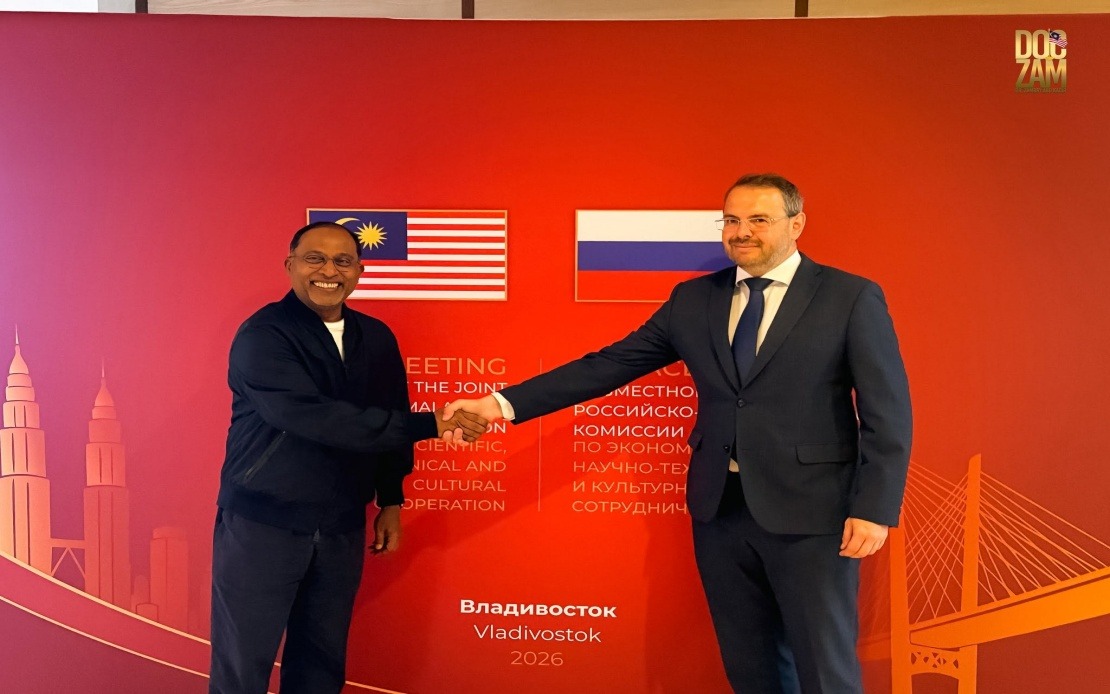
Malaysia and Russia are set to chart fresh territory in bilateral relations as the Fifth Malaysia-Russia Joint Commission on Economic, Scientific and Technological Cooperation (JC-ESTC) convenes in Vladivostok this week. Higher Education Minister Datuk Seri Dr Zambry Abd Kadir is spearheading the Malaysian contingent in discussions aimed at broadening trade corridors, deepening investment partnerships, and unlocking opportunities in emerging technologies and strategic industries where both nations possess complementary capabilities.
The meeting, running from August 13 to 15, brings together a substantial representation of Malaysian institutional interests, with 17 ministries and agencies participating. This extensive roster underscores the intricate web of bilateral engagement spanning economic sectors, commerce, resource development, scientific advancement, tertiary education, agricultural production, and cultural exchange. The sheer breadth of this involvement reflects a recognition in Kuala Lumpur that Malaysia-Russia ties encompass far more than diplomatic niceties; they represent concrete opportunities for mutual economic advancement and technological progress.
Zambry has positioned the meeting as a platform for transforming diplomatic goodwill into tangible outcomes that directly benefit citizens and enterprises in both nations. Rather than limiting discussions to broad statements of intent, Malaysian officials are emphasising the need for actionable commitments—investments materialising on the ground, research collaborations producing publishable outcomes, technology transfers creating competitive advantages, and human capital development opening employment pathways for qualified professionals. This outcome-driven approach reflects a maturation in how Kuala Lumpur views strategic partnerships, moving beyond ceremonial engagement toward pragmatic collaboration.
In the higher education sphere, Malaysia intends to prioritise expanding opportunities for student mobility in both directions, facilitating academic exchanges that expose students to international perspectives and research methodologies. Joint research initiatives represent another focal area, with potential for collaboration in fields where both countries maintain research strengths and capacity. University-to-university partnerships are expected to form the institutional backbone of sustained engagement, creating enduring relationships that survive changes in political leadership or ministerial tenure. Talent development in emerging domains—artificial intelligence, biotechnology, renewable energy, and advanced manufacturing—appears poised to attract particular emphasis, as both nations compete globally for skilled workforces in sectors driving twenty-first century economic growth.
The timing of this engagement carries regional significance. Southeast Asia occupies an increasingly important position in Russian strategic calculations following recent geopolitical shifts, and Malaysia's role as a significant economy within ASEAN makes its cooperation particularly valued. Concurrently, Malaysia's diversified foreign policy approach seeks to maintain robust relationships with major powers across Asia and beyond, using bilateral mechanisms like the JC-ESTC to strengthen partnerships without compromising its position as a non-aligned nation deeply embedded in regional multilateral frameworks.
Russia's scientific and technological expertise, particularly in theoretical physics, mathematics, aerospace engineering, and materials science, represents assets that Malaysian institutions and industries could potentially leverage through structured cooperation. Conversely, Malaysia's strengths in palm oil derivatives, petrochemical processing, advanced manufacturing, and emerging fintech innovation offer value propositions for Russian partners seeking to expand technological applications and market access. Energy sector collaboration, already a traditional component of Malaysia-Russia ties, may evolve to encompass not merely conventional oil and gas exchange but potentially new frontiers in nuclear technology, renewable energy solutions, and energy efficiency innovations.
Zambry was formally received by Russian Deputy Minister of Science and Higher Education Konstantin Mogilevsky upon arrival, signalling Moscow's commitment to the bilateral agenda. The formal co-chairmanship between Zambry and Russian Minister of Science and Higher Education Valery Falkov ensures that discussions occur at a level where decisions can be effectively implemented and follow-up actions assigned to appropriate institutional actors. This administrative clarity becomes essential when coordinating between numerous governmental departments and agencies, where clear lines of responsibility and accountability determine whether agreed initiatives translate into concrete programmes or remain as items in meeting minutes.
The JC-ESTC framework itself, established in 2015, has provided the institutional scaffolding for deepening Malaysia-Russia engagement over nearly a decade. The mechanism's longevity demonstrates the durability of bilateral interest and the utility both sides perceive in maintaining a dedicated high-level dialogue channel. However, Zambry's recent comments suggest a desire to enhance the mechanism's efficacy, ensuring that the platform delivers measurable value and remains responsive to evolving bilateral priorities rather than perpetuating discussions of issues now peripheral to national interests.
For Malaysian stakeholders, the meeting presents opportunities to access Russian expertise in specialised scientific fields and potentially to participate in collaborative research projects attracting international funding. Malaysian companies in manufacturing, energy, and technology sectors may identify partnership opportunities with Russian counterparts, particularly in sectors requiring complementary capabilities or technology sharing. The student and academic mobility initiatives, if successfully negotiated, would grant Malaysian scholars access to world-class Russian institutions while creating pathways for cultural exchange and mutual understanding between younger generations in both nations.
The strategic dimension of deepening Malaysia-Russia cooperation extends beyond immediate bilateral benefits. As ASEAN nations collectively pursue sophisticated foreign policies balancing engagement with major powers, Malaysia's success in leveraging Russian capabilities and maintaining productive bilateral relations contributes to the broader regional project of ensuring that Southeast Asian nations benefit from geopolitical competition rather than becoming territories where external powers impose zero-sum outcomes. This meeting thus carries implications not merely for Malaysia and Russia but for the regional balance that ASEAN collectively seeks to preserve.
Looking forward, concrete agreements emanating from the Vladivostok meeting will demonstrate whether this renewed emphasis on outcomes-oriented cooperation translates into implemented programmes. Malaysian observers should monitor whether student scholarships materialise, whether joint research initiatives advance beyond proposal stage, and whether investment commitments progress to operational ventures. Such indicators will reveal whether the Fifth JC-ESTC Meeting represents a genuine inflection point in bilateral relations or a continuation of well-intentioned but ultimately modest engagement characteristic of interactions between nations lacking immediate strategic imperatives compelling closer integration.

