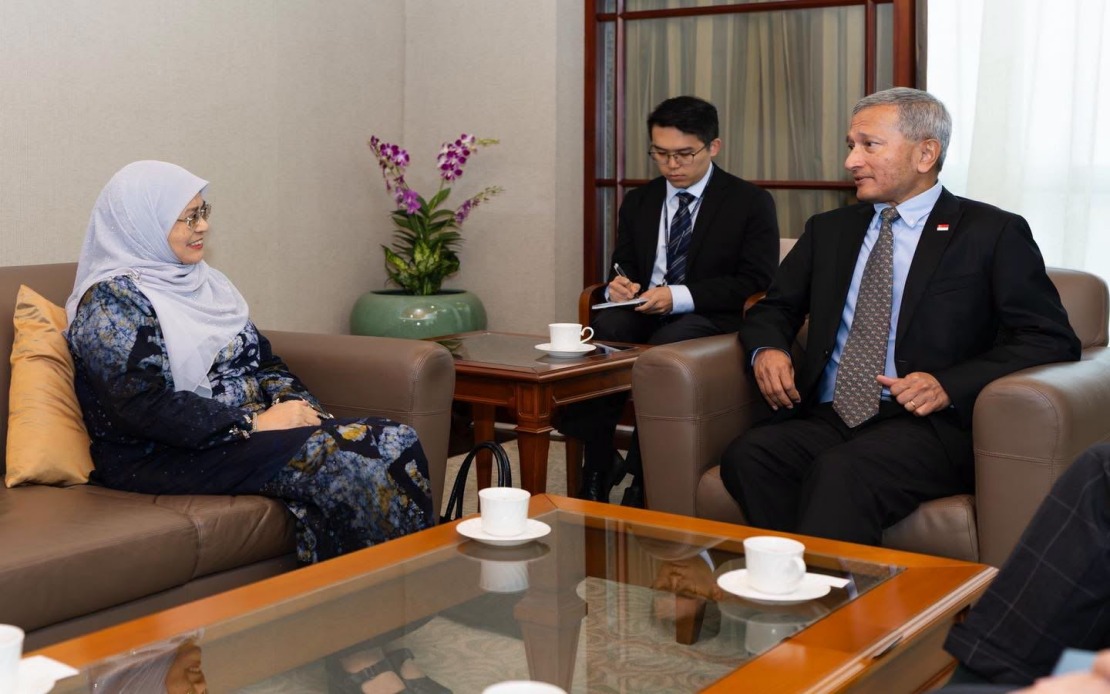
The two neighbouring nations have reaffirmed their commitment to strengthening cooperation across multiple sectors, signalling continuity and deepening engagement at the highest diplomatic levels. This pledge emerged during an official courtesy call when Datin Paduka Anizan Siti Hajjar Adnin, the newly appointed Malaysian High Commissioner to Singapore, met with Singapore's Foreign Minister Dr Vivian Balakrishnan on Wednesday. The exchange underscores both governments' recognition that maintaining the positive momentum built through decades of collaboration remains essential for the region's stability and prosperity.
Datin Paduka Anizan commenced her tenure as Malaysia's chief diplomatic representative in Singapore on July 2, 2026, bringing with her an extensive background in Malaysia's foreign service. Her appointment marks a significant moment in bilateral relations, as the high commissioner position serves as the primary channel for managing the complex relationship between two neighbouring countries separated by the Straits of Johor. The courtesy call represents a traditional diplomatic ritual that sets the tone for her tenure and demonstrates both governments' commitment to maintaining strong official channels of communication.
During their meeting, both sides engaged in substantive discussions on the current state of bilateral relations and identified areas where cooperation could be expanded. The Malaysian High Commission indicated that the conversation focused on practical measures to enhance the lives of ordinary citizens in both countries. This people-centred approach reflects a broader understanding that bilateral relations succeed when they deliver tangible benefits to residents and businesses operating across borders, rather than remaining confined to state-level interactions.
One particularly significant aspect of the discussions involved cross-border communities, who represent a crucial constituency in Malaysia-Singapore relations. Families with members living on opposite sides of the border, individuals employed across the boundary, and entrepreneurs with business interests in both countries comprise a substantial economic and social fabric. The two delegations recognised that improving conditions for these populations—whether through streamlined administrative processes, better transportation infrastructure, or enhanced business frameworks—directly contributes to social stability and economic dynamism in both nations.
Foreign Minister Balakrishnan's remarks emphasised the historical foundations underpinning the bilateral partnership. He noted that Malaysia and Singapore share not merely a border, but a common heritage rooted in their interconnected past, sophisticated people-to-people connections developed through migration, trade, and family ties, and extensive operational cooperation spanning defence, maritime security, law enforcement, and economic integration. This multifaceted relationship distinguishes the Malaysia-Singapore dynamic from many other bilateral partnerships in Southeast Asia, creating both opportunities and responsibilities for managing inevitable friction points.
Balakrishnan expressed confidence in Datin Paduka Anizan's capacity to advance bilateral objectives, specifically referencing her accomplished diplomatic career. This public endorsement serves multiple purposes: it signals to Malaysia that Singapore welcomes her appointment, demonstrates to domestic audiences in Singapore that experienced foreign diplomats will manage this complex relationship, and reinforces to the international community that both nations view this bilateral arrangement as strategically important. The implicit continuity message—that she will build on predecessors' accomplishments—also reassures stakeholders that institutional knowledge and established cooperation frameworks will be preserved.
The timing of this exchange carries subtle significance within the broader context of Southeast Asian geopolitics. As the region navigates challenges ranging from maritime security concerns to economic competition with external powers, the Malaysia-Singapore relationship's stability becomes increasingly important. Both nations' capacity to manage their relationship effectively creates positive spillover effects for regional cohesion and demonstrates to neighbouring countries that pragmatic bilateral partnerships can withstand inevitable disagreements.
Beyond the ceremonial aspects of diplomatic courtesy calls, the substantive focus on exploring avenues to improve citizens' lives reflects contemporary thinking about what constitutes successful statecraft. Rather than limiting discussions to high-level strategic issues, the delegations recognised that citizens' tangible experiences—whether transiting borders, conducting business, or maintaining family connections—ultimately determine whether bilateral relations command genuine public support. This approach acknowledges that globalisation and transnational community formation have created constituencies whose interests cannot be adequately served by traditional state-centric diplomatic frameworks.
The commitment reaffirmed during this meeting also carries implications for Malaysia's broader regional and international engagement. As a nation managing complex relationships across Southeast Asia while maintaining strategic partnerships globally, Malaysia's capacity to nurture productive bilateral relationships with immediate neighbours establishes a foundation for broader diplomatic influence. Singapore, as a strategically positioned city-state with significant regional and global influence, similarly benefits from a well-managed relationship with its larger neighbour, ensuring that no fundamental bilateral disputes undermine Singapore's regional standing or economic interests.
Looking forward, the practical implications of this renewed commitment will manifest through specific cooperative initiatives across sectors including finance, manufacturing, digital economy, education, and tourism. Both nations possess complementary economic strengths and integrated supply chains that, when functioning smoothly, generate substantial mutual benefit. Investments in relationship-building at this stage help ensure these practical cooperations remain insulated from political pressures that periodically emerge in bilateral ties.
The institutional frameworks through which Malaysia and Singapore manage their relationship—including bilateral committees, regular ministerial meetings, and ongoing consultation mechanisms—will likely receive renewed emphasis under Datin Paduka Anizan's leadership. These structures, built through decades of engagement, provide channels for addressing grievances before they escalate and platforms for identifying collaborative opportunities. Her experience with Malaysia's diplomatic apparatus positions her to navigate both the smooth-functioning aspects of the relationship and the periodic tensions that require careful management.
Ultimately, this courtesy call represents more than a routine diplomatic formality. It signals to citizens, businesses, and international observers that both Malaysia and Singapore view their bilateral relationship as sufficiently important to warrant sustained high-level attention. In an era when regional partnerships face pressures from geopolitical rivalries and competing priorities, such visible reaffirmations of commitment contribute meaningfully to relationship stability and public confidence in government commitment to cross-border cooperation.

