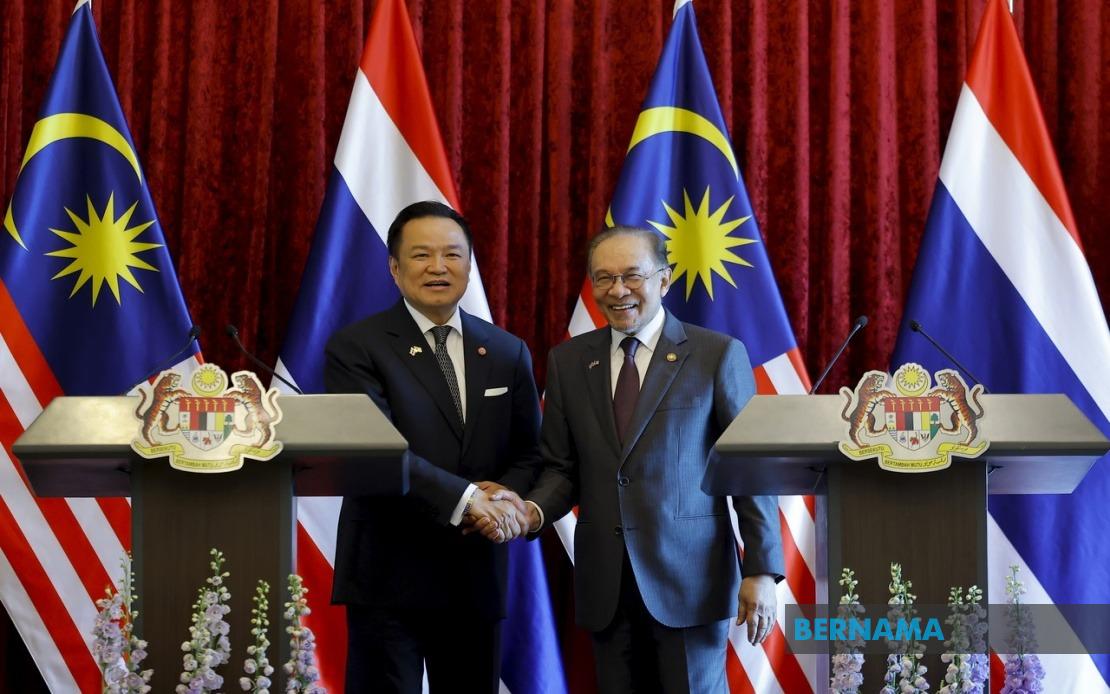
Malaysia and Thailand are intensifying their regional integration strategy through an ambitious programme to accelerate infrastructure development along their shared border and substantially expand commercial ties. The two nations have jointly committed to achieving US$30 billion in bilateral trade within the next three years—a significant leap that underscores their mutual recognition of unrealised economic potential in cross-border commerce and investment.
Prime Minister Datuk Seri Anwar Ibrahim and his Thai counterpart Anutin Charnvirakul formalised the partnership during high-level talks in Putrajaya, signalling renewed political commitment from both leaderships. The discussions yielded multiple agreements spanning infrastructure, trade facilitation, and regulatory harmonisation. Rather than limiting engagement to the capital's formal settings, both leaders scheduled a joint visit to Bukit Kayu Hitam and Sadao—border towns that will serve as the physical anchors for these development initiatives. This deliberate geographical choice reflects the strategic importance both governments assign to grassroots border integration and the communities most directly affected by cross-border economic activity.
At the heart of the partnership lies an aggressive timetable for connectivity projects that will reshape how goods, services, and people move between the two countries. Malaysia and Thailand are prioritising the fast-tracking of multiple border infrastructure undertakings, though specific projects were not detailed in initial announcements. These initiatives typically encompass road networks, bridge construction, and port facilities that reduce transit times and logistics costs for traders. By compressing project timelines, both nations aim to capitalise on the growing middle class across Southeast Asia and rising intra-regional demand for goods and services that cross-border infrastructure can efficiently serve.
The establishment of special border economic zones represents a particularly ambitious dimension of this collaboration. Such zones function as regulated enclaves where businesses enjoy preferential tariff treatment, simplified customs clearance, and streamlined regulatory frameworks—mechanisms designed to attract manufacturing, logistics, and value-added processing operations. For Malaysia, which has long sought to deepen industrial integration with Thailand's robust manufacturing sector, these zones could facilitate supply-chain partnerships that enhance competitiveness in regional and global markets. Thai businesses similarly stand to benefit from improved access to Malaysian markets and port infrastructure serving the Indian Ocean rim.
Immigration and customs facilitation emerges as a critical enabler of the broader trade ambition. Both governments have signalled commitment to reducing procedural friction at border crossings—measures that might include digital documentation systems, pre-clearance mechanisms, and harmonised standards. Such reforms directly address longstanding grievances from traders and transport operators who report delays and inconsistencies that inflate costs and undermine competitiveness. By modernising border processes, Malaysia and Thailand essentially reduce the hidden tariffs that bureaucratic friction imposes on cross-border commerce.
The US$30 billion trade target by 2027 represents a substantial acceleration from current levels, implying both nations must expand their commercial relationship at a rate well above historical trends. Contextually, this aspiration reflects confidence in regional economic recovery and growing integration within the ASEAN framework. For Malaysian exporters, closer ties with Thailand—a manufacturing powerhouse and gateway to Indochina—offer diversified markets for everything from palm-based products to electronics components. Thai manufacturers, conversely, gain proximity to Malaysia's petrochemical and refining assets, alongside improved access to South Asian markets through Malaysian ports and logistics networks.
Anwar's characterisation of the visit as extending beyond the capital to border areas underscores recognition that Malaysia-Thailand relations benefit from active engagement with subnational stakeholders. Bukit Kayu Hitam in Kedah and Sadao in Songkhla are communities whose prosperity historically depended on cross-border trade and labour mobility. By visiting these towns, both leaders signal commitment to inclusive growth—ensuring that border integration generates tangible benefits for residents in these peripheral zones rather than concentrating gains in major urban centres. This grassroots dimension also helps build domestic political support for bilateral initiatives that occasionally generate concerns among local populations wary of increased foreign competition or cultural change.
The timing of these agreements reflects broader regional geopolitical currents. Southeast Asia's economic integration continues deepening through mechanisms like the ASEAN Comprehensive Investment Agreement and the Regional Comprehensive Economic Partnership, creating momentum for bilateral initiatives that complement multilateral frameworks. Malaysia and Thailand, as neighbouring ASEAN members with significant people-to-people connections and complementary economic structures, are well-positioned to demonstrate how bilateral cooperation amplifies regional prosperity. Success in this partnership could serve as a model for other ASEAN dyads seeking to deepen integration.
Challenges remain substantial. Coordinating large-scale infrastructure projects across borders requires sustained political will, technical coordination, and adequate funding. Regulatory harmonisation—essential for enabling zone operations—demands difficult negotiations over standards and enforcement mechanisms. Moreover, achieving trade targets depends partly on macroeconomic conditions beyond bilateral control, including global commodity prices, currency fluctuations, and demand from major trading partners. Both nations must also balance liberalisation with protection of sensitive domestic sectors, a perpetual tension in trade negotiations.
Longer term, successful implementation of these initiatives could reshape economic geography across northern Malaysia and southern Thailand. Enhanced connectivity and preferential trade arrangements may redirect investment flows toward border regions currently disadvantaged relative to capital areas. Skills development, infrastructure spending, and supply-chain clustering effects could gradually elevate prosperity in these peripheral zones. For Malaysia specifically, improved Thailand ties complement broader regional pivot strategies, strengthening ties with both continental and maritime Southeast Asia.
The deliberate framing of this partnership as extending beyond formal diplomacy—rooted instead in tangible infrastructure and economic zone development—suggests both governments recognise that enduring bilateral relations require visible, material benefits for ordinary citizens. As Malaysia navigates complex regional relationships and manages domestic economic pressures, deepening practical cooperation with Thailand offers a relatively uncomplicated avenue for demonstrating effective governance and tangible results.

