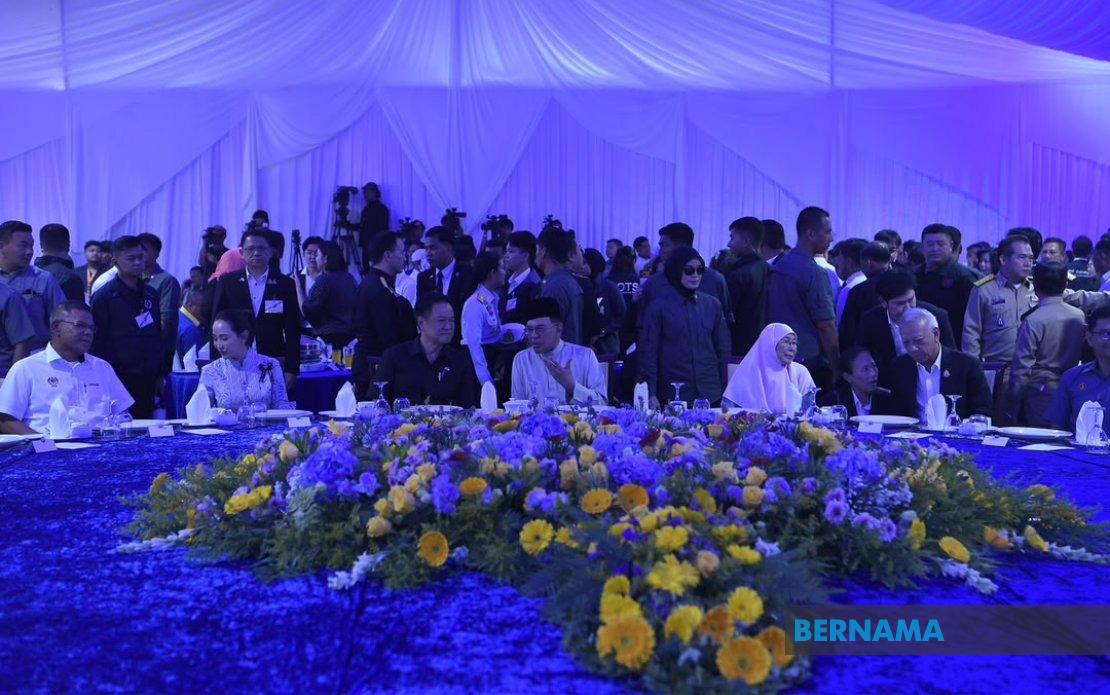
Prime Minister Datuk Seri Anwar Ibrahim and Thai Prime Minister Anutin Charnvirakul jointly opened a new road corridor on July 10, connecting Malaysia's Bukit Kayu Hitam Immigration, Customs, Quarantine and Security Complex directly with Thailand's Sadao Customs, Immigration and Quarantine Complex. The ceremonial launch marks a significant infrastructure upgrade for the busy northern border crossing, one of Southeast Asia's key trade arteries and a vital link for regional commerce and people movement.
The new thoroughfare is positioned as both practical necessity and symbolic gesture. According to Malaysia's Home Ministry, the project underscores the enduring diplomatic relationship between Kuala Lumpur and Bangkok whilst demonstrating tangible commitment to deepening cross-border cooperation. Officials characterised the completion as a strategic milestone reflecting years of coordinated planning between both nations' authorities and engineering teams. The ribbon-cutting ceremony crystallised broader regional ambitions to strengthen connectivity across Southeast Asia at a time when supply chain resilience and efficient border operations remain priorities for ASEAN members.
Operational transition begins immediately following the launch window. The new road will welcome traffic from 6 am Malaysia time on July 11, providing travellers and commercial vehicles with a modernised passage between the two nations. Simultaneously, the older border crossing linking Bukit Kayu Hitam and Danok will permanently cease operations from midnight on July 11, consolidating traffic flows through the enhanced facility. This coordinated switchover ensures continuity whilst allowing authorities to focus border management resources on the upgraded infrastructure.
The modernised facility incorporates integrated control systems designed to streamline the complex choreography of immigration, customs, quarantine and security screening. By concentrating all border functions within contemporary infrastructure, both governments anticipate measurable improvements in processing efficiency. Travellers can expect reduced waiting times during peak periods, whilst logistics operators moving goods across the frontier should experience smoother cargo clearance procedures. The improved infrastructure reflects lessons learned from decades of operating the older crossing, addressing bottlenecks that periodically disrupted flows during high-traffic seasons.
Economic benefits extend well beyond convenience metrics. The Home Ministry highlighted that the corridor serves Malaysia MADANI's vision by spurring development in border communities historically dependent on cross-border trade. Enhanced connectivity is expected to catalyse investment in northern Kedah, stimulating logistics hubs, warehousing facilities and service sectors around Bukit Kayu Hitam. For Thailand's southern provinces, the reliable passage strengthens distribution networks reaching Malaysian and regional markets. Combined, these dynamics should generate employment and business opportunities throughout the bilateral border zone.
The project integrates with the broader ASEAN North-South Economic Corridor strategy, which seeks to harness regional trade potential by eliminating infrastructure constraints. Modern border crossings function as accelerators for the entire supply chain, particularly benefiting manufacturing sectors in Malaysia and Thailand that depend on timely component exchanges and market access. Electronic components, automotive parts, agricultural products and processed goods flow continuously across this frontier; improved passage efficiency translates directly into competitiveness for regional manufacturers competing in global markets.
From a security perspective, the new infrastructure combines modernisation with enhanced controls. Integrated systems allow authorities to conduct comprehensive screening whilst maintaining traffic flow, a critical balance in contemporary border management. Officials from both countries can coordinate surveillance, intelligence sharing and enforcement operations more effectively through unified facility design. Rather than representing a loosening of controls, the upgraded crossing demonstrates how contemporary border security can accommodate legitimate commerce and movement whilst maintaining vigilance against illicit activities and security threats.
The initiative reflects Malaysia's commitment to strengthening border management through technology adoption and international cooperation, themes central to national security policy. Successive Malaysian governments have prioritised modernising entry points, recognising that outdated infrastructure creates vulnerabilities whilst hampering legitimate activity. This project exemplifies that approach, combining physical infrastructure investment with systemic improvements in how authorities manage the border. The Home Ministry's emphasis on transparency and efficiency signals official intent to operate borders as professional, predictable institutions rather than sites of discretionary decision-making.
Thailand's participation underscores Bangkok's parallel interest in modernising its southern border infrastructure. The Sadao facility upgrade reflects Thailand's broader development priorities in provinces like Songkhla and Satun, regions seeking to position themselves as logistics gateways. Thai officials' prominent involvement in the launch ceremony, alongside Malaysian counterparts, demonstrates political commitment from both capitals to maintaining momentum on infrastructure cooperation despite occasional diplomatic fluctuations.
The project's completion arrives amid broader regional discussions about deepening ASEAN connectivity. Organisations like the ASEAN Secretariat have emphasised that unreliable or inefficient border infrastructure remains a barrier to realising the region's trade potential. By upgrading the Malaysia-Thailand crossing, both countries contribute meaningfully to removing such obstacles. The project becomes a template for other ASEAN members evaluating their own border infrastructure needs, suggesting that coordinated investment in cross-border facilities generates mutual benefits outweighing the costs.
Beyond immediate bilateral considerations, the new crossing carries implications for Malaysia's positioning within regional trade hierarchies. As a major trading nation, Malaysia benefits significantly from efficient transportation networks and border facilities. The Bukit Kayu Hitam upgrade strengthens Malaysia's attractiveness as a logistics hub, particularly for businesses seeking reliable transit routes through Southeast Asia. Similarly, companies planning regional distribution centres gain confidence knowing that critical border crossings operate to modern standards.
The operational framework governing the new facility will be crucial to realising its potential. Both nations' authorities must maintain coordinated protocols ensuring consistent application of regulations and processing standards. Any divergence in how procedures are executed could recreate the inefficiencies the new infrastructure was designed to eliminate. Continued collaboration between Malaysian and Thai border agencies, supported by political commitment from both governments, will determine whether the facility becomes a model for regional cooperation or a missed opportunity.
Looking forward, the successful completion of this project may catalyse additional Malaysia-Thailand infrastructure cooperation. Other cross-border bottlenecks could receive similar treatment, progressively improving connectivity between the nations. Officials' references to ongoing commitment to border modernisation suggest that further joint projects may be planned or under consideration. For Malaysian and regional business communities, this trajectory offers prospect of increasingly fluid cross-border operations supporting economic growth throughout Southeast Asia.

