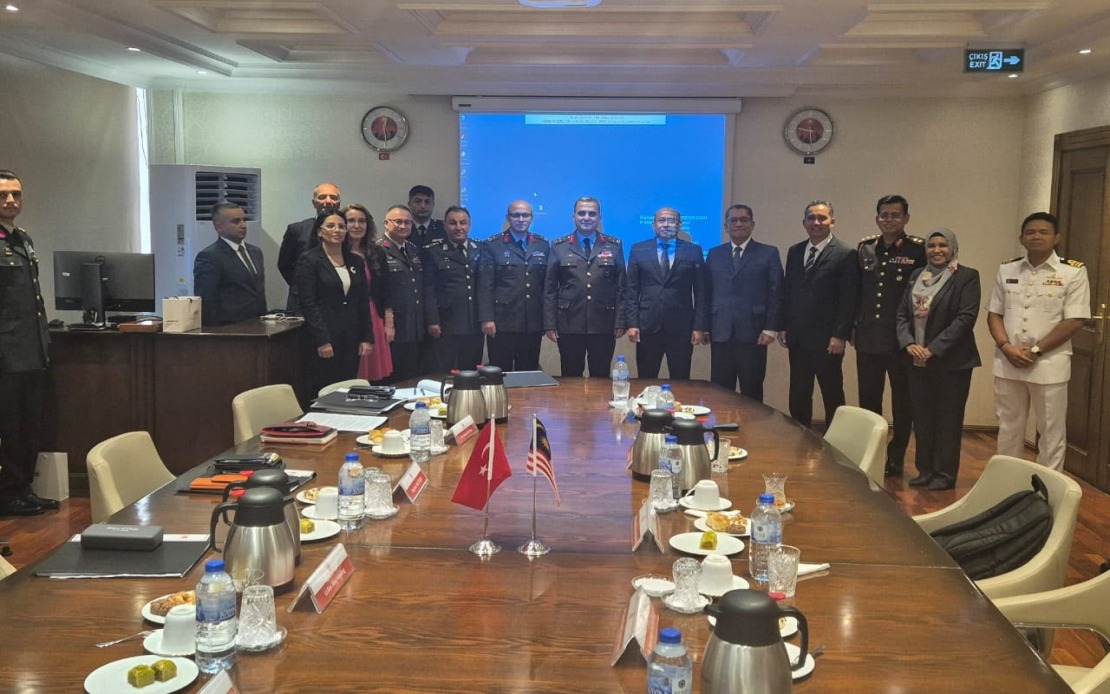
Malaysia and Turkiye have taken a significant step in deepening their military partnership through the first Malaysia-Turkiye Policy Talk, held at Turkiye's Ministry of National Defence headquarters in Ankara on Monday. The meeting represents a milestone in bilateral relations between the two nations and signals their shared commitment to addressing contemporary security challenges in their respective regions. Led by Turkiye's defence director-general Lt Gen Ilkay Altindag and Malaysia's MINDEF deputy secretary-general of policy Datuk Yani Daud, the talks focused on establishing a substantive foundation for sustained defence engagement between Kuala Lumpur and Ankara.
The discussion covered a broad spectrum of defence and security matters, ranging from policy frameworks and strategic doctrine to the complex geopolitical tensions that continue to shape security landscapes across Asia and the Middle East. Both delegations engaged in a comprehensive exchange of viewpoints on how their respective defence establishments perceive emerging threats, regional stability mechanisms, and the role that bilateral cooperation can play in addressing transnational security challenges. This exchange of perspectives goes beyond the ceremonial nature of many diplomatic encounters, suggesting that Malaysia and Turkiye view each other as substantive partners capable of contributing meaningful insights to regional security discourse.
A particularly noteworthy element of the dialogue was Malaysia's recognition of Turkiye's efforts in promoting peace across West Asia, particularly through Turkiye's involvement in the Makkah Pact. This appreciation reflects Malaysia's broader foreign policy orientation, which seeks to bridge divides in the Muslim world and supports international initiatives aimed at conflict resolution. For Malaysian strategists, Turkiye's diplomatic activism in the Middle East carries significant weight, given the region's importance to Islamic affairs and Malaysia's own positioning as a Muslim-majority nation with stakes in regional peace and prosperity.
Beyond the immediate discussions, both countries have agreed to establish formal Terms of Reference for the Policy Talk framework. This institutional mechanism is crucial because it transforms what could have been a one-off diplomatic gesture into a structured, recurring avenue for dialogue. The TOR provides clear guidelines for future engagements, identifies priority areas for cooperation, and creates accountability for implementing agreed-upon initiatives. By formalising this arrangement, Malaysia and Turkiye are signalling their intention to sustain momentum in defence relations regardless of political transitions or other competing diplomatic priorities.
The agreed framework specifically contemplates cooperation instruments and future defence programmes, though the Malaysian Defence Ministry statement does not elaborate on concrete initiatives under consideration. Potential areas of collaboration could span defence procurement and technology transfer, military training and exchange programmes, naval cooperation in strategic waterways, and intelligence sharing on transnational security threats. For Malaysia, such partnerships offer opportunities to diversify its defence relationships and access platforms that complement existing arrangements with other partners, while for Turkiye, engagement with Southeast Asian nations expands its strategic footprint beyond its traditional spheres of influence.
The decision to hold the second Policy Talk in Kuala Lumpur next year underscores the bilateral nature of this emerging partnership and gives Malaysia the opportunity to host a high-level defence delegation. The rotation of venues between national capitals reinforces the principle of equality and mutual respect, which are essential foundations for sustained cooperation between sovereign nations. Moreover, hosting the follow-up discussion in Malaysia allows Defence Ministry officials and other stakeholders to engage with Turkish counterparts in familiar settings and demonstrate Malaysia's institutional capacity for hosting substantive international security dialogue.
From Malaysia's perspective, this initiative aligns with the defence establishment's strategic priorities as outlined in the Mid-Term Review of the Defence White Paper. The document presumably emphasises the importance of expanding Malaysia's international defence partnerships, enhancing interoperability with allied nations, and positioning Malaysia as a responsible actor committed to regional stability. Strengthening ties with Turkiye, a significant military power with experience operating across multiple strategic theatres, contributes to these overarching objectives and demonstrates Malaysia's commitment to pragmatic, results-oriented defence diplomacy.
The timing of this inaugural policy talk also carries regional implications for Southeast Asia more broadly. As several countries in the region grapple with maritime security challenges, potential conflicts over resources and territorial claims, and the influence of major powers navigating the region's geopolitical landscape, Malaysia's outreach to Turkiye signals openness to expanding its circle of defence partners. This approach contrasts with zero-sum perspectives that view defence relationships as necessarily exclusive and instead embraces a more pluralistic model where nations can maintain multiple partnerships simultaneously without fundamental contradiction.
For Turkiye, engagement with Malaysia and the broader Southeast Asian region offers strategic value that extends beyond immediate bilateral interests. The region's geographic importance, its role in global trade and maritime commerce, and its growing economic dynamism make Southeast Asia an increasingly consequential area for Turkish foreign and defence policy. By establishing robust channels of communication and cooperation with regional actors like Malaysia, Turkiye positions itself to contribute to solutions for challenges that transcend traditional Middle Eastern and Eastern European concerns.
The emphasis both sides placed on maintaining regional peace and stability during the talks reflects a shared understanding that security is an increasingly interconnected challenge. Piracy and maritime terrorism, transnational organised crime, irregular migration patterns, and the proliferation of advanced weaponry all require coordinated responses that transcend bilateral relationships. Malaysia and Turkiye's commitment to dialogue on these issues suggests recognition that contemporary security threats demand multilayered diplomatic and operational responses.
Moving forward, observers will monitor whether this inaugural policy talk translates into concrete defence cooperation initiatives that meaningfully enhance Malaysia's capabilities and influence regional security dynamics. The establishment of TOR and the commitment to regular dialogue provide the institutional scaffolding, but sustained progress depends on both nations' willingness to invest resources and political capital into implementing collaborative programmes. Success in this venture could serve as a model for how Malaysia approaches defence partnerships with other non-traditional partners, particularly those from different geographic regions and cultural contexts.
The Malaysia-Turkiye Policy Talk ultimately represents a pragmatic expansion of Malaysia's defence diplomacy toolkit at a time when regional security environments are becoming increasingly complex and multipolar in nature. By building stronger relationships with diverse international partners, Malaysia enhances its strategic autonomy and its capacity to navigate international security challenges while maintaining its non-aligned foreign policy tradition and commitment to regional stability and cooperation.

