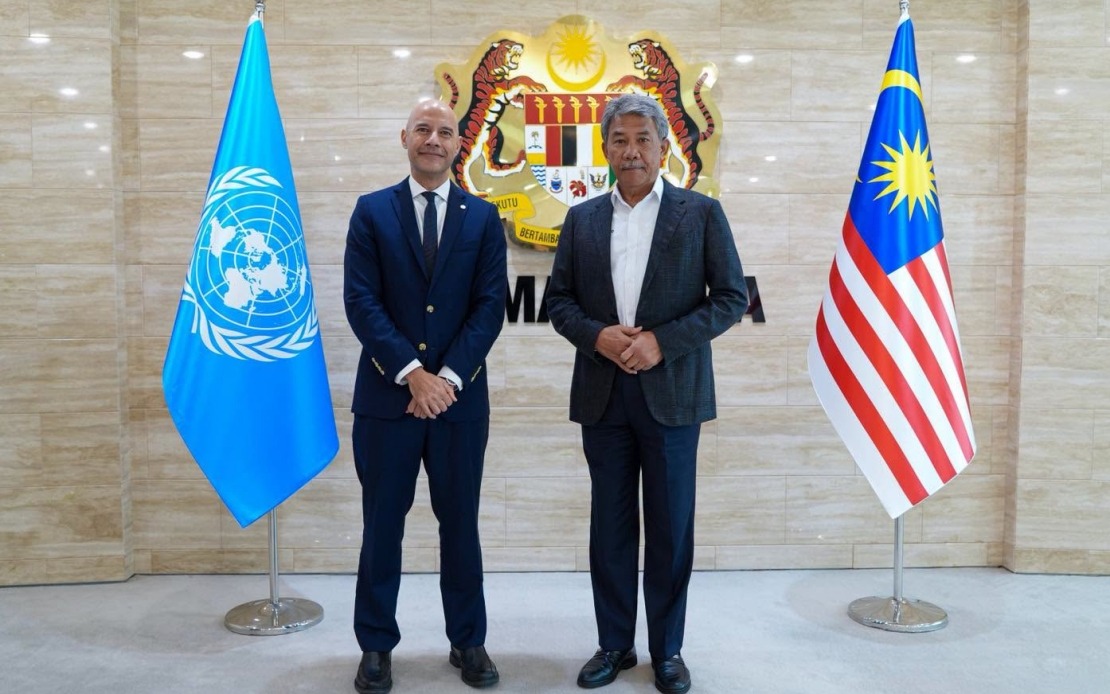
Malaysia has reaffirmed its commitment to strengthening cooperation with the United Nations following a high-level meeting at the Foreign Ministry's headquarters in Kuala Lumpur. Datuk Seri Mohamad Hasan, the Foreign Minister, received Nikolas Myint, the newly appointed UN Resident Coordinator for Malaysia, Singapore and Brunei, at Wisma Putra on Wednesday in what both sides characterised as a productive diplomatic engagement.
Myint assumed his position as UNRC for the three Southeast Asian nations following his appointment by UN Secretary-General António Guterres on May 31, 2026. The timing of this courtesy call reflects Malaysia's proactive diplomatic approach towards the international body and signals the government's intention to deepen institutional ties with UN agencies operating within the country. Such meetings between senior government officials and UN representatives have become customary practice in Malaysia, serving as important forums for discussing bilateral matters and exploring areas of mutual interest.
During the meeting, both sides engaged in substantive discussions centred on strengthening Malaysia's partnership with the United Nations. According to a statement posted on social media, Mohamad emphasised that the encounter provided an ideal platform for exchanging perspectives on avenues for enhanced collaboration between the two parties. The discussion reflects Malaysia's broader strategic interest in maintaining robust connections with multilateral institutions at a time when global challenges demand coordinated international responses.
In his remarks, the Foreign Minister underscored Malaysia's appreciation for the UN's multifaceted role in tackling pressing international issues. He highlighted how the world body addresses challenges ranging from sustainable development and climate change to humanitarian crises and conflict resolution. This recognition comes as Malaysia continues to navigate complex geopolitical dynamics in Southeast Asia whilst pursuing its own development agenda on the global stage.
Mohamad signalled Malaysia's determination to maintain close working relationships with both Myint's office and the various UN agencies established throughout the country. He framed this commitment as serving the nation's long-term interests, emphasising that cooperation with the UN should generate mutual advantages whilst supporting Malaysia's own aspirations for progress and prosperity. This statement reflects a pragmatic approach to multilateralism whereby Malaysia seeks tangible returns from its international engagements.
The Foreign Ministry's emphasis on alignment between Malaysia's development priorities and global well-being suggests a sophisticated understanding of how domestic and international agendas can be harmonised. Rather than viewing UN cooperation as purely altruistic, Malaysia positions itself as a stakeholder in global solutions that simultaneously advance national interests. This framing resonates with how many Southeast Asian countries approach their UN relationships, seeking to extract maximum benefit from multilateral frameworks whilst contributing meaningfully to international objectives.
Myint's appointment carries particular significance for Malaysia given his responsibility for coordinating UN activities across three distinct nations with different political systems and development levels. Singapore's status as a developed economy, Brunei's position as an energy-rich sultanate, and Malaysia's position as a middle-income nation with growing influence mean that Myint must navigate diverse national priorities and expectations. The fact that Malaysia welcomed him promptly through a formal meeting at ministerial level demonstrates the country's seriousness about maintaining productive UN relations.
For Malaysia specifically, the UN presence encompasses numerous agencies working in areas such as sustainable development, refugee support, humanitarian assistance, and technical cooperation. These institutions often provide valuable expertise, funding mechanisms, and platforms for knowledge-sharing that contribute to national development priorities. Strengthening coordination with the UN Resident Coordinator's office can enhance the effectiveness of these various agencies' work within Malaysia and ensure better alignment with government objectives.
The meeting also reflects Malaysia's broader diplomatic strategy of maintaining equidistant relationships with major international organisations and powers. By promptly engaging with the newly appointed UNRC, Malaysia demonstrates its commitment to multilateralism and its willingness to work collaboratively with international institutions on matters of shared concern. This positioning is particularly important for a country that seeks to maintain influence within both regional (ASEAN) and global forums.
Looking forward, the substance of Malaysia's UN engagement will likely centre on several key areas. Climate action and environmental sustainability represent significant concerns for Malaysia, particularly regarding palm oil production and biodiversity conservation. Additionally, Malaysia's interest in addressing refugee situations, particularly the Rohingya crisis affecting its borders, aligns with UN humanitarian mandates. Regional stability and maritime security in the Strait of Malacca also present areas where UN expertise and coordination could support Malaysian interests.
The formality and timing of this courtesy call suggest that both Malaysia and the UN value their institutional relationship and see potential for deepening engagement. As global challenges become increasingly complex and transnational, effective partnerships between national governments and multilateral bodies become more essential. Malaysia's proactive engagement with its new UN Resident Coordinator indicates recognition that navigating contemporary international affairs requires sustained diplomatic effort and genuine commitment to collaborative problem-solving.

