Malaysia and Uzbekistan are positioning themselves for a substantially deeper engagement in agricultural development and food security, leveraging complementary strengths that could reshape agricultural practices across Central Asia. The strategic focus reflects growing recognition among both nations that coordinated approaches to farming innovation and food production security are essential in an era of global supply chain volatility and climate uncertainty.
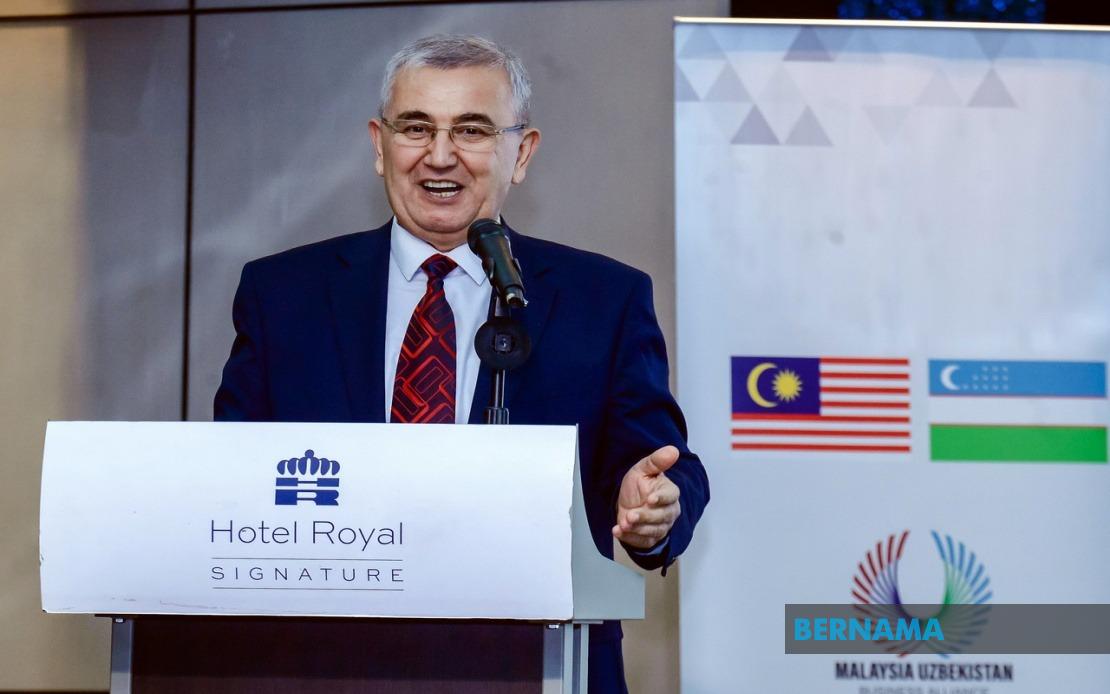
According to Uzbekistan Ambassador to Malaysia Dr Karomidin Gadoyev, agriculture has consistently commanded attention at the highest political levels between the two governments. This emphasis crystallised through multiple high-level visits over recent years, including Malaysian Prime Minister Datuk Seri Anwar Ibrahim's trip to Uzbekistan in May 2024 and President Shavkat Mirziyoyev's February visit to Malaysia. The prominence of agricultural discussions during these diplomatic engagements underscores how both nations view food production and agricultural modernisation as central to their respective development agendas.
The framework for cooperation gained practical momentum following Agriculture and Food Security Minister Datuk Seri Mohamad Sabu's recent official mission to Uzbekistan, which catalysed concrete initiatives beyond rhetorical commitments. Malaysia brings demonstrable capabilities in paddy rice production, aquaculture operations, fisheries management, precision farming systems, and cutting-edge agricultural research infrastructure. Uzbekistan, conversely, possesses advanced capabilities in water-efficient irrigation engineering, horticultural production, and agri-food manufacturing, creating a natural complementarity that both sides are now formalising into structured partnerships.
The integration of digital technology and artificial intelligence into agricultural systems represents a shared priority. Both nations acknowledge that deploying these advanced technologies can substantially amplify crop yields, enhance farm resilience against environmental shocks, and strengthen food supply chains amid intensifying global pressures on agricultural output. For Uzbekistan particularly, adopting Malaysian-proven smart agriculture methodologies could dramatically improve productivity across its vast cultivation areas. The partnership signals recognition that technology transfer in this domain delivers tangible economic and food security dividends.
Practical collaboration is already advancing through Malaysia's Agricultural Research and Development Institute (MARDI), which is jointly exploring innovative farming solutions with Uzbek counterparts. The deployment of advanced agricultural drones represents a particularly compelling dimension. Malaysian enterprise Miracule has inaugurated Uzbekistan's first agricultural drone exhibition facility, with expansion plans encompassing expanded drone deployment across Uzbek farmland and eventual assembly of sophisticated drone systems within Uzbekistan itself. This trajectory from equipment demonstration through to local manufacturing represents the kind of technology transfer that creates sustained economic benefits beyond initial transactions.
Aquaculture emerged as a priority sector given Uzbekistan's demographic and geographic circumstances. With a population approaching 40 million inhabitants and landlocked geography limiting seafood access, aquaculture represents a logical pathway toward enhanced protein availability. Malaysia's established expertise in biofloc farming systems carries particular relevance—this technology cuts feed expenditure by approximately 30 percent while simultaneously boosting productivity and lowering production costs. Malaysian investors have begun examining shrimp and fisheries ventures across Uzbek territory, suggesting genuine commercial confidence in the market opportunity.
Current bilateral trade in agricultural and food products exceeded RM338 million during 2025, with Malaysian palm oil and its derivatives commanding the predominant share of Malaysian shipments to Uzbekistan. Yet Ambassador Gadoyev identified substantial untapped expansion potential, projecting that two to three-fold growth across the next five to ten years remains realistic. This expansion trajectory could position Malaysia as a processing hub for crude palm oil destined for Central Asian markets, while Uzbek enterprises increase their export presence for premium fresh produce and value-added processed foods throughout the region.
The establishment of such regional trade architecture would generate compounding benefits for both economies. Malaysia gains access to a substantial Central Asian consumer base while leveraging Uzbekistan's geographic position as a distribution nexus. Uzbekistan simultaneously benefits from Malaysian processing capabilities and technology while increasing returns on its agricultural production. Such reciprocal arrangements have proven more resilient than extractive trade relationships in Southeast Asian and Central Asian contexts.
Looking beyond immediate bilateral dynamics, the partnership carries broader geopolitical significance for Southeast Asia and Central Asia connectivity. Enhanced agricultural cooperation strengthens institutional linkages between the regions, potentially catalysing collaboration across other economic sectors. Agricultural partnerships often serve as confidence-building foundations for broader regional integration, particularly when structured around knowledge transfer and joint research initiatives rather than purely commodity exchanges.
The invitation extended to Uzbekistan to participate in the Malaysia Agriculture, Horticulture and Agrotourism Exhibition (MAHA) 2026 provides another institutional mechanism for deepening practical engagement. Such platforms facilitate direct business connections between Malaysian enterprises and Uzbek agricultural stakeholders, enabling technology demonstrations, investment discussions, and partnership negotiations outside formal diplomatic channels. For Uzbekistan, MAHA 2026 represents an opportunity to showcase its premium produce and processed food capabilities to Malaysian buyers and consumers, potentially unlocking new export pathways.
The emerging Malaysia-Uzbekistan agricultural architecture reflects how bilateral partnerships increasingly centre on technological complementarity and structured knowledge exchange rather than commodity trade alone. As global food security concerns intensify and agricultural systems face mounting climate pressures, such strategic collaborations become increasingly consequential. The combination of Malaysian expertise in modern farming systems and Uzbek agricultural resources and Central Asian market access creates a partnership foundation capable of generating mutual prosperity while contributing to broader regional food security enhancement.

