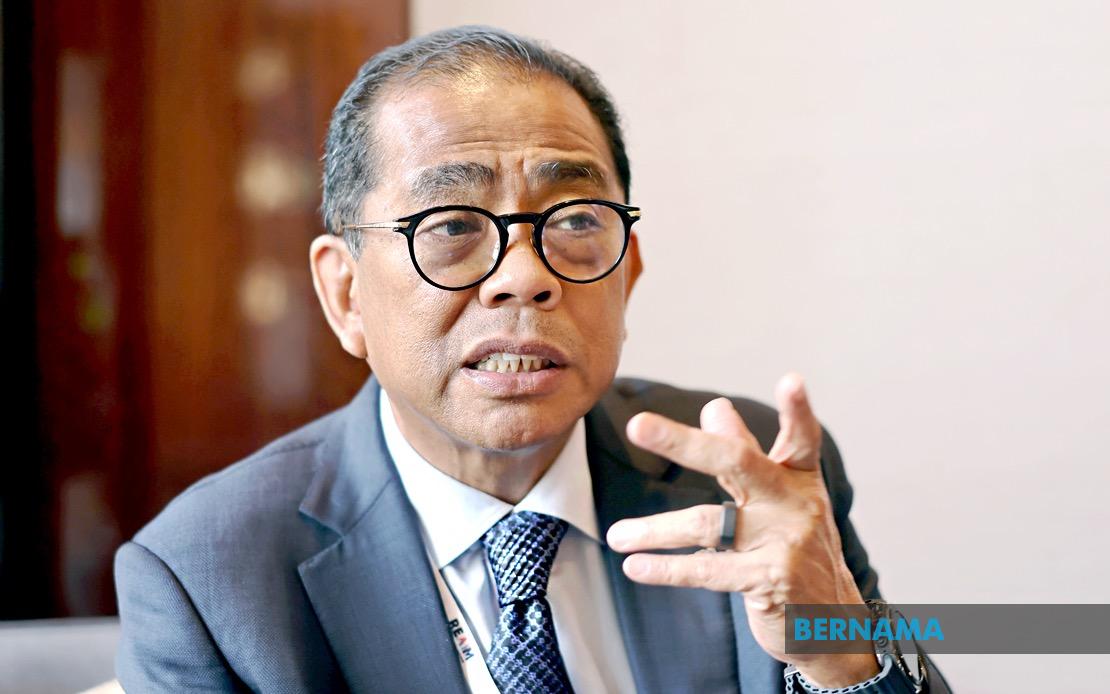
Malaysia and Vietnam have reaffirmed their dedication to broadening defence cooperation as a means of fostering regional peace and economic prosperity within ASEAN, Defence Minister Datuk Seri Mohamed Khaled Nordin stated during an official visit to Hanoi this week. The commitment emerged from substantive discussions between Mohamed Khaled and Vietnamese Minister of National Defence Gen Phan Van Giang, underscoring the strategic importance both countries place on their bilateral military relationship at a time of increasing regional complexity.
The two-day visit represents a continuation of strengthening ties that began with the formal signing of the Memorandum of Understanding on Defence Cooperation in November 2023. During his time in Vietnam, Mohamed Khaled also paid a courtesy call on Vietnamese Prime Minister Le Minh Hung, demonstrating the high-level political engagement accompanying the defence dialogue. These interactions reflect a broader Southeast Asian trend where defence partnerships serve as anchors for diplomatic stability amid shifting geopolitical currents.
The bilateral discussions encompassed a comprehensive range of military and strategic matters. Key areas of focus included joint military training initiatives, mechanisms for sharing intelligence, enhanced maritime domain awareness, submarine rescue operation capabilities, and emerging technological applications such as artificial intelligence in defence contexts. Additionally, both nations explored avenues for defence industry collaboration and strategies for countering newly-emerging security threats, particularly activities in grey zones that fall outside traditional conflict frameworks but threaten regional stability.
Mohamed Khaled proposed strengthening the formal cooperation mechanism through elevating the High-Level Committee's role, seeking to ensure that bilateral initiatives receive proper coordination and achieve more effective implementation on the ground. This institutional approach reflects recognition that expanding defence ties require robust governance structures to translate political commitments into concrete operational outcomes. The proposal signals Malaysia's intent to move beyond rhetorical gestures toward building durable, institutionalised frameworks for defence engagement.
On the contentious South China Sea issue, Malaysia emphasised that regional peace and stability must be preserved through continued reliance on dialogue, diplomatic engagement, and adherence to international legal principles. Mohamed Khaled specifically voiced Malaysian support for reaching a comprehensive and substantive Code of Conduct—a negotiation process involving ASEAN member states and China that has repeatedly stalled over competing territorial claims and resource access. For Malaysia, which maintains its own maritime interests in contested waters, this stance balances national interest with collective ASEAN positioning.
The Defence Minister stressed that ASEAN's unity, strategic autonomy, and central role in maintaining regional equilibrium remain non-negotiable principles. This emphasis carries particular weight given recurring tensions between individual member state bilateral relationships with major powers and collective ASEAN decision-making. By anchoring the Malaysia-Vietnam defence partnership within broader ASEAN frameworks, both countries signal that bilateral cooperation should strengthen rather than circumvent ASEAN's institutional role in regional affairs.
The visit directly operationalises Malaysia's National Defence Strategic Plan 2026-2030, which identifies strengthening international defence relations as a core pillar in safeguarding national sovereignty. Officials noted that implementing bilateral defence diplomacy with Vietnam exemplifies the "Competent Partnership" concept outlined in Malaysia's Defence White Paper, treating defence cooperation as integral to national security architecture rather than peripheral engagement.
Maritime security emerged as a particular priority during the Vietnam discussions. Both nations recognised the necessity of coordinating military training programmes and courses for officers, acknowledging that shared expertise in maritime operations benefits both countries' ability to monitor sea lanes, conduct search and rescue missions, and maintain domain awareness across heavily-trafficked waters. For Malaysia and Vietnam, both with extensive coastlines and maritime economic interests, such cooperation addresses concrete operational needs beyond symbolic gestures.
Both delegations reaffirmed commitment to ASEAN Defence Ministers' Meeting platforms and ASEAN Defence Ministers' Meeting-Plus frameworks, which bring together regional militaries and major powers respectively. These multilateral forums serve as essential venues for establishing norms, managing competition, and preventing miscalculation among parties with overlapping interests. By anchoring their bilateral relationship within these broader structures, Malaysia and Vietnam contribute to maintaining ASEAN's relevance as regional architecture moderates great power competition.
The timing of this engagement reflects broader Southeast Asian strategic recalibration as countries navigate US-China competition, regional supply chain vulnerabilities, and transnational security challenges from terrorism to maritime piracy. Malaysia and Vietnam, as middle-power ASEAN members with substantial military capabilities, recognise that deepening defence partnerships create diplomatic buffers and operational resilience. Their commitment to enhanced cooperation acknowledges that traditional bilateral diplomacy alone proves insufficient for addressing 21st-century security complexities affecting the region.
Looking ahead, the elevated defence engagement between Kuala Lumpur and Hanoi may establish a template for enhanced ASEAN intra-regional cooperation at a time when external powers increasingly vie for influence across Southeast Asia. Malaysian defence officials framed the Vietnam visit not as hedging against any particular power but as necessary investment in regional capacity and collective resilience. This framing allows both nations to deepen military ties without appearing to align against any specific actor, maintaining strategic flexibility essential for smaller powers navigating great power competition.

