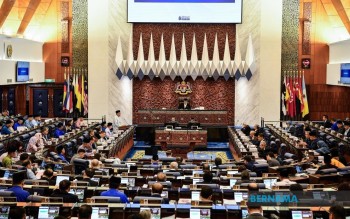
Malaysia has made substantial progress in translating investment approvals into tangible economic activity, with the Ministry of Investment, Trade and Industry (MITI) and its implementation arm, the Malaysian Investment Development Authority (MIDA), green-lighting manufacturing ventures worth RM774.4 billion across the six-year period from 2020 to 2025. This portfolio of 5,899 projects carries the capacity to generate 502,493 employment opportunities nationwide, though the actual job creation to date has already surpassed half a million positions when measured by realised investments.
The execution rate of these approved investments stands as a barometer of Malaysia's investment climate health. MITI disclosed that 5,087 projects, representing 86.2 per cent of the total approval pool, have transitioned from commitment to implementation, channelling RM587.4 billion into the domestic economy. This completion ratio reveals a reasonably robust pipeline conversion mechanism, though it also highlights that roughly one-seventh of approved capital remains in planning or pre-implementation phases. The realised projects have already spawned 416,914 jobs, substantially contributing to the government's employment agenda during a period marked by pandemic recovery and economic restructuring.
What distinguishes these employment gains is their composition and quality. Nearly 40 per cent of all positions created fall within the management, professional, technical, supervisory and skilled (MTS) category—a distribution that signals Malaysia's manufacturing sector is not simply creating entry-level or routine positions but building mid-to-senior tier employment that commands higher remuneration and career progression. This outcome matters considerably for household income stability and the development of a knowledge-intensive workforce, both priorities for government planners seeking to elevate Malaysia beyond low-cost manufacturing.
The gap between approved and realised investments warrants scrutiny, as it reveals implementation patterns across the economy. MITI attributed the variance primarily to the nature of large-scale, capital-intensive projects that inherently demand extended development timelines. Semiconductor fabrication plants, aerospace manufacturing hubs, and green technology complexes typically operate across multiple years from groundbreaking to full operation, meaning approval in 2022 or 2023 might not yield completed facilities until 2025 or beyond. This phased reality reflects both the complexity of modern industrial projects and the technical challenges of establishing facilities that meet international standards.
Understanding which sectors show the widest approval-to-realisation gaps provides insight into Malaysia's industrial composition and bottlenecks. Large-scale foundries, battery manufacturing for electric vehicles, and advanced materials production fall into categories where approval does not translate quickly into job numbers. Conversely, lighter manufacturing and contract manufacturing operations tend to operationalise more rapidly once approved, given lower capital thresholds and simpler technological requirements. The divergence underscores that Malaysia's economic transformation agenda—toward semiconductors, digital economy, green technology and aerospace—inherently involves longer gestation periods than traditional labour-intensive sectors.
Government strategy extends beyond passive approval to active facilitation of investment conversion. MITI and MIDA have implemented a suite of measures designed to collapse the gap between commitment and realisation whilst simultaneously ensuring quality employment outcomes. Investment facilitation offices provide dedicated support to approved investors, navigating them through bureaucratic pathways, infrastructure coordination, and supply-chain linkages that can accelerate project launch. Acceleration programmes specifically target bottleneck-prone projects, identifying and resolving logistical or administrative delays that might otherwise postpone commissioning.
The government's emphasis on high-value-added investment reflects Malaysia's positioning within global manufacturing hierarchies. Rather than competing with Bangladesh or Vietnam on unit labour costs, Malaysia seeks to anchor semiconductor design and fabrication, digital economy platforms, green technology innovation, and aerospace manufacturing—sectors where technical capability, infrastructure quality, and intellectual property matter more than wage competition. MITI's focus on these verticals indicates a deliberate economic upgrade strategy rather than incremental expansion of existing industrial capacity.
Critically, government conditions imposed on investment approvals embed local community benefit requirements into project structures from inception. Manufacturing licence approvals and high-potential foreign investment projects now routinely include provisions mandating hiring of Malaysian workers at proportionate levels, delivery of industrial training programmes that develop local supply chains and workforce capabilities, and collaborative frameworks with universities and research institutions. These stipulations reflect lessons learned from earlier investment inflows that sometimes created enclaves of foreign workers and imported expertise without meaningfully developing domestic talent or institutional capacity.
Research and development incentivisation forms another pillar of Malaysia's investment translation strategy. By encouraging automation and innovation, the government acknowledges that future competitiveness cannot rest on manufacturing alone but must encompass product development, process innovation, and technological leadership. High-income jobs increasingly depend on capacities in R&D, advanced programming, and engineering—competencies that require university partnerships and long-term human capital cultivation rather than simple labour deployment.
The RM587.4 billion in realised investment represents capital that has physically entered Malaysian facilities, purchased equipment, hired workers, and commenced production. This capital infusion has multiplier effects throughout supply chains, local services sectors, and consumer demand. The 416,914 jobs created already demonstrate palpable economic contribution, though the additional 85,579 jobs potentially flowing from the remaining 13.8 per cent of unapproved-but-committed projects remain in the pipeline, contingent upon sustained implementation momentum.
For Malaysian policymakers and regional investors, the data illuminates an economy capable of absorbing substantial manufacturing capital whilst converting approvals into operational reality at respectable rates. The sector composition—emphasising semiconductors, green technology, and digital—positions Malaysia within supply chains critical to global technological transition rather than in sunset industries vulnerable to automation or relocation. This strategic positioning, combined with demonstrated execution capability, reinforces Malaysia's attractiveness relative to other Southeast Asian economies navigating similar transformation pressures.

