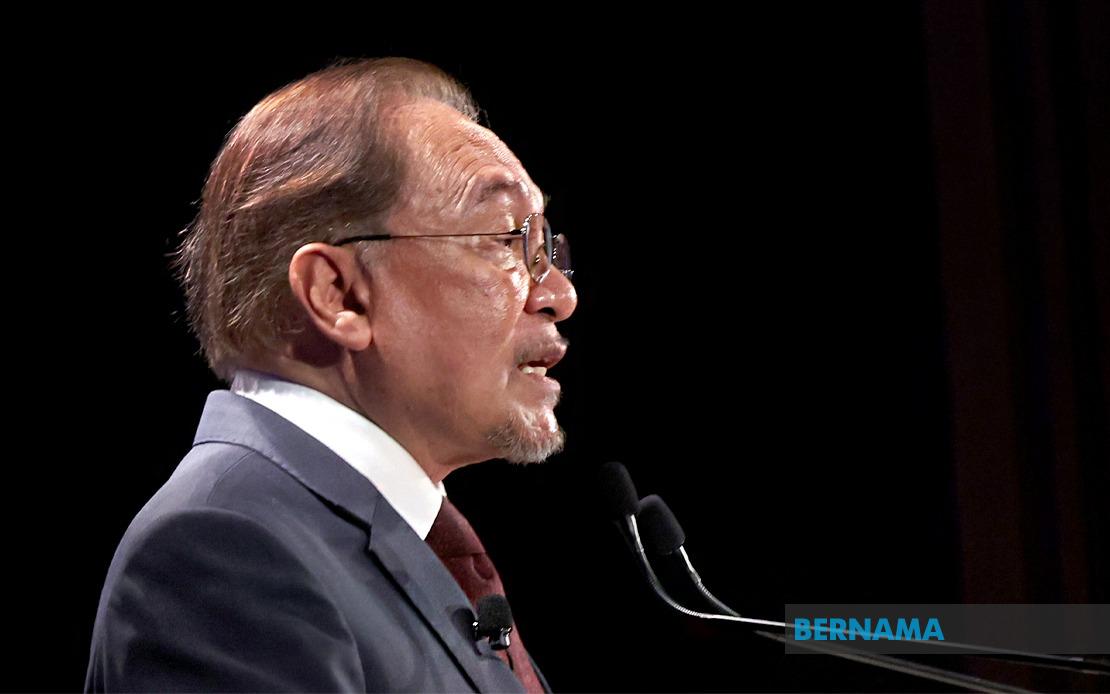
Malaysia has thrown its diplomatic weight behind a fledgling accord between the United States and Iran aimed at de-escalating months of deepening tensions across the Middle East. Prime Minister Datuk Seri Anwar Ibrahim articulated the nation's backing for the emerging understanding during his keynote address at the 39th Asia-Pacific Roundtable in Kuala Lumpur, simultaneously acknowledging the constructive mediation efforts undertaken by Gulf states, Türkiye, Pakistan and other regional actors in brokering the preliminary memorandum.
Anwar's qualified endorsement reflected a measured optimism tempered by realistic caution about the fragility inherent in any nascent peace arrangement. The Prime Minister stressed that the trajectory toward lasting stability remains precarious and susceptible to disruption from actors opposed to reconciliation. His remarks underscored Malaysia's conviction that the international community must remain vigilant in nurturing these fledgling diplomatic gains rather than allowing them to unravel under pressure from spoiler groups or hardline factions on either side.
The Malaysian leader identified strict adherence to ceasefire protocols as foundational to any durable settlement between Washington and Tehran. Beyond military arrangements, he emphasised that reopening the Strait of Hormuz to unrestricted international maritime commerce constitutes an equally pressing imperative. The waterway's restoration to full operational capacity for civilian shipping represents far more than a logistical matter; it carries profound implications for global economic stability and the livelihoods of billions of ordinary people worldwide.
Anwar articulated a perspective grounded in tangible human consequences rather than abstract geopolitical calculations. He highlighted how elevated food and energy prices, precipitated by regional instability and supply chain disruptions, have cascaded throughout developing economies as governments scramble to procure essential commodities. The accumulated financial burden of securing basic goods diverts finite resources that might otherwise channel into poverty alleviation, education expansion, healthcare improvements and infrastructure development across the developing world.
The Prime Minister's framing proved particularly resonant for Southeast Asian audiences already grappling with inflation pressures and supply vulnerabilities. Malaysia, as a significant energy consumer and trading nation heavily dependent on maritime commerce, has concrete national interests in Hormuz's unimpeded operation. Roughly one-fifth of global petroleum shipments historically transited through these strategic waters before recent instability disrupted normal traffic patterns, creating ripple effects throughout Asian energy markets.
Qatar has announced that indirect negotiations between Iranian and American delegations, which concluded on Wednesday, had generated encouraging momentum. The talks concentrated specifically on mechanisms for restoring Hormuz's utility as a conduit for international maritime traffic, suggesting that both parties recognised the economic damage wrought by continued disruption. The participation of Qatar as a neutral intermediary reflects the Gulf state's positioning as a credible broker capable of engaging both antagonists constructively.
Anwar's intervention at the three-day forum, organised by the Institute of Strategic and International Studies (ISIS) Malaysia and now concluded, positioned Malaysia as a responsible stakeholder invested in regional equilibrium rather than as a partisan observer. Malaysia's diplomatic tradition emphasises pragmatic engagement with all significant actors and its location within a region economically intertwined with Middle Eastern energy suppliers and markets lends particular weight to its advocacy for de-escalation.
The underlying anxiety evident in Anwar's address relates to how protracted conflict redistributes wealth away from productive investment toward military expenditure and emergency procurement. Developing nations dependent on imported energy experience disproportionate hardship when supply disruptions trigger price volatility. The economic opportunity cost of regional instability—measured in forgone development projects, delayed industrialisation and constrained social programmes—represents a collective punishment of populations across multiple continents who bear no responsibility for Middle Eastern rivalries.
The qualification that peace prospects remain vulnerable to sabotage acknowledges the multiplicity of actors with vested interests in perpetuating regional discord. Non-state groups, regional competitors and other forces may seek to undermine diplomatic progress, necessitating sustained international commitment to conflict prevention. Malaysia's endorsement signals ASEAN's broader desire for a Middle East oriented toward cooperation and economic normalcy rather than military confrontation.
The reopening of the Strait of Hormuz transcends symbolic significance; it represents the physical manifestation of renewed diplomatic engagement and mutual recognition that continued antagonism serves neither party's genuine strategic interests. Stable maritime commerce through this vital chokepoint would alleviate energy price pressures, facilitate industrial production and restore the conditions necessary for sustainable development throughout Asia and beyond. Malaysia's support for the emerging understanding thus reflects both principled commitment to peaceful dispute resolution and enlightened self-interest in maintaining the regional and global conditions conducive to economic growth and human prosperity across Southeast Asia and developing economies worldwide.

