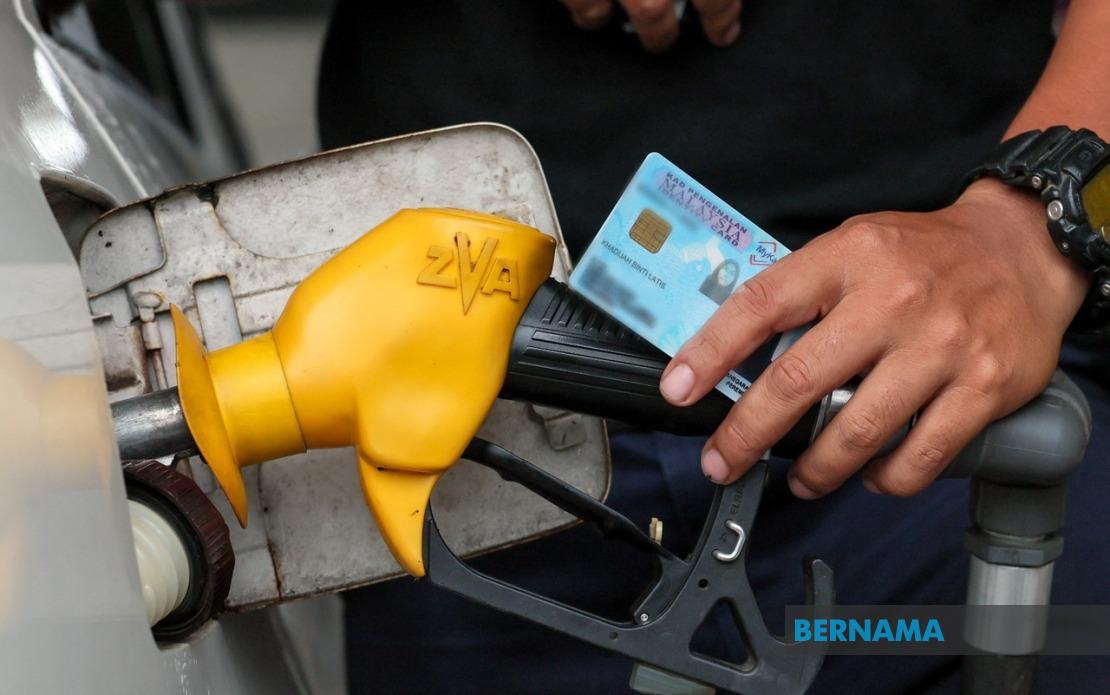
Prime Minister Datuk Seri Anwar Ibrahim announced on August 30 that Malaysia will increase its basic monthly BUDI95 petrol subsidy quota from 200 litres back to 300 litres per month, a decision that directly affects more than 16 million households relying on subsidised RON95 fuel. The measure, revealed during the 2026 National Day address in Putrajaya, takes effect from September 1 and extends to diesel-powered pickup truck and jeep owners, who will receive up to 400 litres of BUDI Diesel monthly. The expansion signals a government shift in managing its subsidy architecture as global energy pressures ease and fiscal conditions stabilise, offering meaningful relief to ordinary Malaysians struggling with mounting transportation costs.
The restoration addresses persistent concerns raised by vehicle-dependent households, particularly those in regions where reliable public transportation remains limited. In states like Sabah and Peninsular Malaysia's outlying areas, many families depend almost entirely on private vehicles for work, school runs, and essential services. According to Herniza Roxanne Marcus, an economics lecturer at Universiti Teknologi MARA's Sabah branch, the additional 100 litres monthly represents a significant reprieve for lower-income and middle-class Malaysians whose fuel expenditure consumes a disproportionate share of discretionary spending. She emphasises that for households in geographically dispersed communities where inter-district commuting is unavoidable, the previous 200-litre allocation had created genuine hardship, forcing families to choose between maintaining vehicle access and funding other necessities.
Marcus explains that the economic benefit extends well beyond fuel pumps. By reducing monthly transportation pressure, households gain budgetary flexibility to redirect savings toward essential items including fresh food, children's education, healthcare, and utilities. This psychological and practical relief proves especially critical for B40 and M40 income groups, whose consumption patterns reveal that transportation typically ranks third or fourth in household expenditure after housing and food. She notes that in Sabah particularly, where public transport infrastructure remains nascent outside major towns, this additional subsidy cushion translates into tangible quality-of-life improvements, allowing families to maintain productive economic participation without sacrificing other basic needs.
The government's decision also reflects a recalibration of subsidy policy in response to changing global energy dynamics. Herniza contextualises the previous reduction to 200 litres as a necessary measure implemented during heightened geopolitical tensions and volatile international oil markets. As those acute market pressures have moderated and Malaysia's fiscal position strengthens, policymakers possess renewed capacity to reassess subsidy levels against current global crude prices, domestic consumption patterns, and household welfare requirements. This approach demonstrates pragmatic fiscal management rather than unlimited generosity, balancing budgetary sustainability with social protection—a difficult equilibrium that most Southeast Asian governments attempt to navigate as they balance development ambitions against immediate citizen needs.
Crucially, Marcus cautions that while the quota increase will ease household cash flow pressures, it should not be misinterpreted as a game-changer for Malaysia's inflation trajectory. The measure provides containment benefits by preventing transportation costs from triggering broader price increases across the economy. When fuel becomes scarce or unaffordable, businesses typically raise prices for delivery-dependent goods and services, creating cascading inflation that eventually harms the very households the subsidy intended to protect. By maintaining adequate fuel access at controlled prices, the government interrupts this transmission mechanism, protecting purchasing power across multiple consumer categories simultaneously. This preventative approach may prove more economically sound than direct cash transfers, as it targets the root cause of cost-of-living pressures rather than treating symptoms after they manifest.
Real-world impact surfaces in the experiences of ordinary Malaysians navigating high-mobility livelihoods. Rozainah Abdul Rahim, a 36-year-old journalist, exemplifies the demographic most stressed by previous fuel quota constraints. Her work requires daily vehicular travel for news assignments combined with weekly commuting between Port Dickson, Negeri Sembilan and Kuala Lumpur for family obligations. Under the 200-litre monthly cap, her consumption pattern regularly exceeded allocation, forcing her to purchase premium-priced unsubsidised fuel or fundamentally restructure her work and family commitments. The restoration to 300 litres eliminates this monthly crisis, allowing her to maintain professional productivity and family responsibilities without incurring unexpected fuel surcharges that would compress her already modest earnings further.
Abdul Rahim's situation reflects broader employment patterns across Malaysia's service, transportation, and professional sectors. Salespeople, delivery drivers, healthcare workers, teachers in remote areas, and field-based professionals across numerous industries depend on uninterrupted vehicle access to maintain income generation. When subsidy quotas compress, these workers face impossible choices: exhaust savings purchasing market-rate fuel, reduce work output and income, or neglect family obligations. The quota increase removes this bind, enabling productive workers to maximise their economic contribution without welfare-dependent sacrifices. From a macroeconomic perspective, this translates into sustained labour productivity and consumer spending that benefits entire regional economies.
The announcement also carries political significance within Malaysia's ongoing cost-of-living narrative. Since taking office, Prime Minister Anwar's administration has consistently framed its approach as protecting vulnerable citizens while maintaining fiscal discipline. Previous subsidy reductions, though economically justified, generated substantial public dissatisfaction that complicated broader policy agendas. The restoration demonstrates responsiveness to citizen feedback without abandoning fiscal prudence—a balancing act that strengthens government credibility on economic management. For Southeast Asian governments facing similar subsidy pressures, Malaysia's approach offers instructive lessons about sequencing, communication, and calibrating support intensity to genuine need rather than universal provision.
Implementation logistics will prove critical to success. The BUDI95 programme relies on sophisticated quota management systems tracking individual vehicle usage and preventing quota trading or smuggling to neighbouring countries. As quotas expand, administrative capacity must scale accordingly to prevent fraud and ensure intended beneficiaries receive allocated benefits. Authorities must also monitor market dynamics carefully—the 300-litre level may require periodic adjustment if global oil prices spike or domestic consumption patterns shift unexpectedly. This ongoing management requirement underscores that subsidy policy cannot remain static but demands continuous recalibration against evolving circumstances.
The expansion to diesel-powered commercial vehicles represents an equally important recognition. Malaysia's logistics and agricultural sectors depend heavily on these vehicles, and fuel costs directly influence supply chain expenses and farmer profitability. By extending enhanced subsidy access to these commercial operators, the government simultaneously supports household incomes in rural and semi-rural communities while maintaining affordable goods transportation across the peninsula. This dual benefit approach suggests policymakers understand that targeting support to strategic economic nodes generates multiplier effects exceeding direct household transfers.
Looking forward, the restoration signals Malaysia's evolving relationship with fuel subsidies in an era of energy transition. Rather than the traditional approach of indefinite universal subsidies that encouraged consumption and strained budgets, current policy emphasises targeted support maintaining affordability while gradually encouraging efficiency. The BUDI95 programme itself incorporates consumption caps that incentivise vehicle maintenance, carpooling, and public transport usage among users approaching quotas. As Malaysia progresses toward renewable energy adoption and electric vehicle proliferation, this calibrated subsidy model may provide a template for managing the transition without abandoning lower-income motorists mid-journey.
For Malaysian households and workers, the immediate reality proves straightforward: monthly fuel expenses will ease meaningfully beginning September 1, freeing resources for food, education, healthcare, and savings. Whether this relief proves temporary or durable depends on global oil trajectories, domestic fiscal conditions, and government commitment to subsidy sustainability. The announcement affirms that despite challenging cost pressures, Malaysia remains committed to supporting citizens' economic participation and household stability—a message that resonates beyond fuel stations across a region where cost-of-living concerns dominate political discourse.

