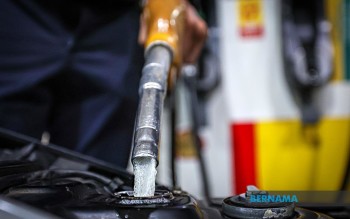
Malaysia's fuel subsidy bill could balloon to RM3.5 billion monthly if crude oil prices persist at approximately US$90 per barrel, according to government projections revealed in parliament this week. Deputy Finance Minister Liew Chin Tong disclosed that RON95 petrol subsidies alone could reach around RM2 billion monthly under these conditions, whilst diesel support would amount to approximately RM1.5 billion monthly. The figures underscore the substantial fiscal burden that elevated international oil prices impose on the nation's budget, particularly as Malaysia maintains price controls to shield consumers from the full impact of global commodity volatility.
Despite the significant subsidy commitments, Liew sought to reassure lawmakers and the public that Malaysia's overall fiscal health has not deteriorated. He emphasised that current fiscal projections remain unchanged and that the government's broader fiscal position continues to demonstrate strength, even as crude oil costs climb. This assertion reflects the administration's confidence in managing competing budgetary pressures, though it also highlights the delicate balancing act between protecting household purchasing power and maintaining macroeconomic stability.
The government derives a substantial offsetting benefit from elevated oil prices through increased petroleum revenues. Liew explained that for every one-dollar increase in crude oil prices per barrel, Malaysia's government revenues rise by an estimated RM300 million. This revenue mechanism acts as a natural hedge against subsidy escalation, though the relationship is not perfectly symmetrical—at certain price thresholds, subsidy costs can outpace revenue gains, creating fiscal pressure. Understanding this dynamic is crucial for Malaysians assessing the government's ability to sustain current fuel pricing policies without compromising other spending priorities.
The Deputy Finance Minister indicated that a comprehensive reassessment of fiscal projections will occur when Prime Minister Datuk Seri Anwar Ibrahim presents the 2027 Budget in October. At that juncture, the government plans to announce updated forecasts that reflect prevailing economic conditions, energy market dynamics, and any shifts in crude oil trajectories. This scheduled review process suggests that policymakers are monitoring developments closely and retain the flexibility to adjust spending plans or subsidy arrangements if circumstances warrant material changes.
The parliamentary questions that prompted these revelations reflected growing concern among legislators about the sustainability of current subsidy arrangements and contingency planning. Senator Datuk Dr Mohd Na'im Mokhtar specifically queried whether the government could maintain its fiscal deficit target if global crude oil prices surpass current projections, and what backup strategies existed to manage such scenarios. The question signals apprehension within the upper house about potential vulnerabilities in Malaysia's budgetary framework should energy costs escalate further.
Whilst Liew did not elaborate extensively on specific contingency measures, his response implied that the government maintains sufficient fiscal flexibility to absorb additional subsidy pressures without abandoning its deficit reduction objectives. This confidence may rest partly on the revenue offset mechanism and partly on the government's willingness to adjust subsidy levels or structure if oil prices reach levels that become fiscally unsustainable. Malaysian observers should note that such adjustments would directly affect household energy costs and consumer purchasing power.
Another significant element of the parliamentary exchange concerned regional disparity in fuel allocation. Senator Datuk Anna Bell @ Suzieana Perian raised the prospect of expanding the BUDI Diesel quota—a controlled distribution programme—for Sabah and Sarawak, reflecting concerns that these states may experience fuel supply constraints or unequal access to subsidised diesel. The BUDI scheme, which targets specific user categories, has become increasingly important as fuel subsidies have tightened and allocation mechanisms have grown more selective.
In response, Liew indicated openness to reviewing applications from specific groups seeking enhanced diesel quotas. He cited the example of pickup truck owners, who recently received an additional 100-litre allocation through a straightforward application process. This flexibility suggests that the government remains willing to fine-tune the BUDI framework to accommodate legitimate operational needs in particular sectors or regions, though decisions appear to be made on a case-by-case basis rather than through blanket policy changes.
The implications of Malaysia's fuel subsidy trajectory extend beyond domestic budgetary concerns. As the region's largest energy producer, Malaysia's fiscal sustainability directly influences regional economic stability and investor confidence in Southeast Asia. Neighbouring economies monitor Malaysian fiscal management closely, and sustained subsidy pressures could eventually necessitate policy corrections that reshape the domestic energy market and consumer behaviour. For Malaysian households and businesses, the stakes are equally high—every month that subsidies remain in place at current levels represents foregone government resources that might otherwise support infrastructure, education, or healthcare investments.
The government's apparent confidence in maintaining fiscal targets despite elevated subsidy costs rests on several foundations: the revenue offset from higher crude prices, controlled subsidy expansion through selective programme design, and a demonstrated willingness to revisit policies quarterly or semi-annually as circumstances evolve. However, this approach also carries risks. If crude oil prices climb further or remain elevated for extended periods, the structural mismatch between subsidy growth and revenue growth could eventually force more difficult political choices regarding either subsidy reductions or broader fiscal consolidation.
For Malaysian policymakers, the challenge increasingly resembles a multi-dimensional puzzle. They must simultaneously protect consumer welfare through affordable fuel, maintain fiscal discipline to preserve macroeconomic stability, manage regional equity concerns in subsidy distribution, and remain responsive to sectoral needs through programmes like BUDI. The October 2027 Budget presentation will provide the next formal opportunity to assess whether current arrangements remain tenable or whether more fundamental adjustments to Malaysia's energy subsidy architecture have become necessary.

