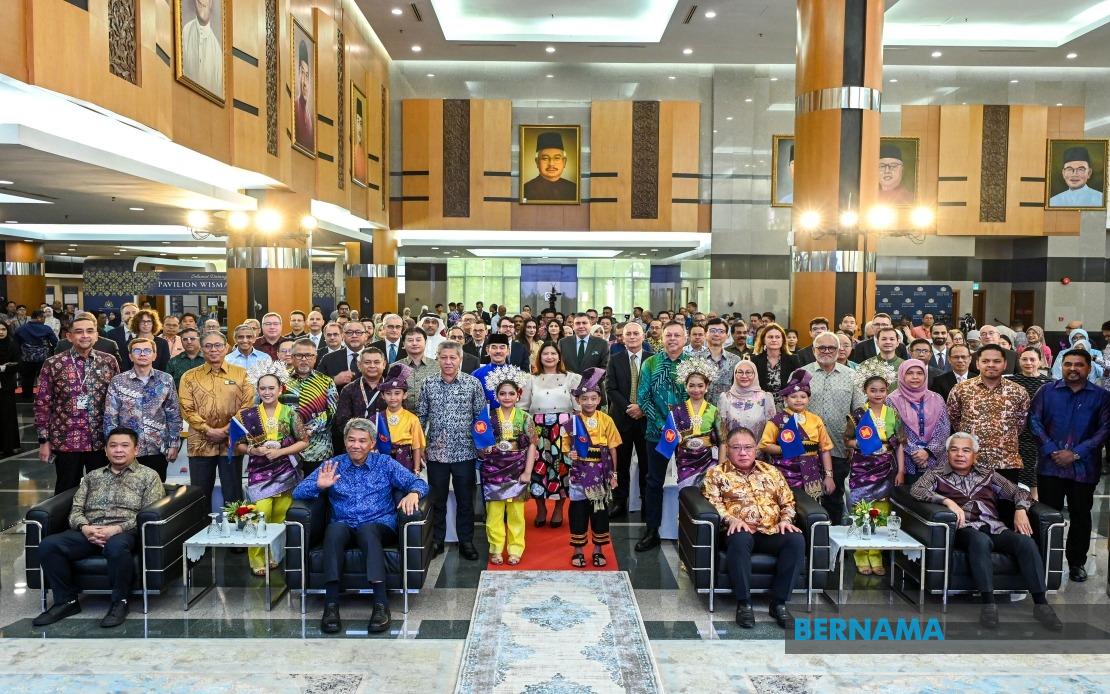
Malaysia reinforced its dedication to the Association of Southeast Asian Nations by hosting a significant commemorative event at its Foreign Ministry headquarters in Putrajaya on Monday, celebrating nearly six decades of regional partnership since ASEAN's establishment in 1967. The occasion drew approximately 300 attendees, including government officials, foreign diplomats, and international organisation representatives, all gathering to reflect on Malaysia's journey within a grouping that has become central to Southeast Asian geopolitics and economic integration.
The celebration, organised under the evocative theme "59 Years of Navigating Together", served as both a retrospective assessment and a reaffirmation of ASEAN's collective values. Malaysia's Foreign Ministry emphasised in its official statement that the milestone represented a moment for member states to acknowledge their shared achievements whilst simultaneously recommitting to the principles that have held the ten-nation bloc together through decades of regional transformation. The ministry highlighted how ASEAN's three foundational pillars—political-security cooperation, economic integration, and socio-cultural exchange—continue to provide the structural framework through which Southeast Asian nations address both internal challenges and external pressures.
Foreign Minister Datuk Seri Mohamad Hasan, who presided over the event, was joined by several other senior government figures, including Tourism, Arts and Culture Minister Datuk Seri Tiong King Sing and Deputy Foreign Minister Datuk Lukanisman Awang Sauni. The assembled leadership reflected Malaysia's whole-of-government approach to regional engagement, acknowledging that ASEAN cooperation extends far beyond traditional diplomatic channels to encompass trade, cultural preservation, tourism development, and security coordination.
The commemoration featured a specially produced video montage titled "ASEAN Journey: Navigating Our Future, Together - 59 Years of Malaysia in ASEAN", which traced Malaysia's role in shaping regional institutions and collaborative frameworks since the bloc's inception. This multimedia presentation served to remind attendees of Malaysia's contributions to ASEAN architecture, from its participation in early political dialogues to its involvement in establishing economic agreements that have facilitated intra-regional trade worth hundreds of billions of dollars annually. The subsequent cake-cutting ceremony, a symbolic ritual at such gatherings, underscored the celebratory nature of the occasion whilst maintaining formal diplomatic protocols.
ASEAN's formation on August 8, 1967, through the Bangkok Declaration represented a groundbreaking moment in Southeast Asian history. Indonesia, Malaysia, the Philippines, Singapore, and Thailand signed the founding document, establishing a framework for peaceful coexistence and cooperative development at a time when the region faced significant geopolitical tensions and Cold War pressures. The five signatories sought to create a space for dialogue and mutual benefit, consciously avoiding the military alliance structures that characterised other regions during this period.
The bloc has experienced substantial expansion over the following decades, growing from its original five members to encompass eleven nations spanning the entire Southeast Asian region. Brunei's accession in 1984 extended ASEAN's reach into the energy-rich Borneo region. Vietnam's entry in 1995 represented a significant Cold War thaw, integrating the country into regional architecture following decades of conflict and isolation. The near-simultaneous admission of Laos and Myanmar in 1997 completed ASEAN's coverage of mainland Southeast Asia. Cambodia's inclusion in 1999, despite initial hesitations regarding its political stability, demonstrated the organisation's inclusive approach to regional membership.
Most recently, Timor-Leste became ASEAN's newest member in October 2023 during the 47th ASEAN Summit, extending the grouping to encompass the entire Malay Archipelago and demonstrating ongoing commitment to regional integration. This expansion has transformed ASEAN from a relatively exclusive club of five nations into a genuinely pan-Southeast Asian institution representing over 650 million people and a combined GDP exceeding $3 trillion. Malaysia, as an original member and geographically central nation within the grouping, has consistently positioned itself as a bridge-builder between ASEAN's founding members and newer entrants.
For Malaysian readers, ASEAN membership carries profound implications for national prosperity and security. The grouping provides frameworks through which Malaysia manages relations with its closest neighbours whilst maintaining strategic autonomy. ASEAN's emphasis on non-interference in internal affairs and consensual decision-making aligns closely with Malaysian interests in protecting national sovereignty whilst engaging in beneficial regional cooperation. Trade agreements negotiated through ASEAN, including the ASEAN Trade in Goods Agreement and various investment frameworks, have become integral to Malaysia's economic integration within Southeast Asia.
The bloc's resilience over nearly six decades reflects adaptability to changing regional circumstances. ASEAN has navigated the Vietnam War, multiple financial crises, territorial disputes, humanitarian emergencies, and global pandemics, often finding consensus amongst diverse member states with varying political systems, economic development levels, and strategic interests. This capacity for cohesion, whilst not always perfect, underscores the practical value that ASEAN provides to its members as a mechanism for managing competition and building cooperative frameworks.
Looking forward, ASEAN faces challenges including managing great power competition between the United States and China, addressing persistent development gaps between members, combating transnational crime and security threats, and responding to climate change impacts that threaten the region's agricultural and maritime economies. Malaysia's continued commitment to ASEAN, reaffirmed through events such as the Putrajaya commemoration, signals recognition that collective action through regional mechanisms remains more effective than unilateral approaches to these complex challenges.
The celebration at Malaysia's Foreign Ministry thus represented more than ceremonial observance. It served as a public statement of continued dedication to the multilateral framework that has underpinned Southeast Asian stability and prosperity. As ASEAN enters its seventh decade, member states including Malaysia are emphasising the importance of revitalising core principles of mutual respect, peaceful settlement of disputes, and economic cooperation. The organisation's future trajectory will depend substantially on whether its members, particularly the larger economies like Malaysia, Indonesia, and Thailand, can sustain meaningful commitment to collective interests whilst managing increasingly complex bilateral relationships and competing strategic partnerships.

