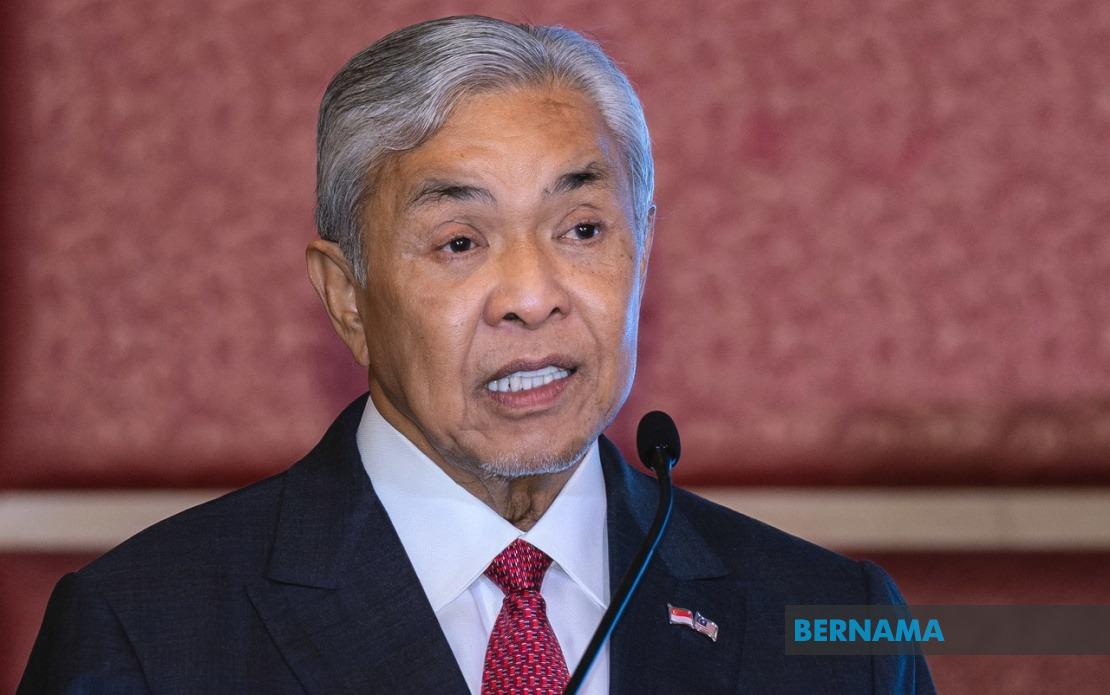
Malaysia intends to establish a self-sufficient system for managing its refugee and asylum seeker populations without depending on international organisations, according to Deputy Prime Minister Datuk Seri Dr Ahmad Zahid Hamidi. The approach stems from National Security Council Directive No. 23, a comprehensive policy framework revised in 2023 and signed by Prime Minister Datuk Seri Anwar Ibrahim in June that year. The directive reflects the government's determination to exercise full sovereignty over how the nation addresses one of Southeast Asia's most pressing humanitarian challenges while maintaining tight control over border management and internal security.
Ahmad Zahid, who simultaneously holds the Rural and Regional Development portfolio, outlined the core principles guiding this domestic framework during parliamentary proceedings. The strategy emphasises balanced administration that neither abandons vulnerable populations nor compromises Malaysia's security posture. Rather than treating refugee management as purely a humanitarian endeavour or exclusively through a security lens, the government seeks to integrate both considerations into a coherent policy architecture. This middle-ground approach attempts to address legitimate concerns about law enforcement and public safety whilst acknowledging the humanitarian obligations toward displaced persons already present within Malaysian territory.
Central to the government's strategy is expanding access to essential services for those refugees deemed eligible under the new framework. Healthcare provision, educational opportunities, and legitimate employment pathways represent key components of this welfare dimension. By formalising these access points through the Refugee Registration Document system, authorities aim to create transparent channels that reduce irregular economic activities driven by desperation or exploitation. The inclusion of employment access particularly addresses a significant source of social tension, where unregulated refugee labour previously undercut local wages and created informal economies beyond government oversight.
However, Ahmad Zahid identified a critical structural problem undermining enforcement efforts: the enabling role played by segments of Malaysia's own population. Local residents who profit from renting accommodation to undocumented migrants or exploit cheap refugee labour create powerful incentives that work against government management objectives. These economic motivations, rooted in personal financial interest rather than ideological sympathy, represent perhaps the most intractable challenge to comprehensive refugee policy. The government acknowledges that no directive, however detailed, can succeed if substantial numbers of citizens profit from circumventing its provisions. This reality suggests that effective implementation requires not only bureaucratic coordination but also community engagement and perhaps economic incentives that make compliance more attractive than evasion.
The NSC Directive No. 23 represents an attempt to rationalise institutional roles across Malaysia's fragmented government apparatus. Multiple ministries and agencies possess overlapping mandates regarding refugee affairs, from immigration to labour to health authorities. By explicitly defining functional responsibilities through the directive, the government seeks to eliminate gaps and contradictions that previously allowed refugees to operate in administrative grey zones. The National Security Council, operating under the Prime Minister's Department, serves as the coordinating apex, suggesting that refugee management is now positioned as a security and stability matter rather than purely a social welfare concern.
The timing and context of this declaration deserve attention given Malaysia's position in regional refugee flows. The country hosts over 126,000 registered Rohingya refugees, though the actual population including undocumented arrivals likely exceeds 180,000. This concentration makes Malaysia a primary destination for displaced persons fleeing Myanmar's Rakhine State conflicts. The Rohingya situation represents a decades-long challenge that shows no sign of resolution, with repatriation proving politically impossible and third-country resettlement sporadic. Malaysia's unilateral framework development reflects recognition that international mechanisms have failed to provide sustainable solutions, necessitating long-term domestic management strategies.
The government's emphasis on developing independent mechanisms without foreign entities likely reflects frustration with international humanitarian organisations' operational limitations and the United Nations Refugee Agency's inability to secure meaningful resettlement commitments. By establishing domestic systems, Malaysia asserts greater control over the pace and scale of refugee integration, as well as the conditions under which humanitarian access operates. This approach aligns with broader Southeast Asian trends toward national sovereignty in border management and resistance to international legal frameworks perceived as constraining state discretion.
Yet the practical challenges remain substantial. Defining eligibility criteria, ensuring equitable access to services, preventing fraud in the registration system, and monitoring displaced populations across a sprawling nation of 33 million presents enormous administrative complexity. The Refugee Registration Document, whilst creating formal status categories, must be protected against corruption and forgery. Malaysian state capacity in these areas, whilst reasonable by regional standards, faces constant resource constraints. The government's ability to simultaneously provide services, enforce laws, and prevent exploitation will ultimately determine whether the directive produces genuine improvements or merely formalises existing inadequate arrangements under new nomenclature.
Implications for Southeast Asia extend beyond Malaysia's borders. Regional countries facing similar refugee pressures—Thailand with Rohingya and Myanmar populations, Indonesia with ongoing arrivals—observe Malaysian developments closely. If Malaysia's independent framework proves effective, it may offer a replicable model for other nations resisting international integration of refugee management. Conversely, if implementation reveals insurmountable obstacles, it may vindicate arguments for regional burden-sharing mechanisms that Malaysia has previously resisted. The question of whether a single nation can sustainably manage large displaced populations without international support remains fundamentally unresolved and will significantly shape this directive's legacy.

