Malaysia is recalibrating its economic engagement strategy by deepening ties across Central Asia and Russia, signalling a fundamental shift in how the country approaches global commerce and diplomacy. Prime Minister Datuk Seri Anwar Ibrahim's recent four-day journey through Tashkent, Kazan, and Ashgabat encapsulates this reorientation, representing far more than routine state visits. The trips underscore how Malaysia is responding to a world order undergoing its most significant transformation since the Cold War's conclusion, where trade restrictions, sanctions, and export controls have become commonplace instruments wielded by major powers competing for influence.
The timing of these missions carries particular significance. The international economy is fragmenting along ideological and geopolitical lines as strategic competition intensifies between global superpowers. For mid-sized trading nations like Malaysia, the implications extend beyond securing conventional growth opportunities. The challenge encompasses protecting critical supply chains, maintaining strategic autonomy, and building economic resilience in an increasingly contested environment where traditional relationships cannot be taken for granted. Malaysia's geographic position and economic model—dependent on openness and connectivity—make this recalibration essential for long-term stability.
In Tashkent, what began as a scheduled courtesy call on President Shavkat Mirziyoyev evolved into substantive working discussions rooted in cooperation frameworks initiated during Malaysia's previous official visit in 2024. The discussions progressed beyond diplomatic niceties to address concrete economic collaboration areas, where implementation details would determine genuine success. This transformation from ceremonial stopover to productive engagement reflects how contemporary diplomatic missions increasingly operate on multiple tracks simultaneously, adapting to emerging opportunities as they surface during high-level interactions.
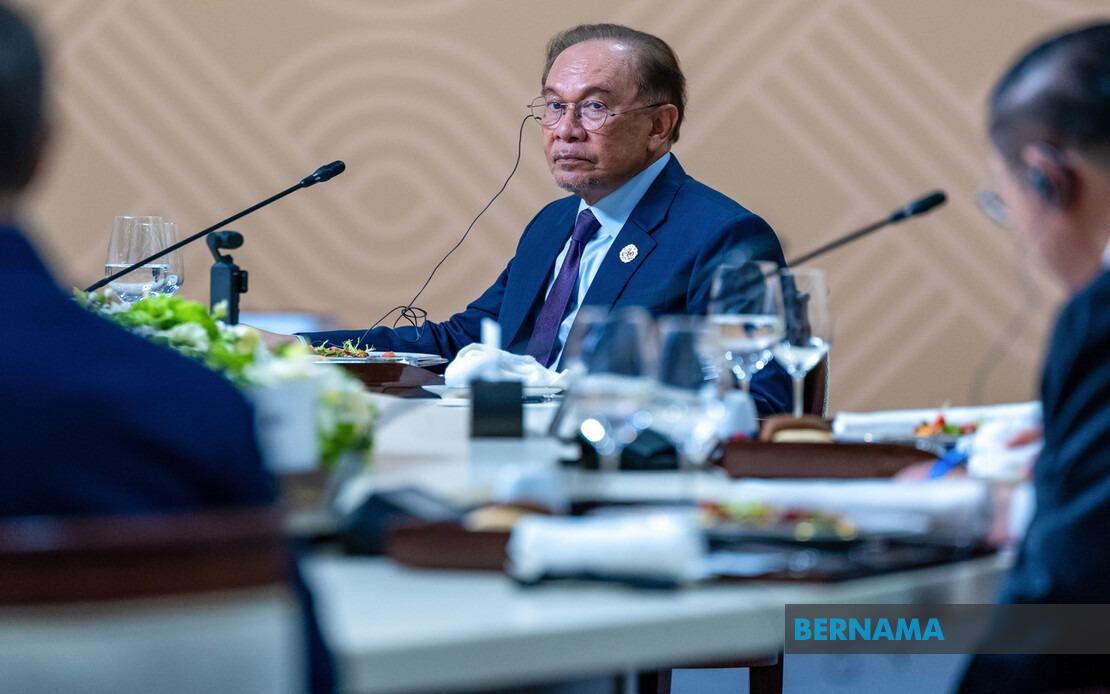
The Kazan leg proved particularly significant given Malaysia's participation in the ASEAN-Russia Commemorative Summit and broader engagement with political and business leaders across the Eurasian region. While Russia remains a comparatively modest trade partner for ASEAN relative to major economies, both sides recognized untapped opportunities spanning energy, agriculture, digital technologies, advanced manufacturing, and food security. The resulting ASEAN-Russia Strategic Programme on Trade and Investment Cooperation 2026-2035 acknowledges that future competitiveness increasingly hinges upon innovation, technological capability, and economic adaptability rather than traditional comparative advantages.
Often overlooked in assessments of Malaysia's Russia engagement is the importance of subnational actors. Discussions with the Republic of Tatarstan revealed opportunities across biotechnology, halal industries, maritime capabilities, Islamic finance, and industrial cooperation. Tatarstan has emerged as one of Russia's most dynamic industrial and technological hubs, and cultivating relationships with such regional innovation centres can generate practical opportunities that complement traditional state-to-state diplomacy. This dimension of contemporary economic statecraft reflects how national governments no longer serve as exclusive gateways to international economic networks; regions, cities, and specialised clusters increasingly function as independent actors in global commerce.
The Ashgabat segment highlighted Malaysia's energy diplomacy, showcasing how patient, long-term partnerships can generate substantial returns. Petronas' three-decade presence in Turkmenistan has transcended its original role as foreign investor, contributing significantly to infrastructure development, technological advancement, skills transfer, and human capital development. The estimated USD12 billion investment demonstrates a partnership built methodically over years rather than opportunistically during recent market disruptions. Recent landmark agreements suggest this relationship is entering what President Serdar Berdimuhamedov characterized as a "new critical phase," providing Petronas with expanded stakes in one of the world's largest gas fields through new production-sharing arrangements and exploration activities.
These energy partnerships carry strategic weight beyond commercial calculations. Recent geopolitical crises have illustrated how swiftly disruptions in one world region can cascade through energy markets, transportation networks, and production costs globally. Consequently, diversified energy partnerships constitute vital components of economic resilience and strategic flexibility, offering insurance against supply chain vulnerabilities. For Malaysia, securing reliable energy partnerships with major producers reduces exposure to market volatility and geopolitical manipulation that could compromise domestic prosperity and industrial competitiveness.
Malaysia's approach reflects a broader reality confronting middle powers navigating an increasingly multipolar world. Economic resilience no longer depends primarily on burgeoning trade statistics or GDP growth rates alone. Rather, it depends on the breadth and diversity of external relationships. Diversification does not entail displacement of existing partnerships; instead, it represents deliberate expansion of Malaysia's economic options as global competition intensifies. For a trading nation whose wealth fundamentally depends on openness and connectivity, resilience increasingly requires a wider network of mutually beneficial relationships across diverse geographies and sectors.
An underlying theme uniting these engagements transcends traditional commercial frameworks. Anwar consistently emphasised throughout bilateral discussions that contemporary economic diplomacy operates across multiple domains simultaneously. Food security considerations intersect with technological advancement. Energy cooperation overlaps with industrial development and infrastructure investment. Digitalisation creates innovation opportunities while simultaneously raising governance concerns and technological dependence risks. The consolidation of what officials describe as "brotherly relations" now constitutes standard economic diplomacy practice, with relationship-building and trust cultivation viewed as essential to securing substantive agreements.
This expansive conception explains why discussions encompassed education and research collaboration, halal ecosystem development, and financial services alongside traditional trade matters. Increasingly, these dimensions represent integral components of comprehensive economic partnerships rather than peripheral considerations. Malaysia's emphasis on Islamic finance and halal certification, for instance, opens cooperation avenues that competitors may overlook, leveraging comparative advantages rooted in Islamic economics expertise and established governance frameworks.
ASEAN's broader strategic posture reinforces Malaysia's diversification approach. The bloc has historically positioned itself as maintaining centrality through engagement across competing centres of influence rather than embracing exclusive blocs or binary geopolitical choices. This strategy preserves strategic autonomy while maximizing economic opportunities. Malaysia's parallel efforts to strengthen ties across Central Asia and Russia complement rather than compete with existing partnerships in Southeast Asia, the Indo-Pacific, and traditional Western markets. This layered approach to international economic engagement reflects sophisticated understanding that genuine resilience derives from optionality.
The practical implications for Malaysian businesses extend beyond government-to-government agreements. Expanded diplomatic channels create frameworks within which commercial enterprises can identify partnership opportunities, navigate regulatory environments, and access new markets. When senior leaders establish political goodwill during high-level visits, subsequent commercial negotiations proceed from foundations of trust and mutual understanding. Malaysian companies exploring opportunities in Turkmenistan's energy sector, Tatarstan's technology industries, or broader ASEAN-Russia trade frameworks benefit directly from diplomatic groundwork laid during these missions.
Looking forward, Malaysia's expanding economic engagement across Central Asia and Russia reflects pragmatic recognition that the twenty-first-century global economy will reward nations that cultivate diverse partnerships. As traditional alignments weaken and new economic blocs emerge, countries positioning themselves within broader networks of mutually beneficial relationships will enjoy greater flexibility and resilience. Malaysia's four-day diplomatic tour, though brief in duration, carries substantial strategic significance as the nation deliberates methodically about its economic future in a transforming world order.