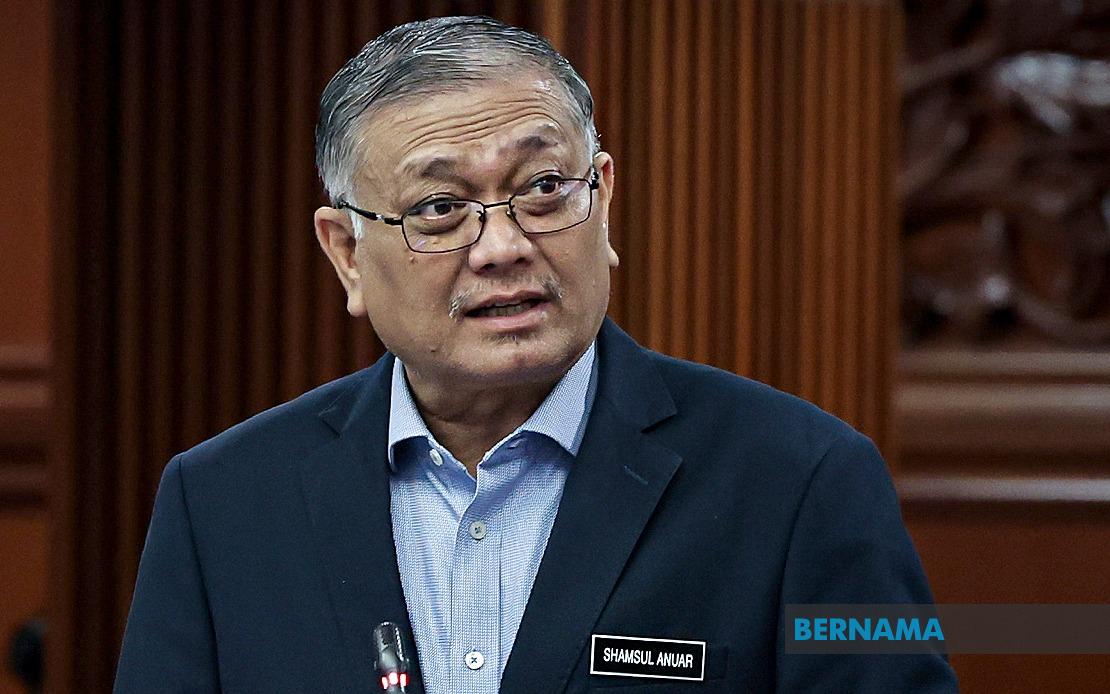
The Malaysian government has underscored its commitment to processing citizenship applications fairly and transparently, while maintaining robust security protocols. Deputy Home Minister Datuk Seri Dr Shamsul Anuar Nasarah made the assurance during parliamentary proceedings, addressing longstanding concerns about access to citizenship for vulnerable populations, particularly children born abroad to Malaysian mothers who face documentation barriers.
In his remarks to the Dewan Rakyat, Dr Shamsul Anuar clarified a persistent misconception in public discourse: the death of a Malaysian mother does not automatically bar an applicant from pursuing citizenship. This distinction carries significant weight for many families navigating Malaysia's immigration framework, particularly in diaspora communities where maternal lineage documentation may be incomplete or complicated by overseas birth registration practices. The deputy minister's explicit statement signals a policy orientation favouring substantive case-by-case evaluation over rigid categorical exclusions.
The Home Ministry operates within a multilayered assessment framework designed to balance competing imperatives. Each application undergoes comprehensive evaluation encompassing background verification, document authentication, and security vetting. This procedural rigour aims to safeguard national sovereignty whilst creating pathways for genuinely eligible applicants. Dr Shamsul Anuar emphasised that citizenship decisions flow from the specific facts presented, relevant supporting documentation, and applicable constitutional provisions—a formulation that theoretically accommodates exceptional circumstances whilst maintaining institutional integrity.
Individuals aged 21 and above who have never previously applied may pursue citizenship through naturalisation under Article 19 of the Federal Constitution. This avenue requires applicants to satisfy prescribed criteria: permanent resident status, minimum residency duration, demonstrated good character, and functional proficiency in the Malay language. For many overseas-born children of Malaysian parents, this naturalisation pathway represents their primary route to citizenship, though it demands sustained engagement with Malaysian institutions and bureaucratic processes that themselves may present barriers for those with limited prior connection to the country.
Operational efficiency has become a ministry priority. The Home Ministry has established a one-year processing target for complete citizenship applications, with performance monitored systematically. This timeline commitment reflects recognition that documentation delays impose genuine hardship on affected families and that administrative sluggishness effectively functions as a barrier to citizenship access. However, ministry officials stress that accelerated processing must not compromise assessment quality or security standards—a tension that inevitably shapes outcomes for borderline cases.
Addressing endemic documentation challenges particularly acute in Sabah and Sarawak, the government has established a Special Task Force comprising the National Registration Department and Sarawak Premier's Department. This collaborative structure conducts field operations targeting birth registration gaps and identity document issuance for eligible individuals. The task force approach recognises that bureaucratic obstacles often concentrate in Malaysia's peripheral regions, where colonial-era record-keeping may be fragmentary and contemporary registration systems sometimes struggle with population mobility.
Complementing federal-level initiatives, a Sarawak-level Special Committee on Citizenship Status reviews applications, particularly those falling under Article 15E of the Federal Constitution. This committee specifically addresses exceptional cases requiring federal government consideration, including applications from children who present complex documentation or residency circumstances. The establishment of state-level specialist committees suggests administrative recognition that citizenship determinations cannot be standardised uniformly across Malaysia's varied jurisdictions and demographic contexts.
Beyond citizenship mechanics, Deputy Foreign Minister Datuk Lukanisman Awang Sauni connected refugee protection to broader regional security architecture. Malaysia will continue leveraging ASEAN platforms and engaging with the United Nations High Commissioner for Refugees to enhance support for Rohingya populations within the country. This commitment reflects understanding that refugee crises generate cascading consequences—irregular migration, human trafficking networks, and security vulnerabilities—that transcend immediate humanitarian considerations and implicate Malaysia's strategic interests.
The government has reaffirmed commitment to ASEAN's Five-Point Consensus as the primary regional framework for addressing Myanmar's political crisis. Simultaneously, Malaysian officials advocate for expanded international burden-sharing, particularly through third-country resettlement opportunities. This dual positioning—supporting regional mechanisms whilst pressuring the international community for greater responsibility distribution—reflects Malaysia's dual identity as both a Southeast Asian state bound by consensus protocols and an active participant in global refugee governance.

