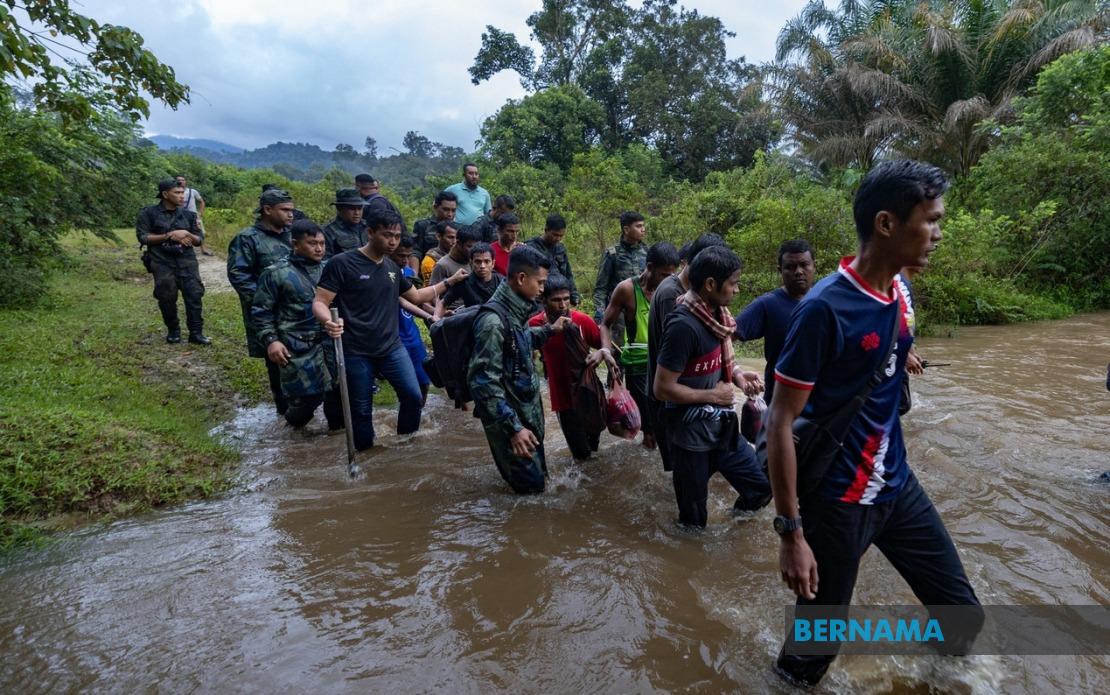
Malaysia has signalled its intention to intensify collaborative efforts with ASEAN member countries and the United Nations High Commissioner for Refugees in tackling the protracted Rohingya displacement crisis, moving towards a more integrated and multi-faceted diplomatic strategy. At a parliamentary session in Kuala Lumpur on July 7, Deputy Foreign Minister Datuk Lukanisman Awang Sauni articulated the government's evolving approach to a humanitarian challenge that has become increasingly central to regional stability discussions across Southeast Asia.
The Malaysian government's position reflects a pragmatic acknowledgement that the Rohingya issue extends far beyond humanitarian concern into questions of regional security and international law. Lukanisman emphasised that Malaysia has consistently leveraged its voice within ASEAN forums to advocate for peaceful resolution pathways in Myanmar, while simultaneously maintaining active engagement with UNHCR mechanisms designed to provide immediate protection and aid to displaced Rohingya populations already residing within Malaysian territory. This dual-track approach demonstrates Kuala Lumpur's understanding that any viable solution requires both diplomatic pressure on the originating state and practical support for affected populations.
The deputy minister identified the cross-border ramifications of the refugee situation as a central driver of Malaysia's engagement. Uncontrolled displacement movements create cascading security challenges that transcend national boundaries, including irregular maritime migration patterns, sophisticated human smuggling networks, and potential extremist recruitment risks within vulnerable refugee communities. Malaysia's geographic position as a primary destination for sea-borne Rohingya arrivals places the country at the frontline of managing these consequences, lending particular urgency to its multilateral advocacy.
However, Lukanisman offered a candid assessment of structural limitations constraining current international responses. ASEAN's foundational principle of non-interference in member states' internal affairs, combined with the bloc's requirement for consensus-based decision-making, creates significant obstacles to mounting coordinated pressure on Myanmar's government. This institutional architecture, while protecting smaller nations from external coercion, simultaneously renders the organisation ill-equipped to address situations requiring unified intervention or sanctions regimes. The constraints exemplify ongoing tensions between ASEAN's cherished sovereignty principles and its collective capacity to resolve cross-border humanitarian emergencies.
The UNHCR, whilst performing invaluable humanitarian functions, operates within equally circumscribed parameters. The agency's mandate focuses primarily on refugee protection, service delivery, and assistance programmes rather than addressing underlying political factors that drive displacement. This functional specialisation means UNHCR mechanisms cannot directly influence Myanmar's government policies or resolve the ethnic and political conflicts at the crisis's root. Current international efforts consequently concentrate on managing symptoms—providing food security, medical care, and shelter—rather than treating the underlying disease of state-level persecution and communal violence.
Recognising these systemic gaps, Malaysia has begun exploring additional regional mechanisms to enhance burden-sharing across ASEAN. Strengthening responsibility-sharing frameworks would distribute the costs and challenges of hosting Rohingya populations more equitably among Southeast Asian nations rather than concentrating them in Bangladesh, Malaysia, and Indonesia. Such mechanisms could include coordinated resettlement programmes, burden-sharing financial contributions, and regional capacity-building initiatives that acknowledge the collective stakes involved in regional stability.
The Malaysian government has also prioritised promoting political settlements that would create conditions for Rohingya voluntary return. Rather than indefinite warehouse solutions keeping displaced populations in protracted limbo, Malaysia advocates for diplomatic initiatives that address Myanmar's governance issues and minority protections, thereby enabling refugees to return with safety guarantees and human dignity restored. This approach recognises that sustainable resolution requires transformation of conditions in Myanmar itself, not merely management of refugee populations elsewhere.
Lukanisman positioned these initiatives within Malaysia's broader international identity as a nation committed to peace, security, and humanitarian principles. This framing serves multiple audiences—domestic constituencies expecting Malaysia to act responsibly on human rights, regional partners assessing Malaysian leadership credentials, and international observers evaluating Southeast Asia's capacity for regional governance. By tying Rohingya engagement to core national values, the government attempted to build domestic consensus around what remains a diplomatically sensitive and costly intervention area.
The deputy minister's parliamentary response, delivered in response to questioning from opposition lawmaker Datuk Seri Dr Shahidan Kassim, reflected ongoing parliamentary scrutiny of Malaysia's Rohingya policies. Opposition figures frequently challenge the government's diplomatic effectiveness, resource allocation, and commitment to long-term solutions rather than short-term crisis management. This parliamentary pressure, while sometimes contentious, creates accountability mechanisms that ensure the issue maintains high-level policy attention.
For Malaysia and its Southeast Asian neighbours, the Rohingya crisis presents a defining test of regional institutions' relevance and effectiveness. The crisis demonstrates both ASEAN's limitations as a coordination mechanism for humanitarian challenges and the gap between international humanitarian frameworks and political will to implement comprehensive solutions. As host to one of the world's largest Rohingya populations outside Bangladesh, Malaysia faces direct consequences from any failure to build sustainable management frameworks or progress toward political resolution in Myanmar.
Moving forward, Malaysian policymakers appear aware that continued reliance on existing diplomatic frameworks risks prolonging the crisis indefinitely. The emphasis on exploring new responsibility-sharing mechanisms and political settlement pathways suggests recognition that incremental adjustments to current approaches may prove insufficient. Whether ASEAN can overcome its structural constraints to mount more decisive regional responses, and whether Myanmar's government will engage constructively in settlement discussions, remain critical uncertainties that will determine whether Malaysia's renewed commitment translates into tangible progress toward crisis resolution.

