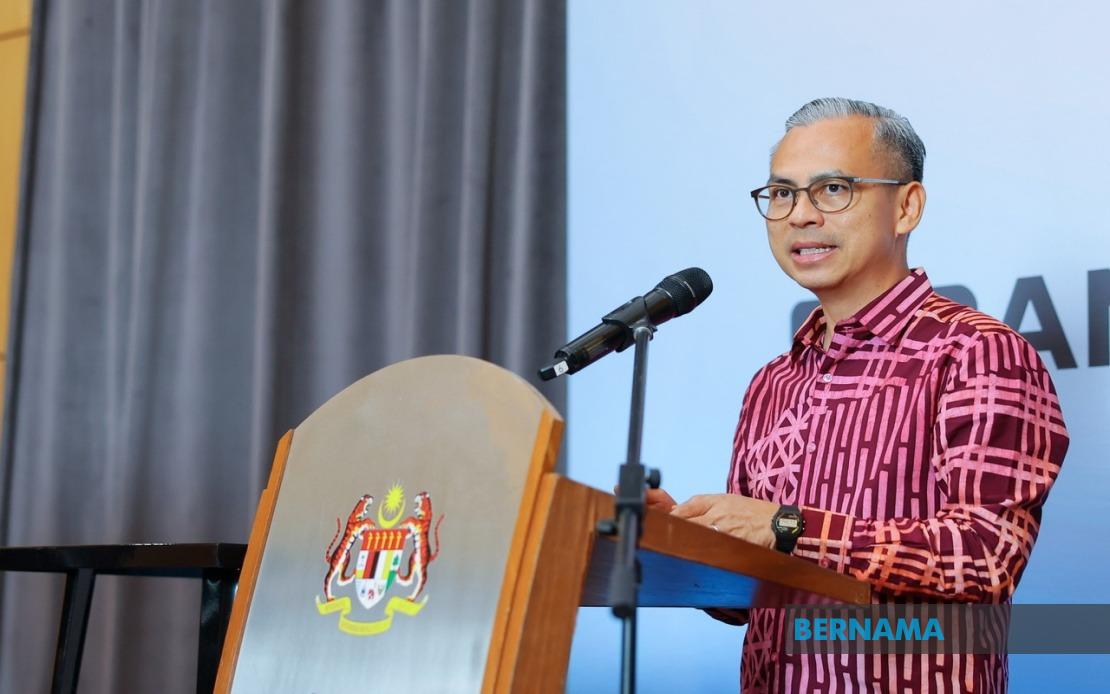
Malaysia is taking structured action against the escalating threat of online fraud by establishing a dedicated cross-agency working committee that formally brings together government departments, financial regulators, telecommunications firms and major social media operators. Communications Minister Datuk Fahmi Fadzil announced the initiative on July 2, revealing that the committee was formally established on June 18 following high-level Cabinet discussions about the alarming surge in digital scam-related offences affecting Malaysian citizens and residents.
The formation of this task force represents a significant shift in how Malaysia intends to address cybercrime, moving beyond siloed departmental responses towards an integrated strategy that acknowledges the interconnected nature of online fraud networks. Fahmi, who serves as government spokesman, emphasized that the inaugural meeting of the working committee would commence shortly, bringing multiple stakeholders into a unified operational framework designed to strengthen law enforcement capabilities, modernise existing legislation, and enhance investigative procedures across digital platforms.
What distinguishes this approach is its explicit inclusion of private-sector participants at an institutional level. For the first time, Malaysia's anti-scam efforts will directly involve banking sector representatives, major telecommunications providers, and dominant social media platforms as active partners rather than passive observers. This tripartite model—government agencies, financial services, and technology companies—reflects international best practices in combating digital crimes that often exploit vulnerabilities spanning multiple sectors simultaneously.
The committee's mandate encompasses three interconnected objectives: strengthening enforcement mechanisms to rapidly identify and prosecute perpetrators; updating the legal framework to address gaps exploited by sophisticated scammers; and improving investigative techniques using data-driven approaches. Fahmi acknowledged that the government has identified several concrete measures that will be implemented in the coming months, though he deliberately withheld specific operational details to prevent scammers from circumventing newly announced countermeasures. This strategic opacity—balancing transparency with tactical necessity—reflects lessons learned from previous crime-fighting initiatives.
Malaysia's decision to employ a cross-agency model draws directly from the government's successful experience tackling child sexual exploitation and abuse material online. That initiative, which relied on coordinated special operations involving multiple departments, achieved measurable results and served as proof of concept for the current anti-scam committee structure. The communications minister suggested that applying the same collaborative framework to online fraud would enable faster, more stringent, and more comprehensive action against perpetrators operating across borders and digital platforms.
The timing of this announcement reflects growing public concern about online scams in Malaysia, where victims increasingly include elderly citizens, small business owners, and middle-income professionals. Scammers have become increasingly sophisticated, employing social engineering techniques, deepfake technology, impersonation of authority figures, and elaborate investment schemes that target specific demographic groups. The losses incurred by Malaysian victims represent not merely personal financial devastation but also aggregate economic leakage from the national economy and erosion of public confidence in digital commerce and financial services.
From a regional perspective, Malaysia's formation of this committee signals recognition that cybercrime transcends national boundaries. Many scam operations targeting Malaysians originate in neighbouring countries or operate through international networks that exploit differences in legal regimes and enforcement capabilities. A coordinated domestic task force creates infrastructure for international information-sharing and joint investigation protocols that can disrupt transnational criminal networks more effectively than unilateral action.
The involvement of telecommunications companies addresses a critical vulnerability in current anti-scam defences. Mobile networks and internet service providers possess real-time data about call patterns, SMS origins, and data transmission that can help investigators rapidly identify and locate scammers. Similarly, financial institutions maintain transaction records that, when shared securely through the committee, enable rapid freezing of illicit accounts and recovery of victim funds. Social media platforms control the digital infrastructure through which many scams are initially marketed to potential targets, making their cooperation essential for prevention rather than purely reactive enforcement.
However, the committee's effectiveness will depend substantially on implementation. Inter-agency coordination requires establishing protocols for information-sharing, defining jurisdictional boundaries, and creating incentive structures that encourage genuine collaboration across institutions with differing operational cultures and priorities. Financial privacy regulations, national security considerations, and commercial confidentiality concerns may complicate data-sharing between government agencies and private companies, necessitating carefully negotiated legal frameworks.
The committee also implicitly acknowledges limitations in current legislation. Existing criminal codes were largely written before sophisticated online fraud became prevalent, and prosecuting scammers requires updating statutes to address crimes like phishing, credential harvesting, investment fraud using digital platforms, and cryptocurrency-based theft. The working committee will likely recommend legislative amendments to enhance penalties, streamline prosecution procedures, and close loopholes that scammers currently exploit.
For ordinary Malaysians, the committee's work should eventually translate into improved victim support services, faster account recovery mechanisms, and public awareness campaigns that reach vulnerable populations. Technology companies may implement stronger authentication requirements, enhanced fraud detection systems, and removal of scam-related content. Financial institutions could strengthen customer verification protocols and establish rapid-response systems for suspicious transactions.
The success of this initiative will ultimately be measured by declining victimization rates, faster prosecution timelines, and increased recovery of stolen funds. Whether the committee can overcome institutional silos, sustain political commitment beyond initial announcements, and adapt quickly to evolving scammer tactics remains to be seen. Malaysia has demonstrated the political will to establish comprehensive infrastructure for tackling online fraud; the coming months will reveal whether this structural foundation translates into tangible protection for Malaysian citizens navigating digital platforms.

