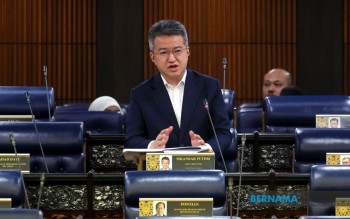
The Malaysian Government has initiated a landmark fiscal framework by tabling the National Trust Fund Bill 2026 in the Dewan Rakyat, signalling a strategic pivot toward intergenerational wealth preservation. Deputy Finance Minister Liew Chin Tong introduced the legislation on July 14, paving the way for second reading during the current parliamentary session. The bill seeks to formally establish the National Trust Fund, known locally as KWAN, alongside the National Trust Fund (Incorporated) entity that will serve as its administrative custodian. This dual-structure approach reflects international best practices in sovereign wealth management, where institutional separation provides governance clarity and fiduciary independence.
The philosophical underpinning of the National Trust Fund responds to Malaysia's evolving economic landscape and the finite nature of hydrocarbon wealth. By anchoring permanent institutional mechanisms to accumulate reserves during periods of resource abundance, the Government aims to create a financial safety net insulating future generations from commodity price volatility and resource depletion. This reflects lessons learned from comparable jurisdictions—Norway's Government Pension Fund Global and the UAE's State Investment Fund demonstrate how disciplined, long-term capital accumulation cushions economies against external shocks and demographic pressures. Malaysia's version targets both stability and sustainability, recognising that petroleum revenues, while currently significant, represent a diminishing resource base over the coming decades.
The funding architecture outlined in the bill establishes three primary revenue streams feeding the trust. The Federal Government commits to annual contributions equivalent to at least 0.1 per cent of projected annual revenue, creating a baseline contribution irrespective of economic conditions. More substantially, the fund receives no less than two per cent of all dividend payments from Petronas, Malaysia's national oil company, capturing a portion of energy sector profits. The third revenue source channels no less than two per cent of export duties collected on depleting natural resources—excluding pre-existing state assignments—into the fund. This tripartite structure distributes funding obligations across general Treasury resources, energy sector earnings, and resource extraction revenues, creating a diversified inflow mechanism.
State governments, particularly those benefiting from petroleum and mineral royalties, retain the option to contribute voluntarily to the national fund. This provision acknowledges Malaysia's federal structure while encouraging resource-rich states to participate in wealth preservation beyond their immediate fiscal needs. Sarawak and Sabah, which receive substantial oil royalties, occupy a particularly strategic position within this framework. Whether subnational governments embrace voluntary contributions will reveal important truths about inter-regional fiscal coordination and attitudes toward long-term national saving versus immediate resource distribution to state constituents.
Parliamentary oversight integrates transparently into the fund's operational design. All contributions flowing into the National Trust Fund appear explicitly in the annual financial statement presented to the Dewan Rakyat, ensuring public visibility and legislative scrutiny. The Federal Government must complete all scheduled transfers by financial year-end, establishing predictable timelines that prevent arbitrary withholding or reallocation of designated contributions. This transparency mechanism addresses historical Malaysian governance challenges by institutionalising accountability requirements into statutory provisions rather than relying upon administrative discretion.
The National Trust Fund (Incorporated)'s board assumes fiduciary responsibility for investment management and strategic asset allocation. The legislation mandates the board to formulate comprehensive long-term investment strategies specifying how accumulated capital deploys across asset classes and geographies. This requirement moves beyond passive accumulation toward active capital stewardship, positioning the fund as an institutional investor capable of generating returns that compound wealth over decades. International experience suggests sovereign wealth funds significantly outperform standard government savings accounts through diversified portfolio approaches spanning equities, bonds, real estate, and alternative investments.
Regulatory reporting obligations impose discipline upon fund management. The National Trust Fund (Incorporated) must furnish the Finance Minister with returns, accounts, reports, and asset activity information as ministerially requested, embedding ongoing oversight into the governance structure. Regular reporting serves dual purposes: it enables public accountability through parliamentary examination of fund performance, while simultaneously providing investment management with clear performance benchmarks and risk parameters. This balance between operational autonomy for professional management and political accountability reflects sophisticated approaches to sovereign wealth governance.
Fund utilisation guidelines establish clear boundaries around permissible expenditures. Moneys may finance board member remuneration and administrative expenses necessary for fund operations, alongside investment-related costs. This narrow utilisation scope protects capital preservation by preventing mission creep wherein political actors redirect trust assets toward unrelated policy objectives. Such constraints prove critical in developing economies where fiscal pressures frequently tempt governments to raid long-term savings for short-term spending. Statutory prohibitions on discretionary withdrawals represent an important institutional commitment to preserving the fund's integrity across multiple parliamentary cycles and administrations.
The bill's anticipated passage carries significant implications for Malaysia's long-term fiscal sustainability and its standing among resource-rich developing nations. Established sovereign wealth funds in comparable countries have accumulated hundreds of billions in assets, providing crucial buffers against commodity downturns and enabling counter-cyclical spending during economic contractions. Malaysia, despite substantial petroleum wealth over recent decades, has not previously formalised equivalent institutional mechanisms at the national level. This legislative initiative addresses that historical gap, positioning the country to capture and preserve resource revenues systematically during high-commodity-price periods.
From a regional Southeast Asian perspective, Malaysia's National Trust Fund legislation signals growing recognition across ASEAN economies that commodity wealth requires disciplined, long-term stewardship frameworks rather than immediate consumption. Indonesia, Thailand, and Vietnam all face comparable pressures to balance resource exploitation's immediate fiscal benefits against intergenerational equity concerns. Malaysia's parliamentary establishment of statutory funding and governance requirements may catalyse similar discussions within peer nations, potentially generating regional momentum toward more rigorous resource wealth management standards.
The second reading's timing during the current parliamentary session reflects Government determination to expedite passage toward implementation. Once enacted and brought into operation through ministerial notification in the Gazette, the legislation creates statutory obligations binding successive governments to maintain fund contributions. This binding character provides essential protection against political cycles that might otherwise subordinate long-term accumulation to electoral pressures. The bill's advancement represents a mature recognition that sustainable prosperity demands surrendering short-term fiscal flexibility in service of durable intergenerational stewardship.

