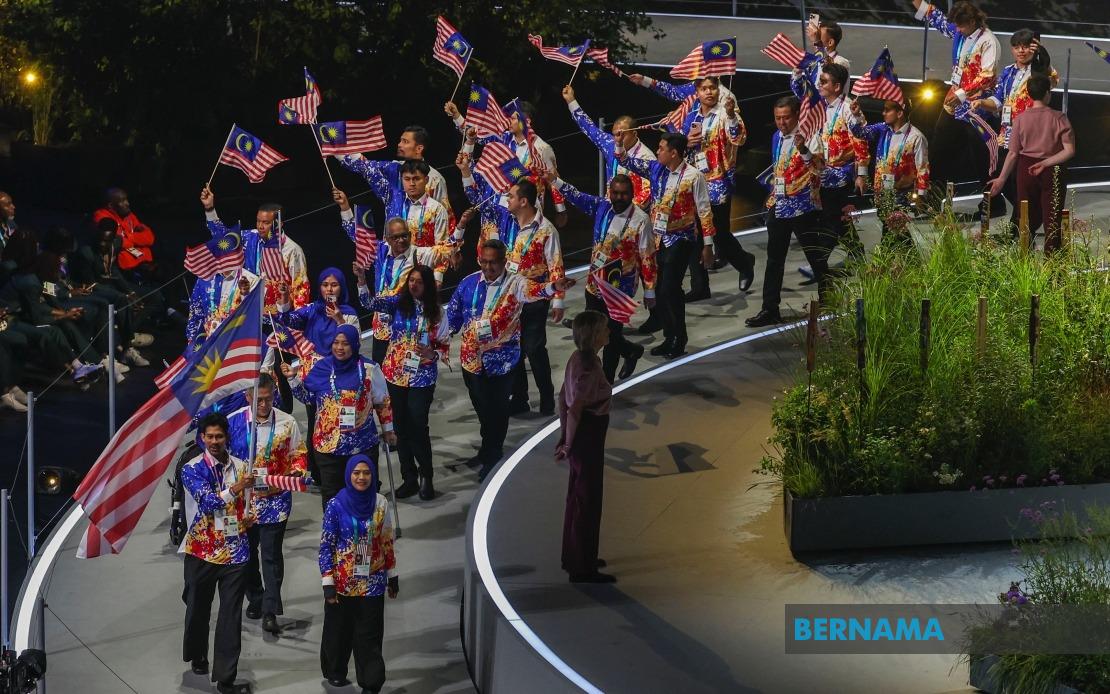
Malaysia's performance at the 2026 Commonwealth Games in Glasgow has exceeded official expectations, with the national contingent capturing seven gold medals as the closing day approaches on August 2. This result surpasses the pre-Games target of five gold medals, signalling an increasingly competitive edge in the Commonwealth sporting arena. The achievement arrives at a moment when Malaysia faces intensifying regional competition from neighbours investing heavily in sports infrastructure and athlete development programmes.
Youth and Sports Minister Dr Mohammed Taufiq Johari attributed the outperformance to what he characterised as the "strength of the country's sports ecosystem", describing the Games outcome as testament to systematic collaborative effort rather than isolated excellence. His framing underscores an emerging strategic philosophy in Malaysian sports administration: that sustainable medal success depends less on sporadic funding boosts than on institutionalised cooperation between governance structures. The minister explicitly acknowledged contributions from the National Sports Council, National Sports Institute, Olympic Council of Malaysia, Paralympic Council of Malaysia, and affiliated national sports associations, suggesting these bodies are operating with uncommon alignment.
The full medal tally announced by the Games deadline comprised seven golds, three silvers and three bronzes—a composition that edges Malaysia's preliminary expectations by two gold medals while falling marginally short in other categories. The contingent's ability to overdeliver in the most prestigious medal category reveals targeted strength in specific disciplines, though the three-bronze finish slightly underperformed the four-bronze forecast. This distributional pattern hints at concentrated competitive advantage rather than broad-based dominance, a distinction relevant for assessing which sports programmes warrant continued investment priority.
Dr Mohammed Taufiq's statement emphasised the personal contributions of athletes, coaching staff and administrative personnel, framing their success through virtues of dedication, discipline and sacrifice. This rhetorical emphasis on individual character aligns with traditional Malaysian approaches to athlete recognition, though it potentially obscures systemic factors—training centre quality, sports science support, equipment access and financial stability—that increasingly determine competitive outcomes in modern Commonwealth Games contexts. The minister's dual acknowledgement of both personal merit and institutional support reflects a maturing policy discourse.
The Games began on July 23 in Glasgow, providing Malaysia a two-week window to showcase capabilities developed over four-year preparation cycles. The Games format offers particular strategic value for Malaysian athletes seeking competitive experience against quality international opposition without the resource demands of World Championships. For smaller sports nations, Commonwealth participation functions as essential high-level competitive exposure, a consideration informing Malaysian federation participation strategies and athlete selection processes.
Looking forward, Dr Mohammed Taufiq indicated that Glasgow's success should catalyse enhanced performance across a demanding succession of international competitions. The 2026 Asian Games in Japan represents the immediate successor event, where Malaysia confronts substantially larger competitor fields from populous Asian nations. Immediately following are the Aichi-Nagoya 2026 Asian Para Games, underlining Malaysia's institutional commitment to Paralympic sport development—an area where Malaysian programmes have progressively strengthened. These sequential events will test whether Glasgow's momentum translates into sustained results across different competitive environments and opposition profiles.
The minister also referenced the 2027 SEA Games and ASEAN Para Games scheduled for Malaysia itself, framing these home events as opportunities for demonstrating continental leadership. Hosting SEA Games carries implicit expectations of medal performance, particularly in sports where Malaysian athletes possess historical advantage. The timing of these remarks suggests Malaysian sports administration views Glasgow not as a standalone achievement but as foundational evidence supporting longer-term competitive positioning across multiple Games cycles.
Dr Mohammed Taufiq's commitment statement regarding ecosystem strengthening indicated the ministry's intention to sustain current policy trajectories rather than implement radical restructuring. He emphasised producing "world-class athletes capable of bringing further glory to Malaysia on the international stage", adopting terminology aligned with high-performance sport ideology increasingly prevalent across Asian sporting nations. This language suggests Malaysian ambitions extending beyond Commonwealth Games success toward broader global sporting recognition, a shift from earlier eras when regional dominance constituted the primary competitive target.
The successful Glasgow campaign occurs amid competitive dynamics reshaping regional sports hierarchies. Singapore's population size and economic resources have enabled sophisticated high-performance programmes, whilst emerging Southeast Asian economies increasingly allocate budgets toward athlete development. Malaysia's ability to exceed expectations in Glasgow demonstrates that systematic coordination and focused investment can yield competitive returns even against better-resourced opponents. However, the marginal nature of the overperformance—two additional gold medals against a five-gold target—suggests improvements remain incremental rather than transformative.
Chef de mission Datuk Awalan Abdul Aziz received commendation for contingent leadership, though detailed analysis of Games team management and athlete welfare remained undisclosed in official statements. The chef de mission role encompasses logistics coordination, regulatory compliance and athlete wellbeing supervision—dimensions rarely visible to public audiences but critical for optimising team performance in overseas competitions. The minister's acknowledgement implicitly recognised these administrative dimensions of sporting success.
Malaysia's Glasgow performance arrives as Southeast Asian sports development becomes increasingly sophisticated. Thailand, Vietnam and Indonesia have substantially invested in sports science infrastructure and athlete identification systems, creating competitive pressures affecting historical power balances. Malaysia's continued reliance on sports ecosystem strength—rather than singular dominance—acknowledges these shifting regional dynamics. The Glasgow result, whilst exceeding targets, must be contextualised within competitive environments where marginal improvements increasingly determine medal distinctions.
Dr Mohammed Taufiq's remarks also implicitly signalled continuity in national sports policy direction, suggesting that existing institutional frameworks and funding mechanisms warrant preservation rather than replacement. This conservative approach reflects institutional inertia but also recognition that sports development operates across extended timeframes where radical restructuring frequently disrupts athlete preparation cycles and coaching relationships. Malaysian sports administration appears committed to refinement rather than renovation of existing structures.
As the Glasgow Games conclude, Malaysian sports stakeholders will conduct systematic performance analysis examining results distributions across disciplines, identifying which sports delivered above-target outcomes and which underperformed expectations. These datasets will inform future funding allocations and talent identification priorities. The ministry's stated commitment to ecosystem strengthening will face practical test when translating Glasgow success into sustained competitive positioning across diverse future competition contexts.

