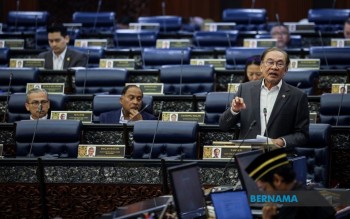
Prime Minister Datuk Seri Anwar Ibrahim has rolled out an e-Invoice Voluntary Declaration Programme running through December 31, 2027, as part of broader efforts to lighten the regulatory load on Malaysia's business sector, particularly its substantial population of micro, small and medium enterprises. Speaking during Minister's Question Time in Parliament on July 7, Anwar outlined the fresh initiative as an uncommon but necessary policy adjustment for income tax administration, positioning it within the government's wider MADANI agenda to support entrepreneurial survival and growth during a demanding global economic period.
The voluntary declaration scheme represents a significant shift in tax compliance philosophy. Normally strict about penalties and enforcement, Malaysia's tax authority will refrain from imposing fines on any corrections, updates or revisions that enterprises choose to make of their own volition during the three-and-a-half-year window. This approach breaks conventional practice in income tax administration, where voluntary disclosure schemes are rarely offered without some form of penalty framework. For business owners navigating e-invoice requirements for the first time, or those discovering discrepancies in their filings, the penalty-free environment removes a major barrier to full compliance and transparency.
The announcement came in response to parliamentary questioning from Lee Chuan How, a Petaling Jaya MP representing the Ipoh Timor constituency under the Pakatan Harapan ticket, who raised concerns about the government's responsiveness to business sector challenges. As Finance Minister alongside his role as Prime Minister, Anwar positioned the e-invoice measure as one of several strategic interventions designed to help companies, especially smaller ones, weather current macroeconomic headwinds and global supply chain uncertainties that have complicated operations across Southeast Asia.
Crucially, the government has also accelerated tax incentive mechanisms to sweeten the compliance process. Eligible businesses can now claim full capital allowance deductions within a single financial year for all expenses incurred in implementing e-invoice systems. This condensed depreciation schedule means companies can recover their technology investments and software licensing costs far more rapidly than under standard capital allowance rules. The measure functions as both a carrot for compliance and a practical recognition that e-invoice infrastructure requires genuine capital outlays, particularly for smaller firms with limited IT budgets.
These incentives build on earlier policy adjustments. In December 2025, the government had previously increased the income threshold exempting businesses from e-invoice requirements, raising the ceiling from RM500,000 to RM1 million in annual turnover. That change alone benefited more than one million taxpayers by removing compliance obligations for a substantial segment of Malaysia's business ecosystem. By raising this threshold, the government effectively narrowed the pool of required e-invoice filers while concentrating administrative oversight on medium-sized and larger enterprises with greater institutional capacity.
The layered approach reflects lessons learned from implementation challenges elsewhere in Southeast Asia. Countries including Singapore, Thailand and Indonesia have rolled out mandatory digital invoicing with varying degrees of friction, and Malaysia appears intent on avoiding the hardest edges of such transitions. Small enterprises often lack dedicated accounting staff or IT infrastructure, making digital compliance genuinely burdensome without offsetting incentives or extended adjustment periods. The combination of the higher exemption threshold, voluntary declaration flexibility and accelerated capital deductions creates multiple on-ramps to compliance rather than a cliff edge.
For Malaysia's MSME sector—which generates substantial employment and economic activity across wholesale, retail, food service and light manufacturing—these measures carry material significance. Micro enterprises with just a handful of employees have often viewed regulatory compliance as a fixed cost that diverts scarce resources from growth and innovation. By reducing the financial and administrative sting of e-invoice adoption, the government aims to preserve entrepreneurial capacity for value-adding activities. The voluntary declaration programme particularly benefits firms that may have received conflicting guidance or struggled with technical implementation during the system's rollout.
The e-invoice programme itself represents part of Malaysia's broader digital economy infrastructure push. Mandatory e-invoicing improves tax collection efficiency, reduces fraud, and creates better real-time visibility into business activity and supply chains. From a macroeconomic perspective, more complete tax data allows the government to fine-tune fiscal policy and understand sector-level trends with greater precision. However, these systemic benefits must be balanced against genuine compliance costs borne by individual businesses, which explains why the government has structured the transition as a multi-year process with accommodations.
The timing of these announcements also signals political sensitivity to MSME concerns ahead of the government's efforts to maintain business confidence. Economic growth projections across the region remain modest, and any perception that regulations disproportionately burden smaller enterprises could fuel discontent. By positioning itself as responsive to business sector feedback and willing to modify policy details, the government attempts to reinforce its MADANI brand as pro-growth and pragmatic rather than doctrinaire about compliance enforcement.
Implementation will rest primarily with the Inland Revenue Board of Malaysia, which must operationalise the voluntary declaration framework and communicate clearly to businesses about eligibility criteria, eligible expenses for the accelerated capital allowance, and the specific procedures for making voluntary corrections without penalty. Clear guidance and perhaps grace periods for filing corrections will be essential to ensuring the programme achieves its intended effect of encouraging rather than deterring compliance.
The programme's success will ultimately depend on how thoroughly businesses understand and utilise the opportunities offered. Trade associations, accounting bodies and government agencies will likely need to coordinate public education campaigns explaining the voluntary declaration mechanism and the capital allowance provisions. For Malaysian entrepreneurs accustomed to navigating a complex regulatory landscape with limited guidance, proactive communication becomes as important as the policy itself in translating government intent into business behaviour.

