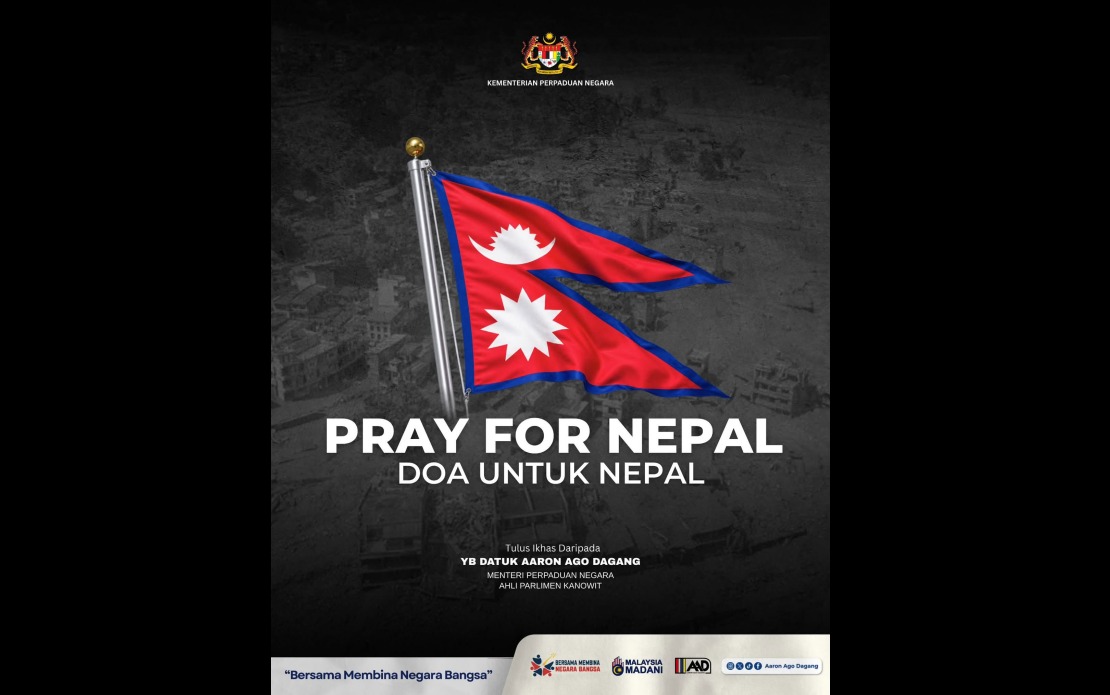
The Malaysian government has responded swiftly to the humanitarian crisis engulfing Nepal's Rasuwa district following devastating floods that struck the region yesterday. Minister of National Unity Datuk Aaron Ago Dagang articulated his condolences through a public statement, urging Malaysians to extend their thoughts and prayers towards the affected Nepali communities during this critical juncture. His intervention reflects the broader diplomatic framework guiding Malaysia's response to regional emergencies, emphasising solidarity with a neighbouring country facing unprecedented natural disaster.
In his statement disseminated via social media platforms, Aaron appealed to the Malaysian public to demonstrate empathy towards Nepal while simultaneously advocating for a successful coordination of international relief and recovery initiatives. The minister's emphasis on collective prayer and shared humanity underscores Malaysia's commitment to trans-border humanitarian cooperation, a principle increasingly relevant as climate-related disasters intensify across South Asia. His remarks positioned Malaysia as a responsible regional actor capable of extending meaningful support during critical moments, reinforcing bilateral ties that extend beyond formal diplomatic channels.
The immediate concern for Malaysian authorities centres on the welfare of citizens stranded or affected by the flooding. As of 11 pm on August 27, the Ministry of Foreign Affairs reported that 57 Malaysians remained uncontactable following the disaster. This figure, compiled from information submitted by family members, friends, and employers, represents a substantial cohort of nationals whose status remains uncertain. The inability to establish contact with more than five dozen citizens has prompted heightened administrative activity at the highest governmental levels, transforming what initially appeared as a regional news event into a matter of direct national interest.
Prime Minister Datuk Seri Anwar Ibrahim has directed a comprehensive whole-of-government response mobilising multiple agencies tasked with locating and assisting affected Malaysians. His directives specifically engaged the National Security Council (MKN) and the Ministry of Foreign Affairs, signalling that this situation transcends routine consular operations and warrants elevated coordination mechanisms typically reserved for significant national emergencies. This administrative escalation demonstrates the seriousness with which Kuala Lumpur regards the predicament, moving beyond symbolic gestures toward concrete action designed to establish communication with and facilitate assistance for stranded nationals.
The flooding in Rasuwa district represents a particularly acute challenge for rescue and recovery operations given the mountainous terrain characteristic of Nepal's northern regions. Such geography complicates logistics, limits infrastructure accessibility, and often impedes communication networks essential for locating survivors. For Malaysian nationals present in the area—whether tourists, workers, or residents—these geographical obstacles compound the difficulty of establishing contact and coordinating rescue efforts. The extended communication blackout affecting 57 individuals reflects both the scale of the disaster and the challenging operational environment confronting emergency responders.
Nepal's vulnerability to monsoon-related flooding has increased substantially in recent years, with climate change intensifying precipitation patterns and swelling river systems. The Rasuwa district, situated in central Nepal and traversed by significant waterways, faces recurring flood risks that have claimed lives and displaced populations with distressing regularity. This latest incident underscores the escalating severity of natural hazards in the region, a pattern that should inform Malaysian contingency planning for citizens residing or travelling in geographically vulnerable areas throughout Southeast Asia and South Asia.
The Ministry of Foreign Affairs' expedited compilation of missing persons data demonstrates Malaysia's capacity to mobilise existing networks of contact tracing, relying upon reports submitted through familial, professional, and personal channels. This crowd-sourced approach, while imperfect, has proven effective in previous humanitarian emergencies and enables rapid identification of potentially affected nationals. However, the persistent communication gap suggests that some Malaysians may be located in areas where infrastructure has been severely compromised or where immediate survival needs preclude contact establishment.
For Malaysian families with relatives in Nepal, the current situation represents an agonising period of uncertainty. The Malaysian government's transparent communication regarding the number of uncontactable citizens, though sobering, provides a clear focal point for relatives seeking information through official channels. Both the National Security Council and Ministry of Foreign Affairs have presumably established dedicated communication lines and coordination mechanisms to process inquiries, disseminate updates, and facilitate information exchange with Nepali authorities and international rescue organisations.
The disaster also highlights the importance of Malaysian citizens maintaining updated registration with their embassy or consulate when residing or travelling abroad, particularly in regions prone to natural hazards. Such administrative discipline enables governments to conduct rapid welfare checks and maintain awareness of national populations during crises. For those still unaccounted for, ongoing diplomatic engagement with Nepali counterparts and coordination with international humanitarian organisations remains the primary mechanism through which Malaysian authorities can track developments and contribute to recovery efforts.
Beyond the immediate humanitarian response, this incident carries implications for regional disaster preparedness protocols and the articulation of mutual assistance frameworks among neighbouring countries. Malaysia's swift governmental acknowledgment and coordinated response establish a model of bilateral engagement during transnational emergencies. The willingness of ministerial leadership to publicly voice concern and mobilise administrative resources demonstrates recognition that responsibility for citizens extends beyond national borders during periods of regional crisis, a principle that could inform broader Southeast Asian approaches to humanitarian emergencies.

