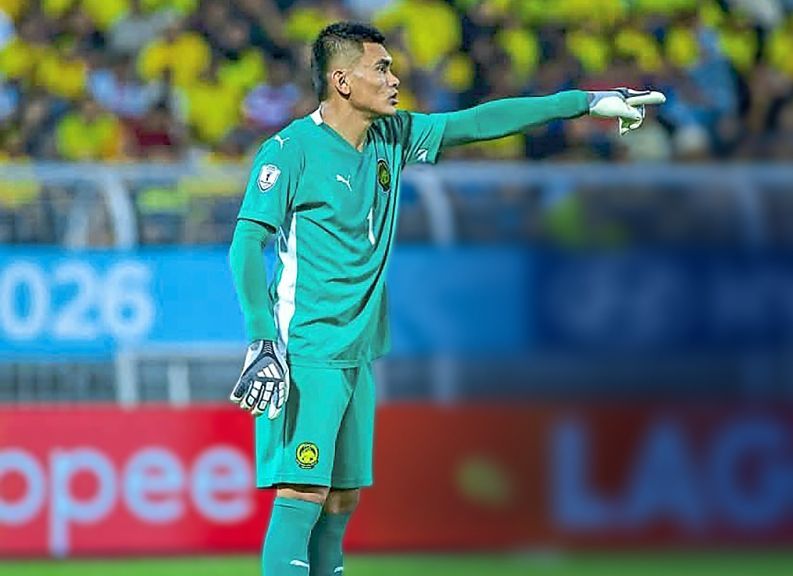
Malaysia's hopes of reaching the Hyundai AFF Cup final suffered a significant blow on Sunday when the Harimau Malaya succumbed to a 0-2 defeat against Vietnam in the semi-final first leg at Cheras Football Stadium in Kuala Lumpur. The loss leaves interim coach Tan Cheng Hoe's squad with a steep mountain to climb heading into the return fixture at MyDinh Stadium in Hanoi, where they must find a way to overturn the deficit against the tournament's defending champions and a team that has proven formidable throughout the competition.
The match proved troublesome from the outset for the Malaysian side, with defensive concerns surfacing just fifteen minutes into the contest. Centreback Rodney Celvin Akwensivie was forced from the field through injury, requiring immediate substitution with young defender Aysar Hadi Sapri. This disruption to the team's structure and momentum came at a critical juncture, exposing potential fragility in a defensive unit that would prove unable to withstand Vietnam's attacking prowess throughout the evening.
Malaysia's attacking efforts showed promise in stretches, particularly during a dramatic sequence in the opening period. In the 34th minute, the home side orchestrated what should have been a breakthrough moment when leftback Faris Danish Asrul delivered a precisely-weighted low cross into the box. Captain and striker Paulo Josue managed to redirect the ball toward goal, but Vietnam goalkeeper Patrick Le Giang produced a crucial save to deny what appeared to be a certain goal. The reprieve lasted mere seconds as midfielder Daryl Sham George inherited possession in front of an ostensibly empty net, yet inexplicably skied his follow-up attempt into the stands, squandering the kind of second-chance opportunity that characterises the difference between competitive and championship-level performances.
The momentum from that missed double opportunity swung decisively toward Vietnam before the interval. In the lead-up to half-time, the visitors capitalised on a lapse in Malaysia's defensive concentration when winger Xuan Son found himself unmarked in a dangerous area. Wingback Truong Tien Anh produced an inviting cross from the flank, and Son completed the move with a well-executed header that gave Vietnam a 1-0 advantage at the break. The goal reflected a pattern that would plague Malaysia's defensive organisation throughout the encounter: lapses in marking discipline and positioning that allowed Vietnam's attacking players crucial space and time to execute their movements.
The second half witnessed Malaysia attempting to assert greater control through increased possession, though the tactical adjustment failed to generate the quality of chances required to threaten a well-marshalled Vietnamese defence. Meanwhile, the visitors maintained their dangerous counter-attacking approach, keeping Malaysian defenders constantly alert and vulnerable to rapid transitions. This contrasting approach in midfield tempo and space management illustrated Vietnam's greater experience and composure in high-stakes knockout football.
A dramatic moment arrived in the 60th minute when referee Rustam Lutfullin signalled for a red card against Vietnamese goalkeeper Patrick Le Giang, adjudging the goalkeeper to have handled the ball outside his designated penalty box. The decision appeared to tip the balance decisively in Malaysia's favour, potentially opening the contest and providing the numerical advantage necessary to engineer a comeback. However, a video assistant referee review overturned the decision after officials determined that Le Giang had not in fact used his hands, with the clearance executed using a different part of his body entirely. The reversal denied Malaysia a crucial advantage and represented another momentum shift away from the home side's aspirations.
In seeking to inject greater penetration into proceedings, Tan Cheng Hoe introduced tactical reinforcements in the form of winger Haqimi Azim Rosli and midfielder Ibrahim Manusi, with the latter marking his senior international debut. These substitutions replaced Mahamadou Sumareh and Syafiq Ahmad respectively, representing an attempt to generate fresh impetus in midfield. Yet the introductions failed to unlock Vietnam's increasingly compact defensive shape, which had grown more assured and resolved as the match progressed.
The Vietnamese side administered the decisive blow in the 86th minute when an unfortunate deflection by Malaysia's Faris Danish Asrul, the same player who had created their best first-half chance, found its way into his own net. The own goal encapsulated the evening's frustrations for the Malaysian contingent, where individual errors and moments of imprecision proved far more consequential than any systemic tactical failing. Vietnam's triumph at Cheras leaves them in commanding position heading toward the decisive second leg.
Malaysia now confronts an extraordinarily challenging task in Hanoi, requiring not merely a narrow victory but a significant reversal of fortune against opponents who have demonstrated both quality and, crucially, an ability to maintain composure under pressure. The defending champions' experience in knockout competition, combined with the hostile atmosphere that awaits at MyDinh Stadium, creates formidable obstacles for Tan Cheng Hoe's squad. Yet the semi-final format still affords the possibility of an improbable turnaround if Malaysia can rectify their defensive vulnerabilities, convert their limited scoring opportunities with greater clinical efficiency, and sustain tactical discipline throughout the encounter.

