The Malaysian government is refining how it delivers targeted fuel subsidies across Sabah and Sarawak, with officials pledging to incorporate feedback gathered directly from communities on the ground. Datuk Mustapha Sakmud, the Minister in the Prime Minister's Department overseeing both states, made the commitment in a statement from Kota Kinabalu, signalling that policymakers remain attuned to the practical difficulties residents face under the new BUDI Diesel scheme launched at the start of July.
The initiative represents a shift toward means-tested fuel support, departing from the universal subsidy model that previously dominated Malaysian energy policy. Under the programme, eligible private diesel vehicle owners receive 200 litres monthly at the capped price of RM2.10 per litre, with SUV and pickup truck owners able to apply for an additional 100 litres should they satisfy defined eligibility thresholds. For rural communities in East Malaysia, where distances between settlements are substantial and transport costs constitute a meaningful portion of household expenditure, such restructuring carries tangible implications for living standards and economic activity.
Mustapha underscored that ongoing consultations between state authorities, federal agencies, and community representatives would persist to smooth the scheme's rollout and shield residents—particularly those in dispersed settlements—from unintended economic strain. This commitment reflects recognition that blanket policy design often encounters friction when applied across diverse geographies with varying infrastructural capacities and demographic profiles. East Malaysia's unique circumstances, including limited fuel distribution networks and greater reliance on personal vehicles for commerce and subsistence, demand tailored implementation approaches that generic national frameworks may overlook.
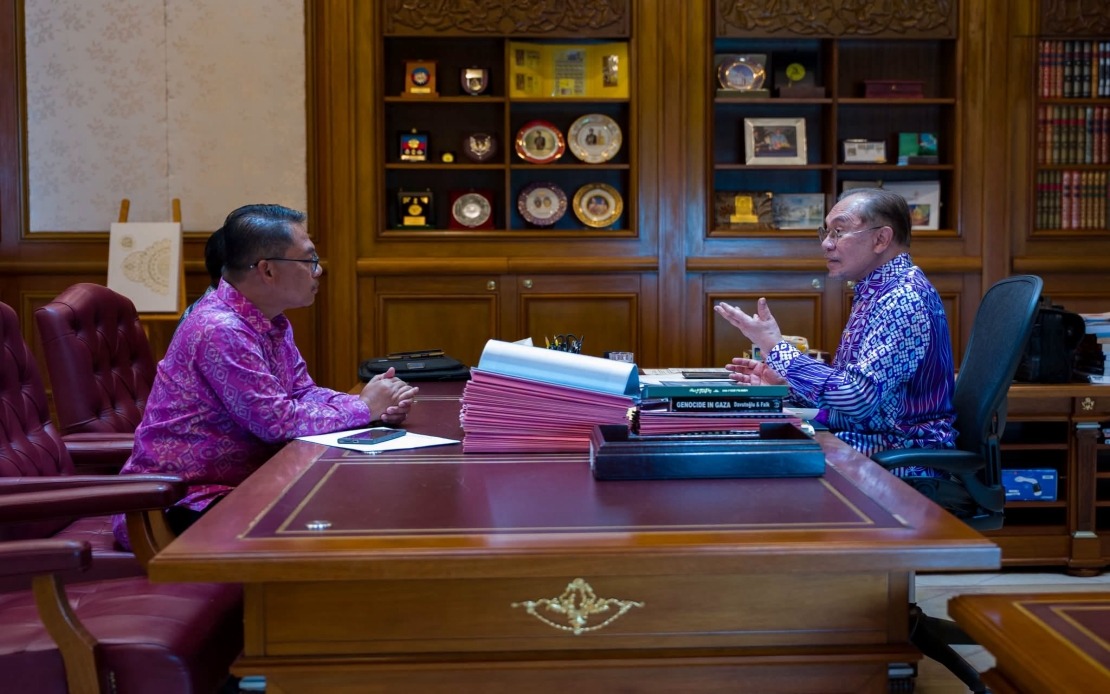
Significantly, Prime Minister Datuk Seri Anwar Ibrahim has personally engaged with affected populations to understand the obstacles encountered during the BUDI Diesel rollout. His direct listening sessions with grassroots communities underscore the government's acknowledgement that policy effectiveness depends partly on incorporating lived experience rather than relying solely on technical projections prepared by civil servants. Such engagement also signals political commitment to the MADANI governance agenda, which emphasises inclusive consultation and responsiveness to citizen concerns as pillars of legitimacy.
Mustapha framed the adjustment process within a broader philosophical stance, invoking the principle that public sentiment deserves consideration in government deliberation. He stressed that urban and rural populations alike would find their viewpoints reflected in policy evolution, positioning the subsidy refinement as emblematic of a government attuned to diverse Malaysian experiences. This messaging carries weight in regions where historical perceptions of federal neglect remain embedded in local consciousness, particularly in Sabah and Sarawak where autonomy and equitable resource distribution have long featured in political discourse.
The BUDI Diesel scheme itself emerged from fiscal pressures surrounding energy subsidies, which have strained the national budget considerably in recent years. By targeting disbursements toward vehicles meeting specific criteria and capping monthly allocations, the government seeks to control expenditure while maintaining support for transport-dependent populations. However, implementation reveals complexities that policy architects may have underestimated, from administrative verification challenges to consumer confusion regarding eligibility determinations and application processes.
For residents in Sabah and Sarawak, the subsidy restructuring arrives against a backdrop of transportation costs that already consume substantial household incomes, particularly in rural constituencies where commercial hubs lie considerable distances away. Fishermen, farmers, and small traders who depend upon diesel-powered vehicles for livelihood activities face direct implications when subsidy mechanisms change. Communities reliant on remote clinics, schools, and markets accessible primarily by private transport have legitimate grounds for ensuring that policy modifications do not inadvertently squeeze household budgets or restrict mobility.
The government's receptiveness to modifying implementation details demonstrates flexibility in approach, distinguishing between programme architecture—which appears fixed—and operational mechanics, where adjustments remain feasible. This distinction permits responsiveness to genuine hardships without necessitating complete policy reversal, a pragmatic middle path that balances fiscal discipline with social cushioning. For Malaysian policymakers, the lesson underscores that even well-intentioned redistributive schemes require iterative refinement as real-world experience accumulates.
Looking forward, the refinement process will likely illuminate broader questions about subsidy targeting efficacy across Southeast Asia, where governments similarly grapple with balancing expenditure control against social protection. Malaysia's experience may offer insights to neighbouring nations wrestling with comparable energy subsidy dilemmas, particularly those with geographically dispersed populations where one-size-fits-all approaches prove inadequate. The willingness to solicit and act upon grassroots input, moreover, provides a model for inclusive policy evolution that could inform governance practices beyond fuel subsidies alone.
The commitment to ongoing stakeholder engagement also suggests that the BUDI Diesel scheme represents not a finalised product but rather an evolving initiative subject to continuous improvement. Communities in Sabah and Sarawak are invited to articulate specific grievances and propose modifications, positioning them as active participants in governance rather than passive policy recipients. This collaborative stance, if genuinely operationalised, could strengthen the scheme's legitimacy and increase compliance among beneficiary populations who perceive their concerns as valued and actionable.
Ultimately, how effectively the government translates public feedback into operational amendments will determine whether the refined subsidy approach successfully balances fiscal sustainability with equitable support provision. For residents in East Malaysia dependent on diesel transport, the outcome carries material consequences for household economics, business viability, and access to essential services. Success requires sustained attention to implementation details, transparent communication about eligibility criteria and quota calculations, and genuine responsiveness when communities report genuine difficulties that policy framers did not anticipate.

