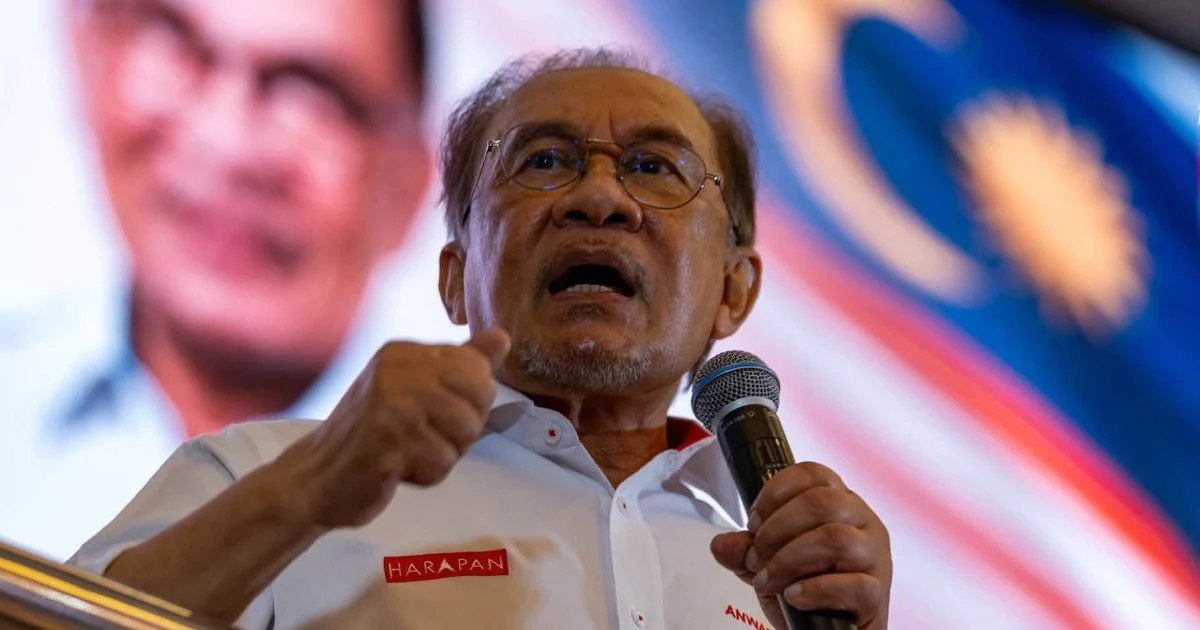
Prime Minister Datuk Seri Anwar Ibrahim has ruled out approaching Singapore to help facilitate voting arrangements for Malaysian workers employed in the city-state during the forthcoming Johor state election on July 11. The clarification addresses a potential diplomatic question that could have arisen given the large number of Malaysians commuting daily across the Causeway for work and the practical logistics involved in allowing them to vote in their home state.
The decision to proceed without formal arrangements through Singapore reflects Malaysia's approach to managing domestic electoral processes independently, even when they involve citizens temporarily located abroad. This stance underscores the principle that voting mechanisms remain primarily a national matter, handled through existing domestic channels rather than through bilateral cross-border coordination. The timing of the announcement suggests that the Elections Commission and relevant authorities have determined that the current framework can accommodate voter participation without additional external facilitation.
Johor's state election represents a significant political event, with voters across the southern state expected to participate in what will be closely watched by political observers across the region. The decision not to seek Singapore's involvement may reflect confidence in Malaysia's existing systems for managing electoral logistics, though it also raises practical questions about how the Elections Commission will address the challenge of voters who may face difficulties returning to Johor on polling day.
Thousands of Malaysians work in Singapore daily, with a substantial portion commuting from Johor. The choice to proceed without cross-border voting facilitation effectively places the onus on individual workers to arrange their own transport and time off to return to their constituencies on election day. This approach prioritizes electoral sovereignty while placing practical responsibility on voters themselves to participate, rather than creating special mechanisms that might complicate diplomatic arrangements or set precedents for future elections.
The announcement also reflects the broader context of Malaysia-Singapore relations, where the countries maintain close economic and social ties despite periodic tensions. By handling the election independently, Malaysia signals its confidence in its own institutional capacity while avoiding scenarios that might require extended negotiations with Singapore over polling logistics or voting rights for Malaysian citizens on Singaporean territory. Such arrangements would introduce complexities around diplomatic immunity, premises access, and bilateral protocols that the government appears to have determined are unnecessary.
From an electoral management perspective, the announcement provides clarity to voters working in Singapore about their responsibilities. While some may have hoped for facilitated voting arrangements comparable to overseas voting provisions in other democracies, the government's position essentially maintains the status quo where Malaysians abroad must return to their constituencies to vote, or alternatively decline participation if circumstances prevent their return.
The timing of Anwar's statement, combined with the specific mention that there are no plans to seek Singapore's assistance, suggests the government had previously considered or been asked about such arrangements and wanted to settle the matter decisively. This proactive communication prevents speculation and ensures that workers, employers, and election authorities can plan accordingly without uncertainty about potential cross-border voting schemes.
Johor's election assumes heightened importance in Malaysia's broader political landscape, as the state has traditionally been a major electoral battleground. Strong performance or setbacks in Johor carry implications for federal politics and coalition dynamics, making the state contest more than a routine local exercise. Ensuring robust participation remains important, even if it means voters must make personal arrangements to return.
The decision also has implications for how Malaysia manages future electoral events involving its diaspora and cross-border workers. By declining to establish special facilities or seek foreign government cooperation, the country maintains consistency with its approach to previous elections and establishes a precedent that voting participation is ultimately an individual responsibility. This framework may be tested if participation rates drop significantly among workers unable to return to Johor on July 11.
Singapore, which has its own electoral traditions emphasizing citizen participation and public order, would likely have cooperated diplomatically had Malaysia formally requested assistance. However, the Malaysian government's preference for independent management reflects a desire to keep the election entirely within domestic institutional frameworks. This approach respects Singapore's sovereignty by not asking it to provide facilities or administrative support for a Malaysian electoral process, even indirectly.
The election management challenge extends beyond Singapore-based workers to the broader principle of ensuring equitable access to voting across different categories of Malaysians. The government's position implicitly accepts that some eligible voters may be unable to participate due to geographical constraints and work obligations, treating this as a manageable aspect of the electoral system rather than a problem requiring cross-border solutions.
As polling day approaches, both the Elections Commission and political campaigns will need to account for the announced voting arrangements when communicating with and mobilizing supporters working across the Causeway. The clarity provided by Anwar's statement allows all stakeholders to operate within known parameters, even if some voters may find the practical implications challenging.

