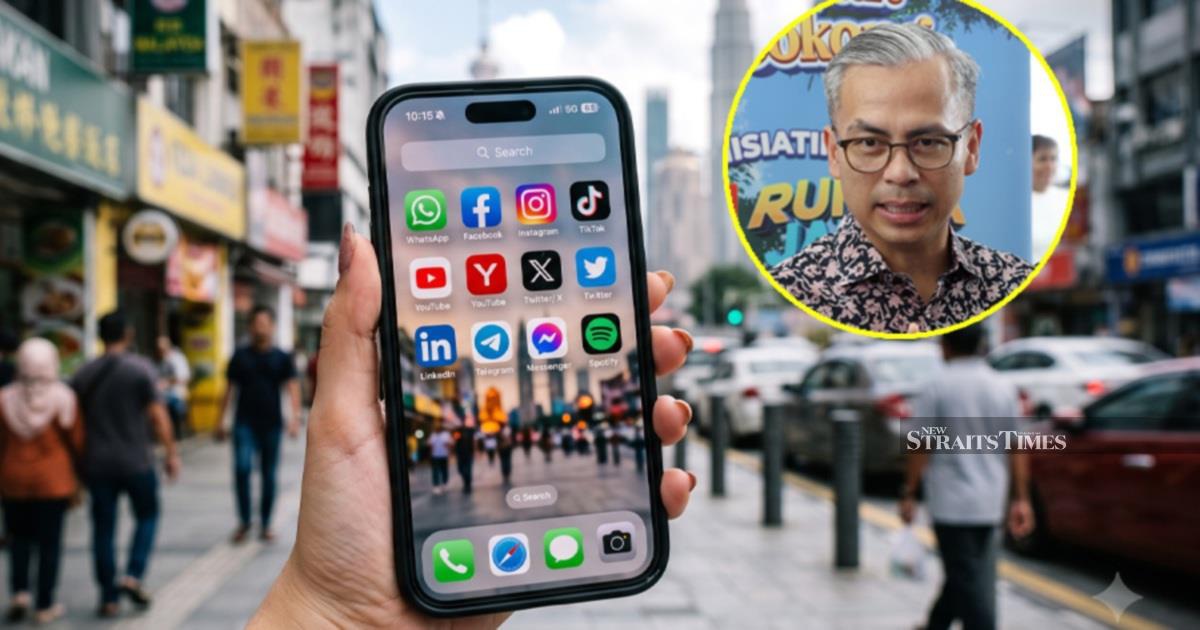
Authorities in Malaysia have identified a substantial network of fake social media accounts designed to manipulate public discourse, with Communications Minister Datuk Seri Fahmi Fadzil revealing the scale of the operation during recent comments. The detection of over 1,800 inauthentic accounts represents a significant finding in the country's ongoing struggle against coordinated disinformation campaigns that exploit the nation's sensitive social and political fault lines.
The proliferation of these accounts underscores a broader pattern affecting Southeast Asian democracies, where bad actors—whether domestic political operators, foreign interference campaigns, or commercial entities—weaponize social media platforms to amplify divisive narratives. By operating through networks of fake accounts rather than legitimate user profiles, perpetrators create the illusion of organic public sentiment while evading accountability mechanisms that might catch individual bad actors. The strategy allows coordinated amplification of specific messages to appear as grassroots movements, potentially influencing policy discussions and public perception.
Fahmi's disclosures indicate that a substantial portion of these accounts specifically target Malaysia's most sensitive social cohesion issues: race relations, religious sensitivities, and matters concerning the institution of royalty. These three domains—collectively known as 3R issues—sit at the intersection of Malaysian constitutional protections and communal tensions. Article 153 of the Federal Constitution enshrines Malay-Muslim privileges while guaranteeing minority rights, creating an inherent complexity in how these topics are discussed publicly. By systematically amplifying provocative content around these issues, malicious actors can manufacture the appearance of widespread grievance, potentially triggering genuine community backlash or eroding trust in democratic institutions.
The timing of such disclosures is particularly significant given Malaysia's recent political volatility and the 2024 election cycle that concluded last year. Social media has become the primary battleground for political messaging in the country, especially among younger voters less reliant on traditional media. Inauthentic account networks can distort how political parties, government decisions, and communal issues are perceived, potentially shifting electoral calculations or triggering real-world tensions based on manufactured online sentiment. The discovery of these accounts suggests that authorities are developing better detection capabilities, though the sheer number identified indicates the scale of the problem remains substantial.
The mechanism by which fake accounts operate typically involves creating profiles with stolen photos, fabricated biographical information, and automated posting scripts. These accounts then engage in coordinated behaviour: liking and sharing specific content, amplifying hashtags, and generating comments that create algorithmic momentum. Platform algorithms, designed to promote engaging content, inadvertently help spread divisive material when it generates reactions. Users encountering such content may believe it represents genuine public opinion, particularly if they exist within algorithmic filter bubbles that reinforce their existing perspectives. The result is a distorted information environment where manufactured outrage drives real-world consequences.
For Malaysia, a country navigating profound questions about national identity, religious pluralism, and equitable governance, such manipulation carries acute risks. Unlike established democracies where institutional resilience and press diversity provide counterweights to misinformation, Malaysia's still-developing institutional safeguards mean that coordinated disinformation can have outsized impact. Educational institutions, civil society organisations, and media outlets have not yet fully adapted to rapid-response fact-checking across Malay-language and English-language social media spheres. Additionally, the decentralised nature of social media means grassroots communities often lack resources to verify claims before sharing them within their networks.
The discovery also raises questions about platform accountability. Facebook, Instagram, TikTok, and X (formerly Twitter) have pledged to combat inauthentic behaviour, yet enforcement remains inconsistent—particularly in smaller markets like Malaysia where dedicated teams may be limited. Platforms typically remove detected fake accounts and associated content, but this reactive approach rarely addresses underlying incentives that drive creation of such networks in the first place. The accounts often cost minimal money to create and operate, while potential gains from shifting public narrative or damaging political opponents remain substantial, creating an economic calculus that favours perpetrators.
Fahmi's announcement suggests Malaysian authorities are increasing pressure on platforms to improve detection and removal speeds. The Communications Ministry and other relevant agencies have signalled commitment to combating digital manipulation, though enforcement against local operators—whether political operatives, conspiracy theorists, or commercial scammers—remains nascent. Malaysia lacks comprehensive legislation specifically targeting coordinated inauthentic behaviour, instead relying on broader defamation laws, sedition provisions, and communications regulations that sometimes criminalise speech itself rather than inauthentic conduct. This legal gap creates challenges for prosecutors seeking to address network manipulation without inadvertently restricting legitimate expression.
For Malaysian civil society and news organisations, the findings underscore the importance of media literacy initiatives and collaborative fact-checking efforts. When citizens encounter sensational claims about 3R issues on social media, lacking easy access to verification sources, they may accept such claims as true. Supporting local fact-checking organisations, teaching digital literacy in schools, and investing in quality journalism that covers communal issues responsibly remains essential infrastructure for combating manipulation. The problem cannot be solved through platform enforcement alone; it requires sustained effort from multiple stakeholders including government, media, civil society, and technology companies.
Looking forward, Malaysia's experience with these 1,800 fake accounts provides valuable lessons for regional governments and platforms. The sophistication and scale of inauthentic networks likely will increase rather than diminish, particularly as artificial intelligence tools make account creation and behaviour automation easier. Detecting and neutralising such networks requires investment in technical capabilities, expertise in local languages and cultural contexts, and willingness to move quickly once threats are identified. The challenge facing Malaysian authorities—and indeed all Southeast Asian democracies—is establishing sustainable mechanisms for identifying and countering coordinated manipulation while respecting legitimate expression and political debate.

