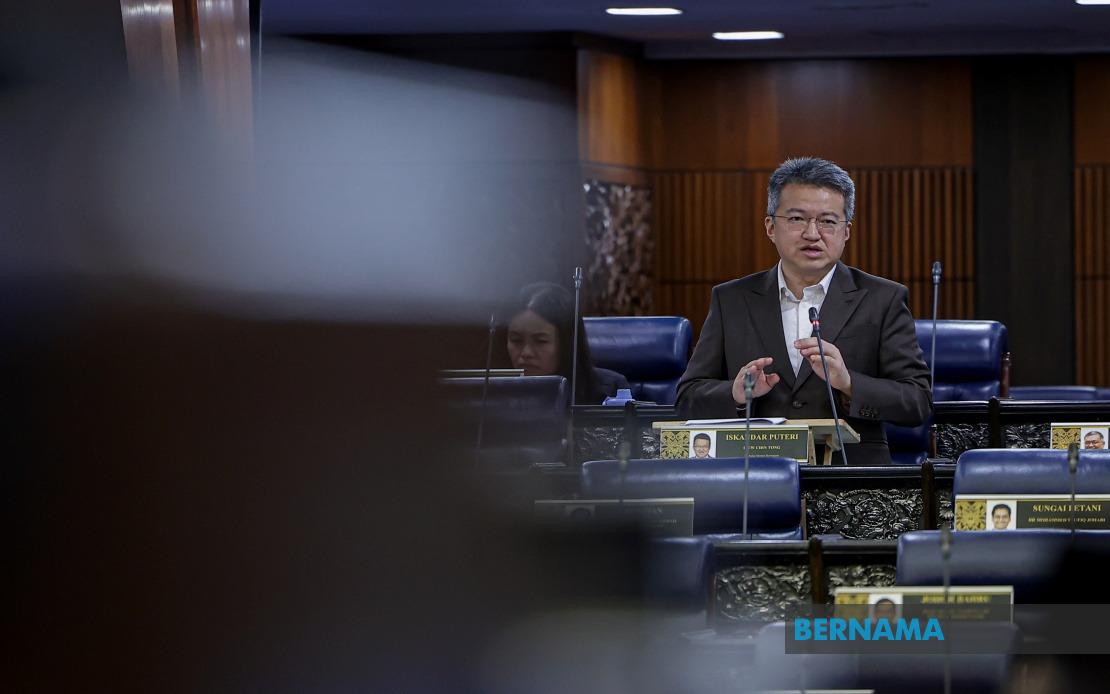
The Malaysian government is doubling down on institutional safeguards designed to prevent a recurrence of the 1Malaysia Development Berhad scandal that undermined the nation's international standing. Deputy Finance Minister Liew Chin Tong articulated this commitment during parliamentary proceedings, emphasising that the MADANI administration under Prime Minister Datuk Seri Anwar Ibrahim remains focused on restoring global confidence through a comprehensive suite of governance enhancements.
The foundational pillar of this reform agenda is the Public Finance and Fiscal Responsibility Act 2023, legislation that fundamentally tightens controls over how the government manages and deploys public money. This statute establishes enforceable mechanisms for fiscal discipline while creating legal barriers against the concentration of power that enabled previous mismanagement. The framework represents a deliberate shift toward transparency and accountability mechanisms that would make it substantially more difficult for officials to circumvent existing oversight structures or divert state resources without triggering automatic regulatory intervention.
Complementing this legislation, the government has substantially expanded the investigative capacity of the Auditor-General through amendments to the Audit Act. The revised framework adopts what officials term a "follow the public money" approach, fundamentally altering how auditors track and scrutinise government expenditure across agencies and entities. Rather than relying on documentary compliance checks, this methodology enables auditors to trace funding flows comprehensively, identifying irregularities or suspicious patterns that might indicate misappropriation or abuse. This represents a meaningful enhancement over previous audit regimes that operated within narrower investigative parameters.
Beyond legislative measures, the administration is simultaneously drafting a Government Procurement Bill intended to introduce stricter protocols governing how public agencies acquire goods and services. This procurement framework aims to eliminate opportunities for inflated contracting, preferential vendor selection, and other mechanisms historically exploited to siphon public resources. Additionally, the government is undertaking a broader overhaul of the legal architecture governing state-owned enterprises, recognising that these entities frequently become vehicles for financial malfeasance when subjected to inadequate oversight or governance standards.
The imperative driving these reforms is not merely domestic accountability but the restoration of Malaysia's severely damaged international reputation. The 1MDB scandal imposed costs that extended far beyond the immediate financial losses incurred by the government. The episode attracted sustained global media scrutiny, triggering investigations by foreign law enforcement agencies and spawning complex cross-border legal proceedings that consumed governmental resources and subjected Malaysian institutions to international judicial examination. This reputational damage fundamentally undermined perceptions of Malaysia's institutional integrity and the reliability of its fiscal management practices.
These perceptual challenges translated directly into economic consequences. Investor hesitation regarding Malaysia as a destination for capital deployment reflected legitimate concerns about governance standards and the security of capital in an environment where high-level financial impropriety appeared insufficiently constrained by existing safeguards. The scandal created headwinds for Malaysia's competitive positioning globally, complicating efforts to attract foreign direct investment and maintain the market confidence necessary for stable macroeconomic performance. By reforming governance structures, the administration aims to demonstrably reverse these negative associations.
The financial toll of managing the 1MDB legacy remains substantial. Since 2017, the government has committed RM18.7 billion from both operating and development budgets to satisfy the institution's financial obligations. Following the MADANI government's assumption of office in March 2023, officials confronted an immediate obligation to redeem USD3 billion in government-guaranteed 1MDB bonds, necessitating an allocation of RM13 billion from the development budget—a sum equivalent to approximately 13.1 percent of the total development expenditure budgeted for that fiscal year. These ongoing financial commitments underscore why preventing future comparable episodes carries such urgency for government planners.
The correlation between enhanced governance frameworks and improved economic outcomes provides initial validation of the administration's approach. Malaysia has recorded its highest-ever approved investments and simultaneously achieved notable trade performance metrics. The country's standing in global competitiveness rankings has similarly improved, suggesting that investors and international observers have observed the governance enhancements with sufficient confidence to alter their capital allocation decisions in Malaysia's favour. These developments indicate that institutional reform efforts, when clearly communicated and visibly implemented, can reverse reputational damage and restore the market conditions necessary for sustained economic growth.
For Malaysia's regional standing within Southeast Asia, these governance reforms carry particular significance. The 1MDB scandal damaged not merely Malaysia's reputation but also regional perceptions of governance standards across ASEAN. By implementing sophisticated institutional safeguards and demonstrating measurable improvement in fiscal oversight and accountability mechanisms, Malaysia positions itself as a jurisdiction where governance standards have genuinely evolved beyond previous deficiencies. This matters for intra-regional capital flows, technology transfer partnerships, and the broader business confidence that facilitates regional economic integration.
The architecture of these reforms reflects international best practices adapted to Malaysia's specific context. Rather than implementing superficial compliance measures, the government has chosen to reconstruct foundational institutional relationships between oversight bodies, spending agencies, and audit authorities. The emphasis on follow-the-money audit approaches aligns with methodologies increasingly employed by developed economies seeking to detect sophisticated financial misconduct that might evade traditional documentary audits. Similarly, the reformed government procurement framework incorporates safeguards that international observers associate with jurisdictions maintaining highest standards of fiscal administration.
Moving forward, the effectiveness of these measures will depend substantially on implementation fidelity and the willingness of enforcement agencies to apply these frameworks with consistency and rigour regardless of political pressures. The legislation itself, however comprehensive, represents merely the structural foundation. Embedding these governance standards into organisational culture and ensuring that officials at all levels internalise the accountability expectations encoded in these laws requires sustained institutional commitment and transparent reporting of enforcement actions. Malaysian observers and international monitors will likely assess the government's governance credentials substantially based on whether these reforms produce demonstrable consequences for officials who breach established protocols.

