Malaysia is stepping up efforts to draw Thai students into its universities and colleges, targeting growth of more than 20 per cent as it leverages geographic nearness, competitive tuition costs and attractive career prospects following graduation. The push reflects a broader regional strategy to position Malaysian higher education as a preferred destination for Southeast Asian learners seeking quality academic experiences without the expense of studying in Western nations or Singapore.
Education Malaysia Global Services (EMGS), the government-linked agency operating under the Ministry of Higher Education, has forged partnerships with the Thai International Education Consultants Association (TIECA) to amplify its marketing reach. TIECA, which represents Thailand's sole professional body for education agents, brings together 78 active member organisations positioned to disseminate information about Malaysian study opportunities to prospective applicants throughout Thailand. This collaborative approach taps into established networks within Thailand's education intermediary sector, enabling Malaysia to reach students through trusted local channels rather than relying solely on direct promotion.
Current enrolment figures underscore both the existing demand and untapped potential. Education Malaysia Global Services data indicates that 634 Thai students maintained active enrolment status in Malaysian institutions during 2025, with the student body divided roughly equally between undergraduate and postgraduate cohorts. The trajectory has shown encouraging momentum, with enrolments climbing from 300 students in 2024 to 360 the following year—representing a 20 per cent year-on-year increase. EMGS leadership believes sustained collaboration with TIECA can perpetuate this upward trend, potentially establishing Malaysia as a regional hub for Thai tertiary education seekers.
Novie Tajuddin, chief executive officer of Education Malaysia Global Services, identified three primary advantages drawing Thai students across the border. Geographic proximity eliminates lengthy travel burdens and permits easier family visits during academic breaks, a consideration often overlooked in student recruitment but significant for family-conscious Thai applicants. Affordability represents another decisive factor; Malaysian tuition and living costs remain substantially lower than comparable programmes in developed nations. Educational quality constitutes the third pillar, with Malaysian institutions increasingly recognised for meeting international standards while maintaining reasonable price points.
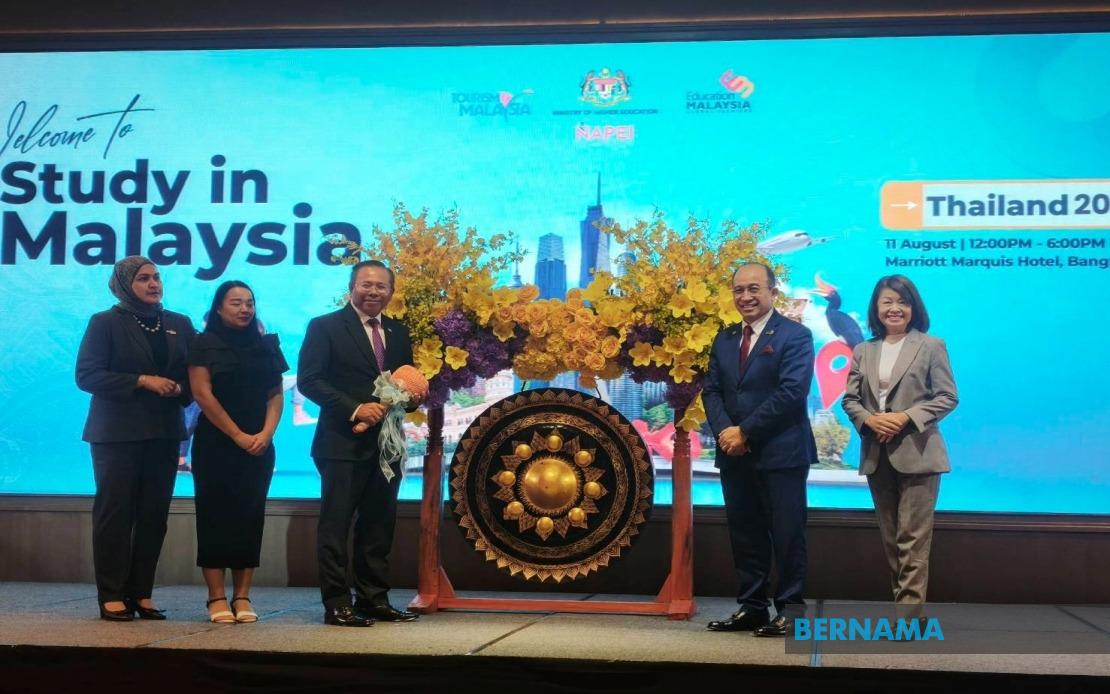
The recruitment campaign manifested in a multi-city education fair coordinated by Education Malaysia Global Services, Tourism Malaysia and the National Association of Private Educational Institutions (NAPEI). The roadshow traversed major Thai population centres, commencing in Chiang Mai on August 9 before moving to Bangkok on August 11 and concluding in Hat Yai on August 13. This geographic spread ensured exposure across Thailand's northern, central and southern regions, acknowledging that prospective students exist throughout the country rather than concentrating solely in Bangkok.
Malaysia's Ambassador to Thailand, Datuk Wan Zaidi Wan Abdullah, formally inaugurated the Bangkok edition of the education fair, underscoring the initiative's diplomatic importance. The ambassador advanced a strategic proposal urging Malaysian public and private universities to establish dedicated scholarship schemes specifically targeting Thai applicants. Wan Zaidi contended that such financial incentives would substantially strengthen Malaysia's competitive position, acknowledging that scholarships frequently determine study destination choices among academically capable yet financially constrained Thai students.
One distinctive advantage Malaysia offers lies in its Graduate Pass programme, a one-year post-study employment visa extending to international graduates including Thai nationals. This pathway addresses a critical concern among Thai families: whether their children can translate academic qualifications into practical career opportunities and extended residency. By permitting employment in designated sectors following graduation, the Graduate Pass transforms Malaysia into not merely an educational destination but a potential stepping stone for career advancement in Southeast Asia. Thai graduates can develop professional experience, establish networks and potentially transition to permanent career arrangements, elevating Malaysia's attractiveness beyond the immediate tertiary education period.
Education Malaysia Global Services maintains operational responsibility for facilitating visa processing for international students and promoting Malaysia globally as a talent and knowledge destination. The agency's dual mandate—administrative facilitation and strategic marketing—positions it as the natural orchestrator of initiatives designed to expand foreign student numbers. Novie Tajuddin's leadership of these recruitment efforts reflects the government's priority on this portfolio, signalling political commitment beyond routine operations.
Coordination between Education Malaysia Global Services and the Thai Embassy in Malaysia constitutes another operational dimension supporting enrolment growth. Embassy engagement strengthens institutional relationships, streamlines administrative procedures and demonstrates government-to-government commitment to educational exchange. Such diplomatic coordination proves particularly valuable when addressing visa complications, recognition of qualifications or other bureaucratic hurdles that might discourage Thai applicants otherwise inclined toward Malaysian study.
The Strategic timing of this intensified recruitment campaign reflects Malaysia's recognition of evolving regional educational patterns. Thai middle-class families increasingly seek international educational credentials for competitive advantage in Thailand's employment market. Simultaneously, Malaysian universities have expanded capacity and programme offerings, creating infrastructure capable of accommodating significantly larger Thai cohorts. The convergence of Thai demand and Malaysian supply capacity creates a distinctive market opportunity that authorities appear determined to exploit systematically through coordinated government, diplomatic and private sector initiatives.

