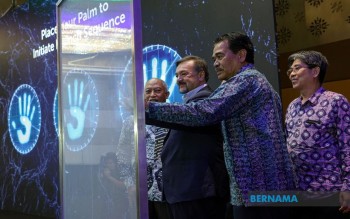
Pengurusan Aset Air Bhd (PAAB), the wholly owned asset management company of the Ministry of Finance, unveiled the nation's first Sustainable Islamic Finance Framework on June 30, establishing a watershed moment for the country's approach to blending Islamic finance principles with environmental sustainability and water security objectives. The launch represents three significant national firsts: Malaysia's inaugural framework incorporating blue finance mechanisms, the country's inaugural sustainable Islamic finance framework, and the first such framework to achieve Platinum Rated Framework certification—a distinction underscoring the rigour of its design and governance structures.
The framework's architecture reflects extensive collaboration between PAAB, Maybank Investment Bank Bhd acting as sustainability structuring adviser, and RAM Sustainability Sdn Bhd as independent second party opinion provider. This tripartite approach ensures the framework meets exacting standards for transparency, governance and accountability while remaining faithful to Islamic finance principles. By creating this institutional scaffolding, PAAB positions itself to channel capital toward water infrastructure and environmental projects through mechanisms that command legitimacy across both sustainability and Islamic finance communities—a critical distinction in a nation where Islamic financial instruments represent a growing proportion of capital market activity.
The framework's significance extends beyond technical innovation. Blue finance, a relatively nascent concept globally, refers to financial instruments and mechanisms specifically designed to fund ocean and freshwater conservation, sustainable use, and restoration initiatives. By being the first Malaysian framework to integrate blue finance into Islamic finance architecture, PAAB creates a template for mobilising capital toward one of the nation's most pressing infrastructure challenges. Water security has emerged as a paramount concern for Malaysia, with competing demands from urban consumption, agricultural irrigation, and industrial processes placing mounting pressure on existing infrastructure inherited from earlier development phases.
PAAB chairman Datuk Seri Jaseni Maidinsa outlined the tangible achievements underpinning the framework's credibility. As of December 31, 2026, PAAB's total migrated and committed investments in Malaysia's water services sector reached RM46.88 billion—a substantial commitment reflecting both the magnitude of infrastructure requirements and the institutional capacity deployed toward addressing them. These investments have materialised in concrete infrastructure gains: twenty-one water treatment plants now operate with combined daily treatment capacity of 2.085 billion litres, whilst forty-two reservoirs provide storage totalling 783 million litres. Simultaneously, 3,263 kilometres of replacement pipeline networks have been installed, directly tackling the chronic non-revenue water losses that have bedevilled Malaysia's distribution systems and undermining supply reliability across urban and suburban regions.
Finance Minister II Datuk Seri Amir Hamzah Azizan, who officiated the launch, projected that PAAB would issue its inaugural blue sukuk issuance during the third quarter of 2026. This debut offering carries particular significance as the anticipated first blue finance instrument globally to employ a taxonomy jointly developed by PAAB, Maybank, and RAM Sustainability under guidance from the Securities Commission Malaysia. The taxonomy represents a standardised classification system enabling market participants to identify and assess eligible water-related assets with precision, reducing information asymmetries that typically inhibit capital flows toward specialised infrastructure sectors.
The use of water assets as underlying collateral for sukuk issuances opens novel securitisation pathways. Rather than relying on conventional debt instruments unsecured by identifiable productive assets, the blue sukuk framework enables investors to hold beneficial claims over defined water infrastructure elements—treatment plants, reservoir systems, distribution networks—that generate predictable revenue streams from water tariffs and service fees. This asset-backed structure provides investors with transparent visibility of underlying cash flows whilst simultaneously demonstrating how emerging environmental finance methodologies can be integrated into time-tested Islamic finance conventions around asset-backing and Sharia compliance.
Minister Azizan's remarks at the post-launch press conference underscore the policy rationale driving this initiative. He articulated a strategic concern that insufficient investment in water assets creates cascading negative consequences across multiple dimensions of national development. Water infrastructure inadequacy undermines urban service delivery, constrains industrial competitiveness, threatens agricultural productivity, and creates public health vulnerabilities. By creating a dedicated financing framework targeting water assets specifically, the government signals commitment to removing capital constraint barriers that might otherwise defer critical infrastructure investment decisions.
The framework's innovation lies partly in its recognition that Islamic finance methodologies and blue finance objectives need not constitute separate policy domains. Islamic finance emphasises asset-backing, prohibits speculative transactions, mandates stakeholder transparency, and imposes social responsibility considerations on financial intermediaries. These principles align naturally with blue finance objectives, which similarly demand that capital deployment demonstrably produce identifiable environmental and social outcomes rather than generating ephemeral financial returns divorced from underlying productive activity. By fusing these orientations, PAAB creates institutional conditions enabling capital to flow toward water infrastructure on terms acceptable to both Sharia-conscious investors and environmentally motivated impact investors.
For Malaysian market participants, the framework's implications extend beyond PAAB's direct financing activities. The taxonomy and governance standards embedded within the framework will likely influence broader market practice. As other financial institutions and corporate issuers reference PAAB's standards, Malaysia's Islamic finance and sustainability infrastructure becomes increasingly codified and professionalised. This institutional maturation enhances market depth and credibility, potentially attracting international capital seeking exposure to emerging market Islamic finance instruments backed by explicit sustainability commitments.
The Platinum rating certification itself functions as a market signal. By engaging internationally recognised rating methodologies, PAAB signals alignment with global standards whilst maintaining Malaysian institutional autonomy. This positioning matters as international investment flows increasingly incorporate environmental, social and governance (ESG) criteria into allocation decisions. Investors scrutinising Malaysian sukuk offerings will encounter a framework explicitly designed to integrate environmental considerations, potentially enlarging the investor base willing to deploy capital into Malaysian Islamic finance instruments.
Beyond immediate financing implications, the framework establishes precedent for integrating water security considerations into broader fiscal and monetary policy architecture. Water infrastructure investment, historically underinanced relative to requirements, becomes institutionally visible through dedicated financing mechanisms. Government agencies, state water authorities, and private sector contractors utilising PAAB's framework create transparent records of capital deployment toward water objectives, enabling policymakers to track progress against national water security targets and identify remaining gaps requiring policy intervention.
The framework's emergence also reflects Malaysia's positioning within broader regional and global conversations surrounding sustainable finance. Southeast Asian economies increasingly recognise water scarcity and competition as defining development constraints. By establishing Malaysia's first integrated blue-Islamic finance framework, PAAB creates a model potentially replicable across the region. Indonesian, Thai, and Philippine policymakers facing analogous water infrastructure challenges might reference Malaysia's institutional innovations when designing their own sustainable finance mechanisms, amplifying the framework's influence beyond national boundaries.

