Malaysia's fourth National Training Week (NTW 2026) commenced with an expansive pledge to democratize skills development, offering thousands of free courses to citizens regardless of age or employment status. Launched in Sandakan on July 20, the initiative represents a coordinated effort between the Human Resource Development Corporation (HRD Corp) and the Ministry of Human Resources to position lifelong learning as a foundational national priority rather than a periodic campaign.
The selection of Sandakan as the launch venue carries symbolic weight, reflecting deliberate recognition of Sabah's strategic importance to Malaysia's broader human capital agenda. By anchoring the programme's debut in the East Malaysian state, organisers signal commitment to ensuring that skills development opportunities penetrate beyond the industrialised corridors of the Peninsular heartland, reaching underserved regions where training access has historically lagged. This geographic intentionality matters for a nation pursuing competitive advantage in the evolving regional economy, where talent gaps in peripheral areas risk widening disparities.
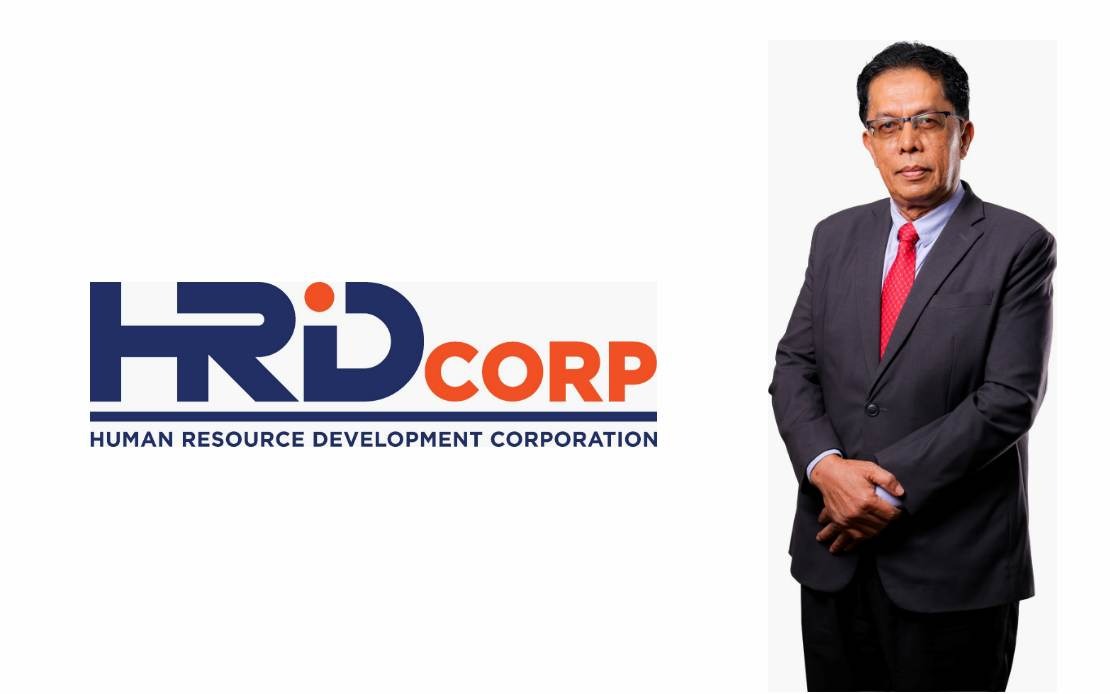
Khairul Firdaus, speaking at the launch, reframed NTW beyond the conventional understanding of time-bound campaigns, emphasizing instead its role as an embedded cultural mechanism. His characterization of the programme as a "national movement" suggests ambitions to shift Malaysian attitudes toward continuous professional development, embedding the expectation that learning extends throughout one's working and retirement life rather than concluding at formal qualification stage. For a workforce navigating rapid technological displacement, this philosophical pivot carries practical implications: individuals in mid-career stages facing skill obsolescence now have institutionalized pathways to reskill without bearing personal financial burden.
The curriculum architecture reflects sophisticated calibration to contemporary labour market demands. Artificial intelligence prompting, digital animation, drone operations, and digital marketing courses address immediate sectoral shortages, particularly in technology and creative industries where Malaysia competes regionally. Simultaneously, offerings spanning autism support and language instruction acknowledge that skills development encompasses both technical and human-centered competencies. This balanced approach prevents the programme from narrowing into purely tech-focused training, instead positioning it as responsive to diverse economic ecosystem needs.
Inclusivity extends beyond course selection to participant categorization. By explicitly targeting employees, entrepreneurs, gig workers, homemakers, and retirees, HRD Corp acknowledges that Malaysia's modern workforce defies traditional employment categories. The inclusion of gig workers—whose numbers have surged as platform economies expand—recognizes a demographic largely absent from conventional corporate training pipelines. Homemakers accessing professional development opportunities signals recognition that non-market-labour contributions can transition into income-generating skills. Retirees participating in structured learning reverses demographic fatalism, positioning older Malaysians as potential contributors to labour shortages rather than economic burdens.
The delivery infrastructure demonstrates pragmatic understanding of Malaysian accessibility constraints. Offering courses through dual online and in-person modalities accommodates geographic dispersion, internet reliability variations, and learning-style preferences. This hybrid approach proves especially significant for rural constituencies and low-income participants who may face transportation barriers to physical training centres. Digital delivery also enables national scalability without proportional infrastructure expansion, allowing HRD Corp to serve larger participant volumes than facility-based provision would permit.
The carnival format accompanying the Sandakan launch incorporates gamification and experiential learning, transforming what could have been administrative registration into community engagement events. Interactive sessions, career advisory services, and institutional exhibitions create ecosystem visibility, allowing participants to understand pathways from initial training through employment. This scaffolding particularly benefits first-generation learners uncertain about navigating post-training opportunities.
Special recognition accorded to 149 top-performing SPM students from Batu Sapi constituency injects a talent-cultivation dimension beyond immediate reskilling. Early engagement with excellence-oriented cohorts builds pipelines of ambitious learners who might otherwise settle into lower-trajectory pathways absent structured encouragement. This targeted motivation proves especially valuable in constituencies where family or community expectations might not centre professional advancement.
The roadshow's nationwide itinerary, culminating in Penang on July 25-26, ensures that the initiative functions not as Sabah-centric phenomenon but as genuinely distributed offering. Staggered venues allow regional customization—training priorities in agricultural Kedah likely differ from manufacturing-oriented Selangor—while maintaining coordinated messaging around lifelong learning as national imperative. The progression across states facilitates media coverage that travels, amplifying public awareness beyond initial launch publicity.
For Malaysian employers confronting talent shortages in emerging sectors, this programme functions as de facto workforce pipeline development. By publicly subsidizing skills acquisition in areas where commercial training provision remains limited or expensive, government reduces hiring friction and accelerates digital transformation timelines. Small and medium enterprises particularly benefit, as formal training investment often exceeds their individual HR capacity, but access to HRD Corp-sponsored programmes levels competitive playing fields against larger corporations.
The initiative also positions Malaysia strategically within Southeast Asian human capital competition. Regional peers including Vietnam and Thailand have scaled comparable programmes, and Malaysia's commitment to free, technology-focused training reinforces positioning as investment destination attracting firms requiring digitally-skilled workforces. This economic dimension extends beyond immediate participant benefit into broader foreign direct investment calculus.
Regional observers might note parallels with Singapore's SkillsFuture initiatives, though NTW 2026's explicit attention to underserved populations suggests Malaysia's approach prioritizes equity alongside efficiency—a distinction reflecting different demographic and geographic contexts. For Southeast Asia watchers, NTW serves as indicator of Malaysian policy-makers' recognition that technological disruption demands proactive, subsidized responses rather than reliance on market mechanisms alone.
As implementation unfolds across the roadshow's remaining venues, the programme's success will depend on translating course completion into employment outcomes. HRD Corp and KESUMA would benefit from establishing longitudinal tracking mechanisms measuring post-training earnings gains and occupational mobility, allowing evidence-based iterative refinement. Early data collection proving programme effectiveness generates political constituencies supporting continuation beyond initial four-edition commitment, embedding lifelong learning as enduring policy feature rather than electoral-cycle campaign.

